
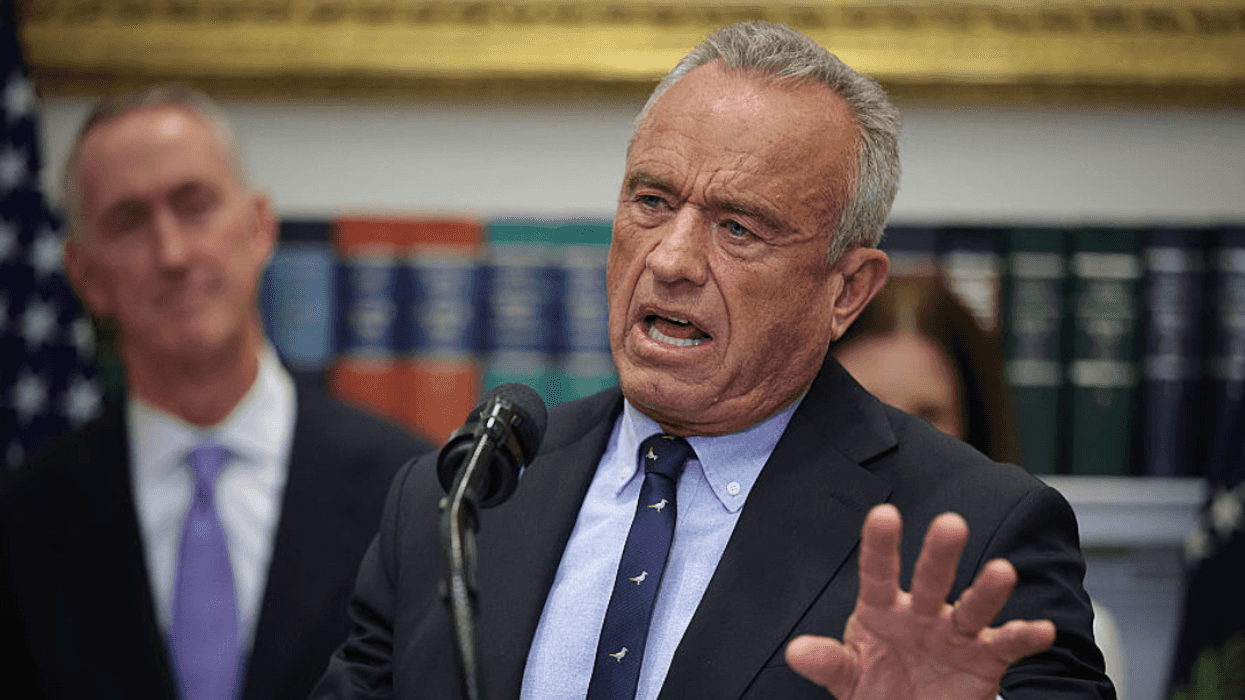

Health and Human Services (HHS) Secretary Robert F. Kennedy Jr. weirded people out after he took the opportunity to gripe about how low teen sperm count currently is during an Oval Office event on maternal health.
The event was used to launch moms.gov, a new federal resource hub focused on prenatal care, nutrition, and postpartum support, along with information on employer fertility benefits and expanded childcare options, including assistance for stay-at-home parents.
But at one point, Kennedy took attention away from that when he said:
"The fertility crisis for women began in 2007, for men in 1970. Men had twice the sperm count as our teenagers do today. This is an existential crisis for our country."
You can hear what he said in the video below.
As men age, it’s natural for testosterone levels and muscle mass to slowly decline. Starting around age 40, testosterone typically drops by 1 to 2% per year. Yet, because testosterone isn’t usually tested during routine checkups, many men may not realize their symptoms—like fatigue, depression, or hair loss—are linked to hormonal changes.
By age 45, more than a third of men have testosterone levels below what’s considered normal. In addition to lower energy and mood changes, low testosterone can contribute to decreased muscle mass, hair thinning, and even weakened bones, which raises the risk of fractures.
Over the past 50 years, global sperm counts appear to have dropped by more than 50%, according to a 2022 review published in Human Reproduction Update. The study, which analyzed data from 1973 to 2018, stirred debate among fertility experts—some supported the findings, while others argued that evolving methods for measuring sperm make long-term comparisons unreliable.
However, a similar analysis published in January in the medical journal Fertility and Sterility examined data spanning from 1970 to 2023 and found “no clinically significant decline in sperm concentration among confirmed fertile men and the general male U.S. population without known infertility.”
It's worth noting that neither of these studies singled out adolescents for concern—so what was Kennedy even talking about?
People were understandably weirded out.
Kennedy's remarks revived claims he made last year during a White House event focused on fertility policy, where he warned that declining birth rates and falling reproductive health metrics pose what he described as a national security threat.
Appearing alongside President Donald Trump in the Oval Office to promote a new agreement offering discounted fertility drugs for couples trying to conceive, Kennedy argued that U.S. fertility rates have dropped well below replacement level.
He attributed the decline to environmental factors and chemical exposure, saying the administration’s “Make America Healthy Again” agenda aims to reduce endocrine disruptors that he claims are harming fertility.
True to form, during this week's event, he said reproductive health was being compromised by a “toxic soup” of environmental factors that “young women are walking around in.”









 @joannawietrzyk/Instagram
 reply to @joannawietrzyk/Instagram
 reply to @joannawietrzyk/Instagram
 reply to @joannawietrzyk/Instagram
 reply to @joannawietrzyk/Instagram
 reply to @joannawietrzyk/Instagram
 reply to @joannawietrzyk/Instagram
 reply to @joannawietrzyk/Instagram
 reply to @joannawietrzyk/Instagram
 reply to @joannawietrzyk/Instagram