
Skip to content
Search AI Powered

Latest Stories

The Ozone Hole Over Antartica Is Shrinking, But There's a Downside

The Ozone Hole Over Antartica Is Shrinking, But There's a Downside
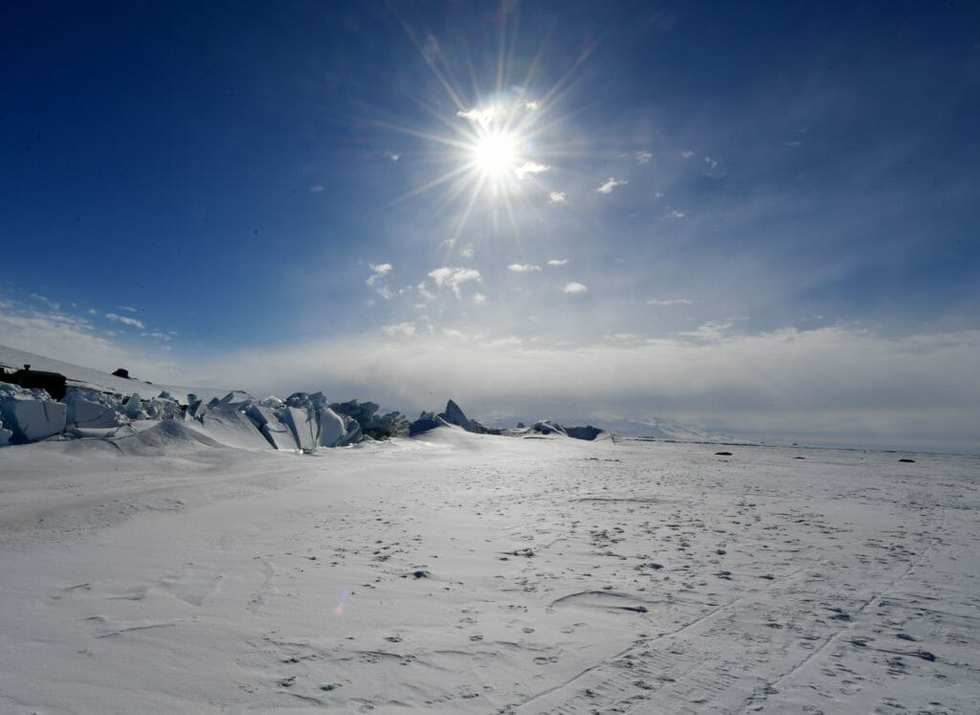
A frozen section of the Ross Sea at the Scott Base in Antarctica on November 12, 2016. Kerry is travelling to Antarctica, New Zealand, Oman, the United Arab Emirates, Morocco and will attend the APEC summit in Peru later in the month. (MARK RALSTON/AFP/Getty Images)

The ozone layer is smaller than it has been in 30 years. This is thanks in part to human actions like eliminating CFCs, but NASA says it isn’t a sign of rapid healing.

It’s hard to go a day without reading about climate change. As unprecedented heat waves and extreme weather events become regular occurrences, it can be easy to forget about the massive stratospheric event that brought all this to our attention: the hole in the ozone layer.

As it turns out, there’s a good reason we don’t hear much about the ozone layer these days: the hole is smaller than it’s been in 30 years. NASA and NOAA announced earlier this month that the hole, created in part by the use of synthetic substances called chlorofluorocarbons (CFCs) in refrigerators and aerosols, reached its largest size for the year on September 11. On that day it covered about 7.6 million square miles, or an area about 2.5 times the size of the U.S. That’s about 1.3 million square miles smaller than it was a year ago, and it appears that it’s still shrinking.


The ozone layer protects the earth from most of the sun’s UV light. After the hole was detected in 1985, many countries minimized the use of CFCs, which break down when they come into contact with UV rays and release chlorine and bromine that damages ozone. It seems like, for once, humans did something for the environment, and it worked.

While this feels like something to celebrate in what is otherwise a pretty dark time for the climate, however, NASA has some words of caution: “The smaller ozone hole extent in 2016 and 2017 is due to natural variability and not a signal of rapid healing,” the organization said in a statement.

At least some of the hole’s shrinkage over the past three decades can be attributed to human changes, but this year’s record low is actually due more to warmer air in the Antarctic.

“The Antarctic ozone hole was exceptionally weak this year,” Paul A. Newman, chief scientist for Earth Sciences at NASA’s Goddard Space Flight Center, said in the statement. “This is what we would expect to see given the weather conditions in the Antarctic stratosphere.”

As the low-pressure system in the Antarctic stratosphere becomes warmer and more unstable, NASA explains, there is less cloud formation in the lower stratosphere, which means less chlorine- and bromine-catalyzed reactions to destroy ozone. Essentially, this phenomenon is making conditions in the Antarctic stratosphere look more like those in the Arctic, which doesn’t have as much of an ozone problem.

But experts are still excited about the progress that’s been made, thanks at least in part to humans’ willingness to give up CFCs. The scientists who helped discover the hole in the first place are excited that their recommendations have actually been followed.

We shouldn’t rest on our laurels, however. NASA refers to a 2013 study showing that the ozone hole won’t fully close until 2070.
More from News

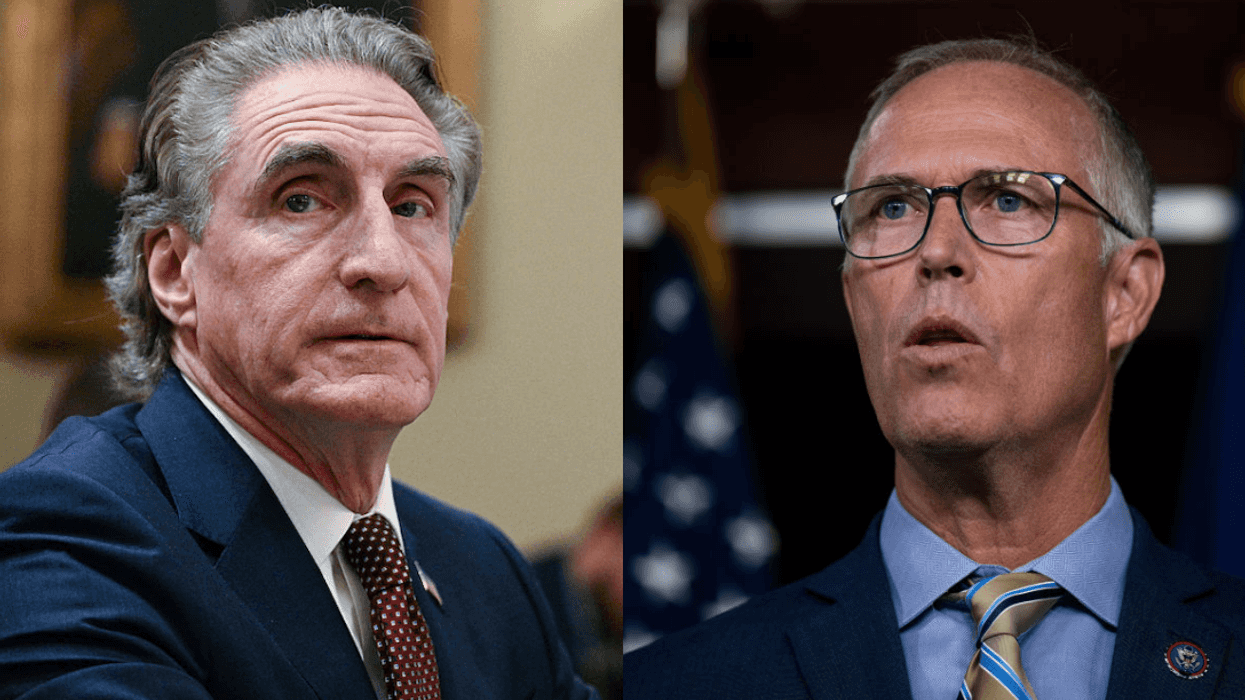
Doug Bergum; Jared Huffman
Jim Watson/AFP via Getty Images; Bill Clark/CQ-Roll Call, Inc via Getty Images

Dem Rep. Hilariously Trolls Trump Official For Having No Idea How Solar Power Works In Viral Clip

Interior Secretary Doug Burgum was trolled by California Democratic Representative Jared Huffman after he, testifying before the House Natural Resources Committee, seemed to think solar panels are unreliable because they don't work when the sun goes down.

The sun produces heat and light through solar, or electromagnetic, radiation. Solar energy technologies capture that radiation and convert it into usable power. The two primary forms of solar technology are photovoltaics (PV) and concentrating solar-thermal power (CSP).

Keep ReadingShow less
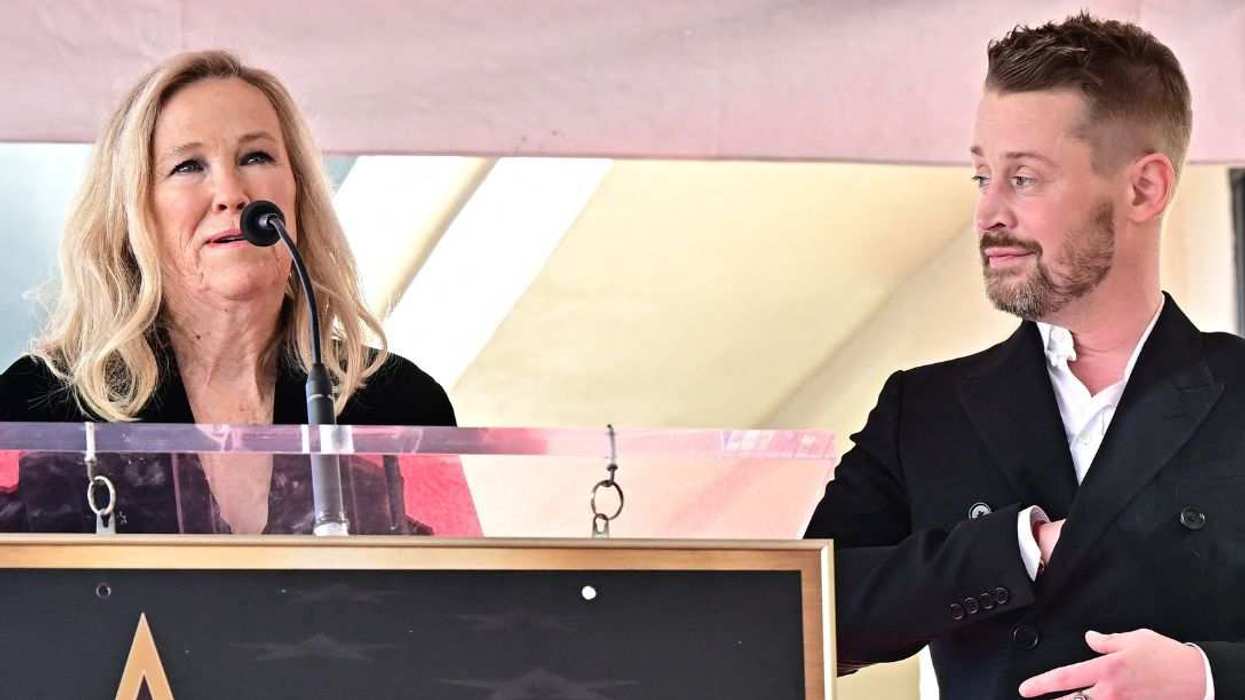
Catherine O'Hara and Macaulay Culkin at the star ceremony, where he is honored for the Hollywood Walk of Fame.
FREDERIC J. BROWN/AFP via Getty Images

Macaulay Culkin Just Opened Up About The 'Unfinished Business' He Felt He Had With Catherine O'Hara—And We're Sobbing

More than three decades after they first starred together in Home Alone, Macaulay Culkin is opening up about the emotional bond he shared with Catherine O’Hara, and why her passing left him feeling like he “owed” her something more.

The former child star, now 45, discussed O’Hara’s recent passing with Gentleman’s Journal. O’Hara died on January 30 at age 71 from a pulmonary embolism linked to an underlying illness.

Keep ReadingShow less
Jason Collins
Maya Dehlin Spach/Getty Images

Tributes Pour In For First Out Pro Basketball Player Jason Collins After His Tragic Death At 47

The sports world lost a legend this week. And not just any legend: one who made history.

Jason Collins was the first openly gay active NBA player and the first openly gay professional athlete in any of the four major American sports leagues when he publicly came out in April 2013.

Keep ReadingShow less
Julia Louis-Dreyfus; Stephen Colbert
CBS

Julia Louis-Dreyfus Channeled Her 'Veep' Character To Epically Roast Stephen Colbert In Send-Off For The Ages

The Late Show with Stephen Colbert is set to air its final episode next Thursday, May 21.

The controversial cancellation will end Colbert's 11-year tenure at the late night desk, and end the Late Show franchise on CBS, which hit the airwaves in 1993 with host David Letterman—who shared his own message for the network over the cancellation.

Keep ReadingShow less
Melania Trump
Mandel Ngan/AFP via Getty Images

Kevin Hart Roast Writer Reveals Melania Joke That Got Cut—And It's Absolutely Savage

In an interview with Variety, writer Madison Sinclair revealed some of the jokes that got cut from Netflix's The Roast of Kevin Hart—including a joke about First Lady Melania Trump and MAGA comedian Tony Hinchcliffe that is as savage as it is nasty.

Hinchcliffe is best known for having called Puerto Rico "a floating island of garbage" during a Trump rally at New York City's Madison Square Garden in October 2024, just weeks before the election.

Keep ReadingShow less