

[DIGEST: Technology Review, Engadget, Nature, New York Times]
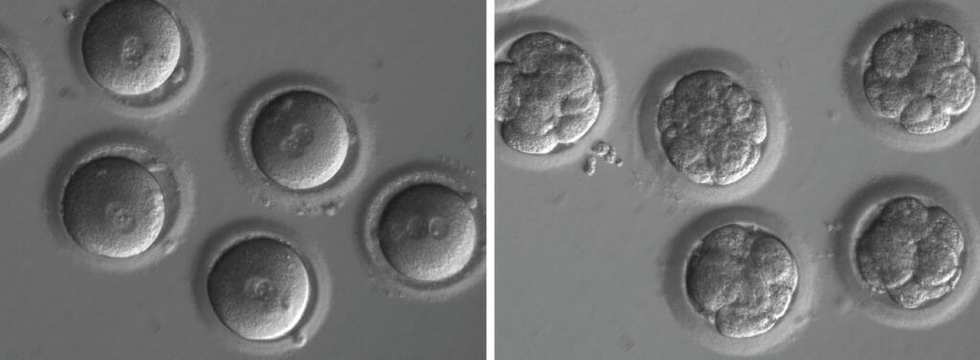
Gene editing and genetic modification may seem like something from the far-off future, but as it turns out, the future is now. Scientists have proven they can successfully edit the genes of human embryos and eliminate hereditary genetic diseases. It’s the first time this type of experiment has occurred in the United States.
However, it’s not the first time such a feat has been accomplished worldwide. Scientists in China were able to edit human embryos in three separate cases. The experiments weren’t without side effects, however; scientists use a technique called CRISPR to edit these genes. Unfortunately, in the Chinese cases, CRISPR introduced errors. Additionally, the desired DNA correction was only adopted by some, not all, of the embryo’s cells. This new American experiment, led by Shoukhrat Mitalipov of Oregon Health and Science University, didn’t have those problems.
CRISPR is a technique that allows scientists to modify DNA. It works by replicating the immune response of bacteria when faced with an invading virus. Bacteria actually take part of the invaders’ DNA and splice it into their own; they then make RNA copies of it, which helps them identify and fight off viruses in the future. The CRISPR technique inserts its own RNA into the bacteria, which triggers the Cas9 enzyme. Cas9 then finds the appropriate DNA sequence and makes a cut; it’s at this point scientists can go in and edit the DNA. To put it another way, CRISPR relies on the body’s natural mechanisms to edit genes; that’s why it’s relatively easy and inexpensive.
Mitalipov worked with embryos that had an unspecified inherited disease. His team was able to correct the defective genes that caused the disease. What’s more, this germline engineering ensures that the disease will no longer be a part of the genetic bloodline; future offspring will receive the corrected genes. It’s important to note that this is just a first step; the embryos were only grown for a few days. There was never any plan to implant them and allow them to fully mature. The full results were published in the journal Nature.
However, this experiment has brought with it an onslaught of worry and speculation about “designer” babies — babies that are genetically modified to have “superior” traits. It’s important to note that the United States currently prohibits clinical trials with genetically modified embryos. Other countries haven’t followed suit. There’s a real fear that this type of gene editing — given how accessible and inexpensive it is — might lead to a certain type of eugenics, valuing “enhanced” children over unmodified children and even possibly shunning children with disabilities.
This is why it’s so important to discuss what this type of CRISPR work will be used for, and why. It’s also crucial to involve an international audience. MIT researcher Richard Hynes, co-leader of a committee that recently recommended guidelines for the editing of human embryos, said to The New York Times, “Once the technical hurdles [of editing an embryo’s genes] are cleared, then there will be societal issues that have to be considered and discussions that are going to have to happen. Now’s the time.”





 Page Six/Facebook
 Page Six/Facebook
 Page Six/Facebook
 Page Six/Facebook
 Page Six/Facebook
 Page Six/Facebook
 Page Six/Facebook




 u/jpdiv/Reddit
 u/nojunkpeter/Reddit
 @scottiferr/TikTok
 @scottiferr/TikTok
 @scottiferr/TikTok
 @scottiferr/TikTok
 @scottiferr/TikTok
 @scottiferr/TikTok
 @scottiferr/TikTok
 @scottiferr/TikTok
 @scottiferr/TikTok
 @scottiferr/TikTok
 @scottiferr/TikTok
 @scottiferr/TikTok
 @scottiferr/TikTok
 @scottiferr/TikTok
 @scottiferr/TikTok
 @scottiferr/TikTok
 @scottiferr/TikTok
 @wife_mama02/TikTok
 @wife_mama02/TikTok
 @wife_mama02/TikTok
 @wife_mama02/TikTok
 @wife_mama02/TikTok
 @wife_mama02/TikTok
 @wife_mama02/TikTok
 @wife_mama02/TikTok
 @wife_mama02/TikTok
 @wife_mama02/TikTok
 @wife_mama02/TikTok
 @wife_mama02/TikTok
 @wife_mama02/TikTok
 @wife_mama02/TikTok
 @wife_mama02/TikTok
 @wife_mama02/TikTok