

While everyday Americans are watching the cost of seemingly everything eat away at their bank accounts, the billionaire class continues operating in an entirely different financial multiverse.
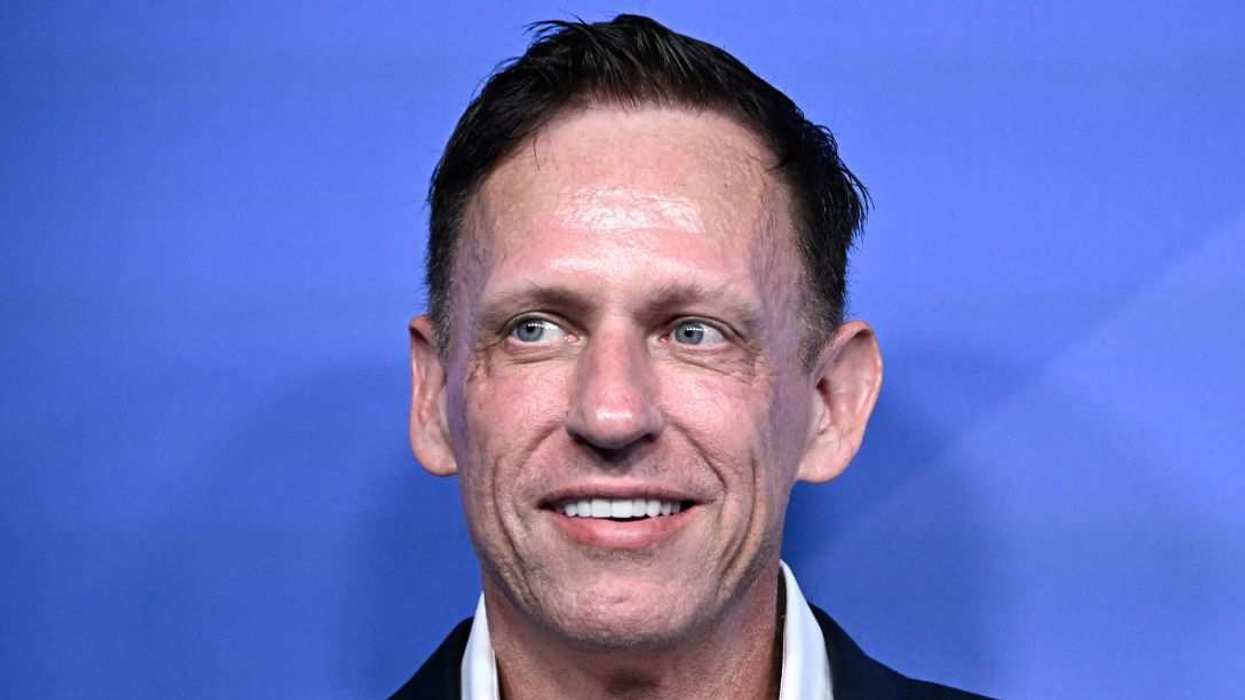
Now, tech billionaire Peter Thiel has apparently found another luxury afforded by extreme wealth: redefining whether “evil” might actually be a good thing. The eyebrow-raising philosophy came during a September 2026 appearance on MD Meets, where Thiel sat down with fellow billionaire Mathias Döpfner.
Döpfner kicked off the exchange:
“Why do we always moralize new technologies? I would say technologies are just neutral. You can use them for good and for bad causes, and it depends on us, what we human beings are doing with it.”
Because, apparently, this is what rich people chat about when they get together.
And for those who don’t know, Döpfner chairs Axel Springer SE, the media empire behind Politico, Business Insider, Bild, and Welt, while Thiel has his fingers in an entirely different collection of extraordinarily lucrative pies across tech, data, and venture capital.
Thiel naturally had a take of his own:
“I'm going to get in trouble for what I'm about to say, but I think we moralize way too much. There's always a question I like to ask: What is the antonym of good? And the moral antonym is evil. The functional antonym is bad.”
Ah, yes. If there's one thing society has clearly been suffering from, it's an exhausting surplus of moral consideration.
And Thiel isn't merely a billionaire with opinions and a microphone. He co-founded PayPal and Palantir, founded Founders Fund, and became Facebook's first outside investor.
No surprise here, the next part of his philosophy involved Ferraris:
“A Ferrari is an evil car because it doesn't get many miles per gallon. A Trabbi is a bad car. It's less good than a golf cart. You know, the former East German car. And so, if you're evil, you're at least competent. And if you're evil, you're not bad.”
So, evil isn't bad as long as it's competent? Interesting.
By that logic, if a gas-guzzling Ferrari is “evil” but competent, does that make a fuel-efficient Prius “good” and competent? And where exactly does fellow PayPal alum Elon Musk's Tesla land on the moral spectrum?
Congratulations, Thiel, we've apparently solved thousands of years of moral philosophy with Consumer Reports.
Then the billionaire took it a step further:
“And therefore, maybe you're actually kind of good because you're at least getting something done.”
Well, America's wealthiest people have certainly been getting something done.
Watch Thiel make his case:
Peter Thiel, venture capitalist and co-founder of PayPal, on competence mattering more than morality:"if you're evil, you're at least competent. And if you're evil, you're not bad.""A Ferrari is an evil car because it doesn't get many miles per gallon. A Trabi is a bad car. And so if you're evil, you're at least competent."
— Guillermo Flor (@guilleflorvs) September 25, 2026
But being competent enough to “get something done” doesn't make what you're doing inherently good. What you're accomplishing—and who benefits—still matters.
Just look at philanthropist Melinda French Gates. Through Pivotal, she's focused her philanthropy on advancing women’s power, health, and family well-being. When Olivia Rodrigo's Daisy Chain Fields festival recently raised $10 million for 10 women-focused charities, French Gates matched it, bringing the total to $20 million.
Rodrigo put it this way:
“Melinda is one of the most inspiring women I’ve ever met. She’s devoted her life to empowering women and girls that might have otherwise been forgotten.”
And that's where Thiel's philosophical word salad starts losing its croutons.
French Gates is extraordinarily wealthy and clearly capable of getting things done. Yet here, competence looks like putting millions behind women and girls—not taking a Ferrari-sized detour to move “evil” a little closer to “good.”
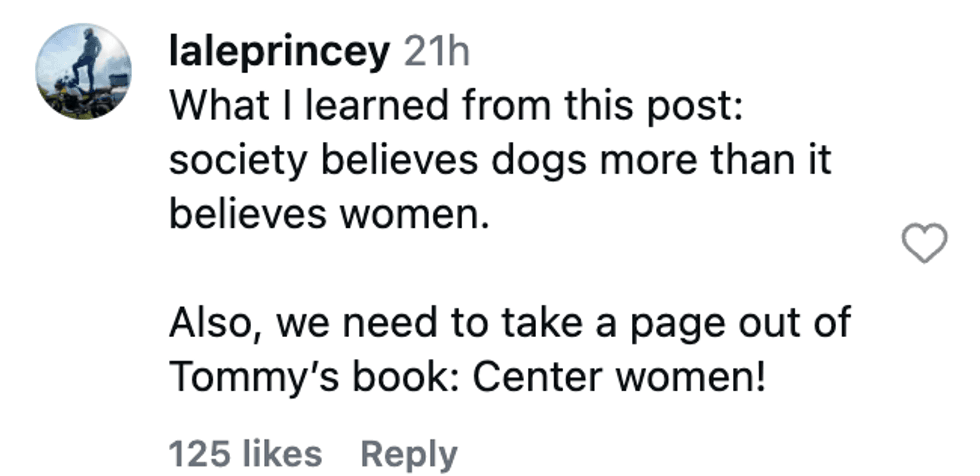
Maybe competence was never the moral compass. What you choose to do with it is. And judging by the reaction online, social media wasn't exactly lining up to enroll in Thiel's philosophy class.
Check out the discourse below:
But before we permanently enroll Thiel in Team Evil, there's more context. The tech investor eventually swapped luxury cars for classic literature to explain where he was going with all this.
Thiel attempted to connect the dots:
“I think it's better to be good than evil, I want to be very clear, but I prefer Goethe's ‘Faust’ to Marlowe's ‘Faust.’”
For anyone wondering what the hell that means, here's the SparkNotes version: Marlowe's Faust makes a questionable bargain and ultimately pays for it. Goethe's Faust makes plenty of morally questionable choices, too, but ultimately gets redeemed.
I guess we let the billionaire who thinks we spend “way too much time thinking about climate change” explain why he prefers Door No. 2.
You can watch the full interview with Döpfner here:
- YouTube MDMEETS - Essential Talks with Mathias Döpfner
And while Thiel debates what qualifies as “good,” his fortune keeps getting bigger. His reported net worth jumped from approximately $23.9 billion in August 2025 to $32.1 billion by August 2026—more than $8 billion in a year.
Maybe the real question is what someone with billions considers worth getting done.



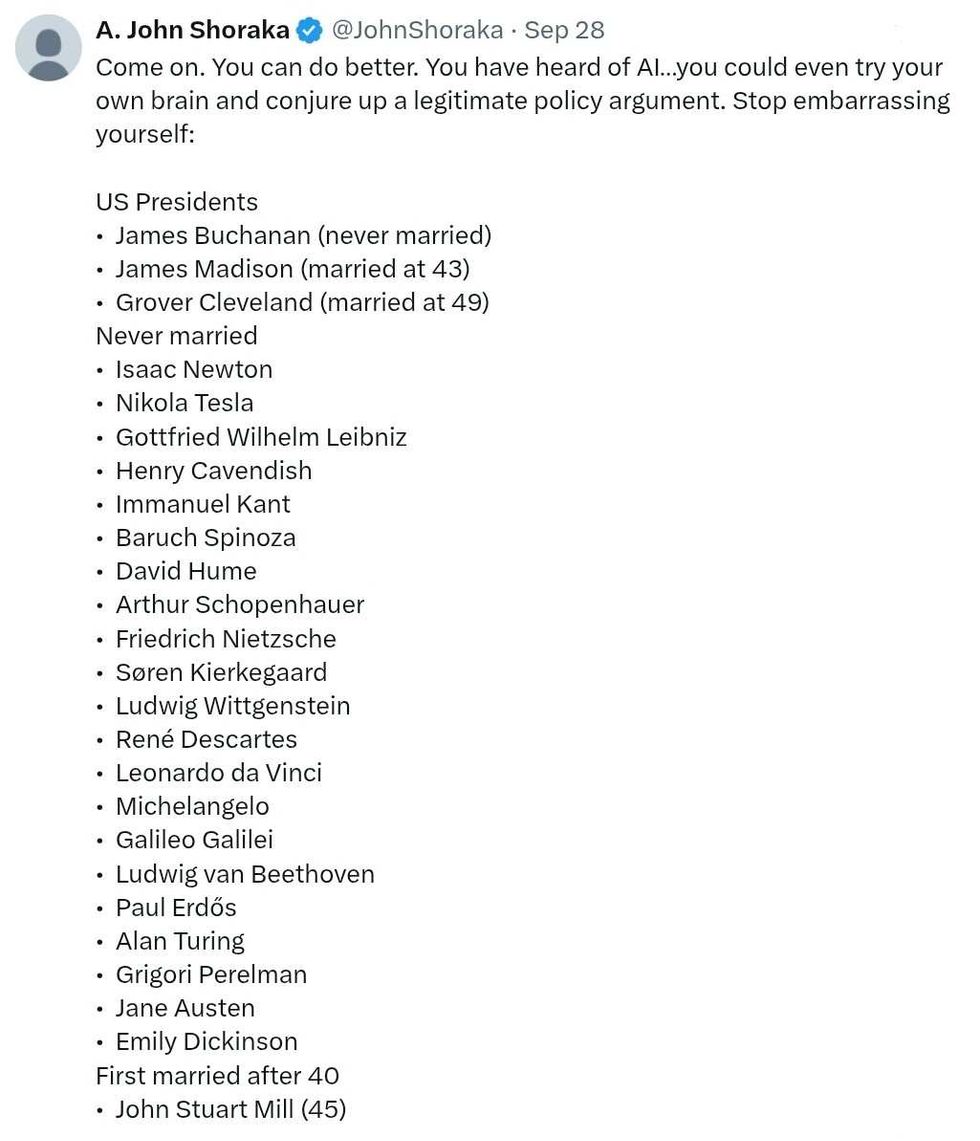 @JohnShoraka/X
 @gardengirl125/X





 @MeidasTouch/X
 @MeidasTouch/X
 @loonamona/Instagram
 @shhtheyrewatching/Instagram
 @charlize_elger/Instagram
 @missfoxyfoxfox/Instagram
 @laleprincey/Instagram
 @tleav/Instagram
 @emjayy033/Instagram
 @youdumbwitch/Instagram
 @mscoralmakenzi/Instagram
 @eliandmaloneysfosters/Instagram
 @gannet_guts/Instagram
 @thedwivah/Instagram