
Last month, I recommended readers focus on two persons of considerable interest to the case against Trump over the theft of national security and other classified information.
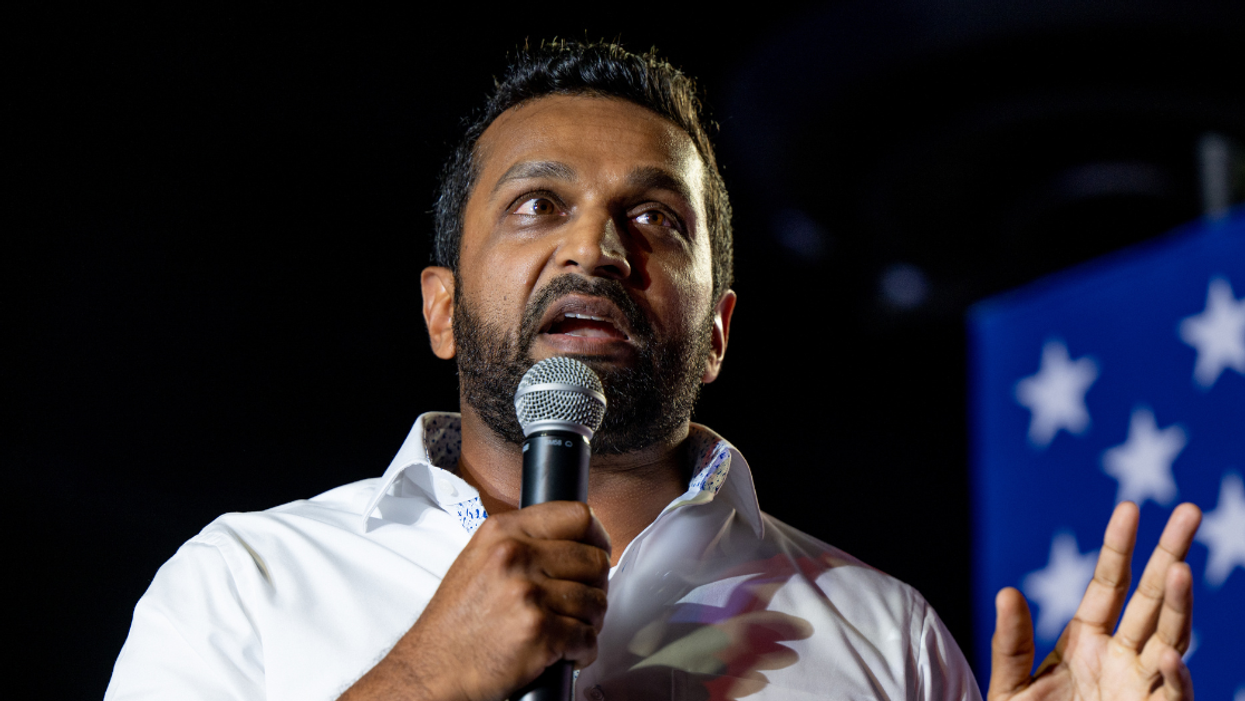
One of those two is named Kashyap Pramod "Kash" Patel, and he is back in the news again in a big way.
Yesterday, The Wall Street Journal reported prosecutors intend to offer Patel limited immunity so he can testify before the grand jury in what I and others have cheekily dubbed the NARA-Lago case. Legal observers have been expecting this testimony, and now it’s finally confirmed and will be happening.
But what does it mean for the larger picture? There are few key takeaways, so let’s dive in.
But first, a primer.
Who Is Kash Patel?
To set the context properly, it’s useful to remember that Patel once worked as a top aide to Republican Representative Devin Nunes, who was one of Trump’s chief allies and was a useful mouthpiece and deflector in Congress during the Russia interference investigation. Nunes stepped away from Congress to become CEO of Trump’s ironically named social media platform, Truth Social.
During his time with Nunes and afterwards as a Trump aide, Patel was and has remained an advocate for the idea of the “Deep State”—something that factors into this discussion today, but we’ll get to that.
Patel knows the legal system inside out, having worked both as a federal public defender and as a federal prosecutor.
That means he knew precisely what he was doing when he pled the Fifth the first time he was called before the grand jury in Washington, and he knows what he’s doing now presumably in negotiating his testimony that will be subject to an immunity deal.
Patel is no mere errand boy. He is a die-hard, true believing MAGA loyalist and trusted go-to guy for Trump, an important fact to keep in mind when we weigh his upcoming testimony.
Trump promoted Patel at the waning days of his administration to be the chief of staff to the Acting U.S. Secretary of Defense, where many privately believed he called the shots, especially when it came to pursuing election conspiracies and the long-delayed decision whether to send in troops on January 6.
After his term in office, Trump named Patel as an official representative for him to the National Archives and Records Administration (NARA). And it’s here that most of our story begins.
What Does Patel Know?
Earlier this year in May, months before the warrant was executed by the FBI to search and seize documents from Mar-a-Lago, Patel was busy making threats against NARA.
He began by asserting many documents had been declassified by Trump and the goal was to get them back from the National Archives and release them publicly.
He described what he intended to retrieve and release in an interview with Breitbart on May 5, 2022:
“It’s information that Trump felt spoke to matters regarding everything from Russiagate to the Ukraine impeachment fiasco to major national security matters of great public importance—anything the President felt the American people had a right to know is in there and more.”
Patel complained White House counsel including Pat Cippolone “failed to generate the paperwork to change the classification markings, but that doesn’t mean the information wasn’t declassified.”
He asserted:
“I was there with President Trump when he said, ‘We are declassifying this information'.”
Later, in an interview given in June of 2022, Patel specifically vowed to retrieve classified documents from the agency and publish them on his website. The plan was to “make a big announcement every time” a new document was published.
That’s a record scratch moment.
Think about this: the former President wanted to claim mounds of classified documents were now unclassified and then release them strategically to score political points.
While working for Nunes, Patel had come to believe that a number of classified documents containing non-public information would be helpful to the then-President if the public only could know about them.
Patel asserted Trump had declassified a tranche of “Russiagate documents” in the final days of the administration, but White House counsel Cippolone had blocked their release and now NARA had them.
Said Patel during yet another interview:
“White House counsel and company disobeyed a presidential order and implemented federal governmental bureaucracy on the way out to basically send the stash to the National Archives, and now that's where it's at.”
Trump in fact had sought to declassify a whole set of documents related to the Russian election interference in a memo from January 19, 2021, claiming in the FBI’s “Crossfire Hurricane” investigation, “Portions of the documents in the binder have remained classified and have not been released to the Congress or the public” and that after a review by himself personally:
“I determined that the material in that binder should be declassified to the maximum extent possible.”
The follow up on declassification never happened, and most of the documents at the insistence of White House counsel instead went to NARA. Patel asserted that his plan with NARA, at the instruction of the former President, was therefore to:
“Identify the documents, whether it’s Russiagate, Hunter Biden, impeachment, Jan. 6th, and put them out.”
It’s important for purposes of this story to understand the battle with NARA was really an extension of the battle with the rule gatekeepers at the White House, and all this was part of an effort to undo what Cippolone had ordered.
As legal experts interviewed by Just Security noted, a conspiracy to publicly release classified information may give rise to criminal liability under the Espionage Act, which is probably why Patel was smart to assert his right against self-incrimination the first time he appeared before the grand jury.
Now that he will be testifying, as legal expert and commentator Ryan Goodman noted, one of the first questions prosecutors really should ask is this:
“Were you acting as an agent of, or in concert with, Donald J. Trump when you described, repeatedly, Trump's plan to publicly disseminate the documents?”
The wrinkle in all of this is if what Patel says is true, and he confirms it all under oath, then the former President really might have taken (or believed he had taken) some action to declassify whole classes of documents, including what he took with him to Mar-a-Lago.
But even this doesn’t buy him much mileage in his defense, as I explain below.
Will Patel Have To Testify Now? Can’t He Take the Fifth Again?
The quick answers are, yes, he will have to testify, and no, he can’t plead the Fifth this time. This is because he is being offered limited immunity, meaning his statements before the grand jury cannot be used directly against him in any subsequent criminal proceeding.
That means he isn’t at risk of self-incrimination from whatever he tells the grand jury, so there is no Fifth Amendment right to protect.
It doesn’t mean, however, that he can lie (that could lead to a perjury charge), and it doesn’t mean he’s completely off the hook (because his guilt could still be proved by evidence other than his in-court testimony).
What Is Patel’s Likely Testimony?
The most obvious route here is for Patel simply to confirm what he said repeatedly in interviews earlier this year. That is today, the plan, approved by Trump, was for him to get as many now-declassified documents as he could from NARA and to publish them.
It would be difficult at this point for Patel to disavow the things he said over and over in earlier interviews, so it is unlikely he will suddenly claim there was never any plan to publicly disseminate previously classified documents.
Rather, he will likely claim there was no harm no foul, at least in Patel’s mind, because these documents were “declassified.” Therefore, he would argue, a plan to publish them wasn’t a conspiracy to commit a crime.
That Testimony Could Still Be Very Damning
Let’s suppose for a moment Patel indeed says under oath what he has claimed in podcasts and interviews, namely the former President declassified everything and wanted everyone to know what was in the documents.
We now know that mixed in among the documents the former President supposedly declassified and took with him illegally to Mar-a-Lago were national security information documents subject to the Espionage Act.
The classification argument advanced by Patel and Trump is rather silly when it comes to these documents because whether or not they are classified is irrelevant to the criminal statute.
So long as the documents fall into the national security information bucket—as information about a foreign power’s nuclear and missile capabilities generally would—taking them and keeping them, on top of planning to disseminate them publicly, is a crime under 18 U.S.C. 793 punishable by up to 10 years in prison.
Nor does it matter what the classification status was on government documents to which Trump had no right of possession in any case after he was President. The law governing this is 18 U.S.C. 2071, and it says nothing about classification status, only about the unlawful removal and concealment of government records.
This is likely why the Department was careful to press forward with investigations on laws that decidedly do not depend on the classification status of documents.
The Testimony Could Shed Light on Trump’s Motive
One real value of Patel’s testimony goes to motive.
For months, people have been arguing over what possible reason Trump would have for taking and squirreling away these documents and then going so far as to obstruct efforts to get them back.
In the MAGA fever world of conspiracies, which Patel and Trump himself inhabit, documents around Russiagate, January 6, and the two impeachments are valuable pieces of the narrative that, in their minds, never got to see the light of day.
And those top secret national security information documents? They were leverage, of course, to show how far Trump would be willing to go in releasing the nation’s secrets to prove his point.
Patel may have gambled badly here by assuming the “declassifications” he claims happened meant these documents could be handled any way they liked. In fact, as he is quickly learning, the wave of the hand of the king, or in Trump’s case perhaps even a mere mental projection, is both insufficient and irrelevant to his own legal jeopardy.
Finally, it is now safe to presume if the Department of Justice is offering limited immunity to Patel, then the target of their investigation is in fact Patel’s boss, and there are likely indictments coming for Trump.
There simply is no space or other actors between Patel and Trump here on the question of the removal of government documents and the apparent plan to publish previously classified ones.
The former President’s legal team should be nervous because the trap has now been drawn quite close.







 @hollywoodreeltime/Instagram
 @hollywoodreeltime/Instagram
 @hollywoodreeltime/Instagram
 @hollywoodreeltime/Instagram
 @hollywoodreeltime/Instagram
 @hollywoodreeltime/Instagram
 @hollywoodreeltime/Instagram
 @hollywoodreeltime/Instagram
 @hollywoodreeltime/Instagram
 @hollywoodreeltime/Instagram
 @hollywoodreeltime/Instagram
 @hollywoodreeltime/Instagram
 @hollywoodreeltime/Instagram