We didn't have the hole story. via Knowable


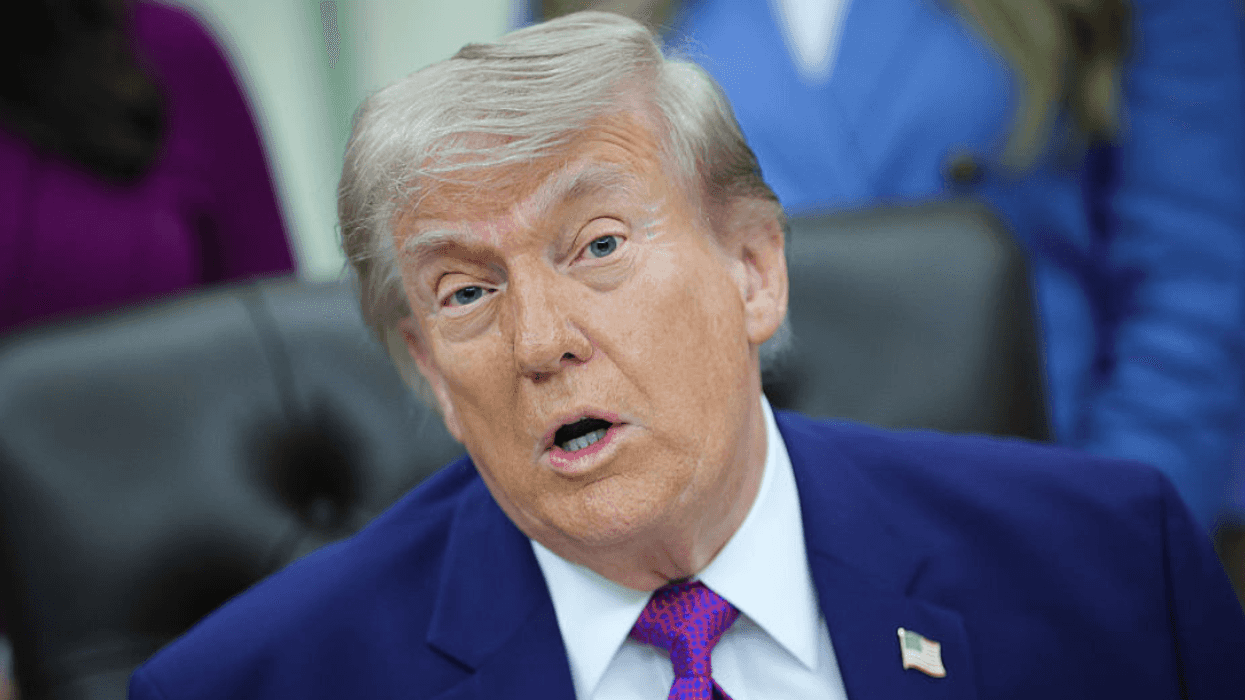
Former Secretary of State Hillary Clinton mocked President Donald Trump following a report he approved a proposed design featuring his portrait on a new $250 bill bearing his signature, despite longstanding federal law barring living people from appearing on U.S. currency.
According to four current and former Treasury Department employees who spoke to the Post anonymously out of fear of retaliation, two political appointees at the department—U.S. Treasurer Brandon Beach and senior adviser Mike Brown—repeatedly pressed Bureau of Engraving and Printing staff beginning last year to develop prototype designs for the bill.
Bureau staff ultimately produced several mockups, including one depicting Trump’s face at the center of the $250 note between the signatures of the president and Treasury Secretary Scott Bessent, according to one employee. The Washington Post, which broke the story, said it also reviewed documents supporting the account.
Then Clinton weighed in with the following jab at Trump and how little he's doing to address a nationwide affordability crisis:
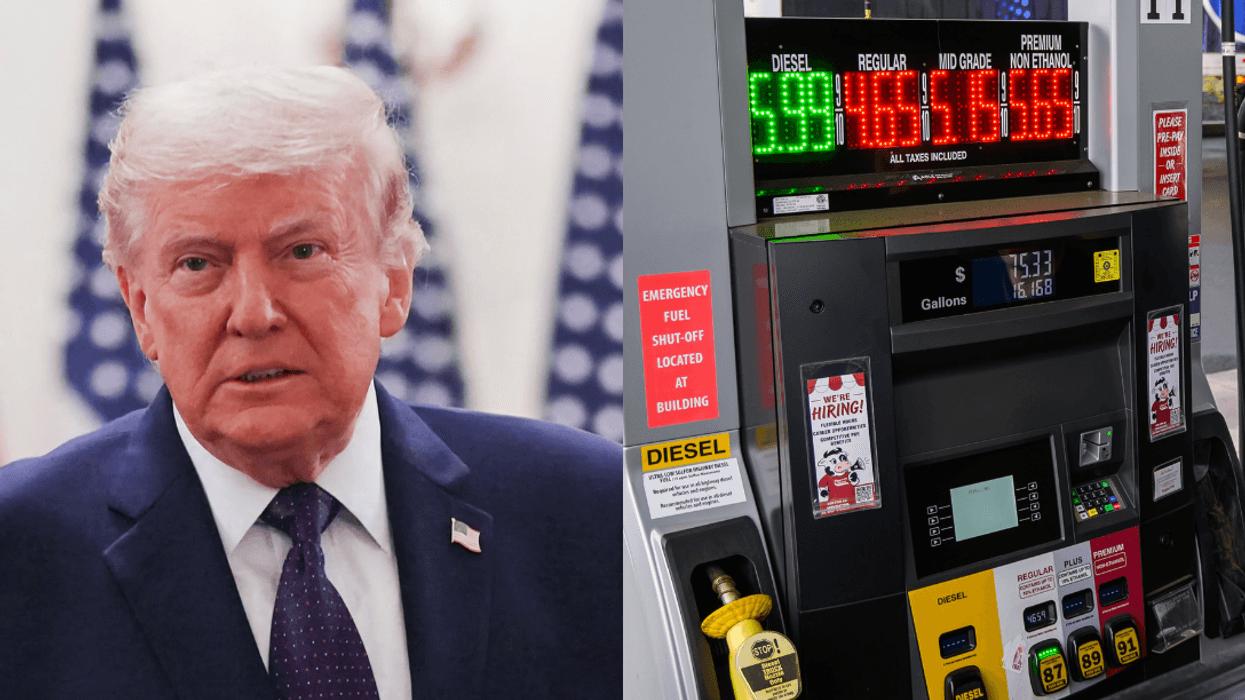
"By the end of Trump’s term, it’ll be just enough to buy one gallon of gas and a carton of eggs."
You can see what she wrote below.
Consider that just a couple of weeks ago, when asked by a reporter how much he considers the "financial situation" of Americans when he goes into negotiations with Iran amid the highly unpopular war, Trump was brutally honest:
"Not even a little bit. The only thing that matters when I'm talking about Iran, they can't have a nuclear weapon."
"I don't think about Americans' financial situation. I don't think about anybody. I think about one thing: we cannot let Iran have a nuclear weapon. That’s all."
So when you factor that in, you can imagine that others are as unimpressed as Clinton with Trump's latest narcissistic move.
The news that Trump would be featured on a $250 bill comes just weeks after the State Department announced it will issue a limited run of commemorative passports for the 250th anniversary of the country's founding featuring an image of Trump, making him the first living president ever depicted on a U.S. passport.
Roughly 25,000 to 30,000 of the special passports will be available through the Washington passport office ahead of July 4, while standard passports will still be offered elsewhere. The move is the latest in a broader effort to attach Trump’s likeness and signature to official commemorative items tied to the nation’s semiquincentennial celebration.
Trump's portrait will be paired with a gold imprint of his signature on an interior page, while the cover reverses the standard layout by placing “United States of America” in bold gold lettering at the top and “Passport” at the bottom. It also includes a gold American flag emblem marked with “250” encircled by stars on the back cover.
This development prompted New York Democratic Representative Alexandria Ocasio-Cortez to observe that the decision is ultimately not just a reflection of Trump's narcissism but a signal that "all these lower-level people [are] competing for his love and attention as well."
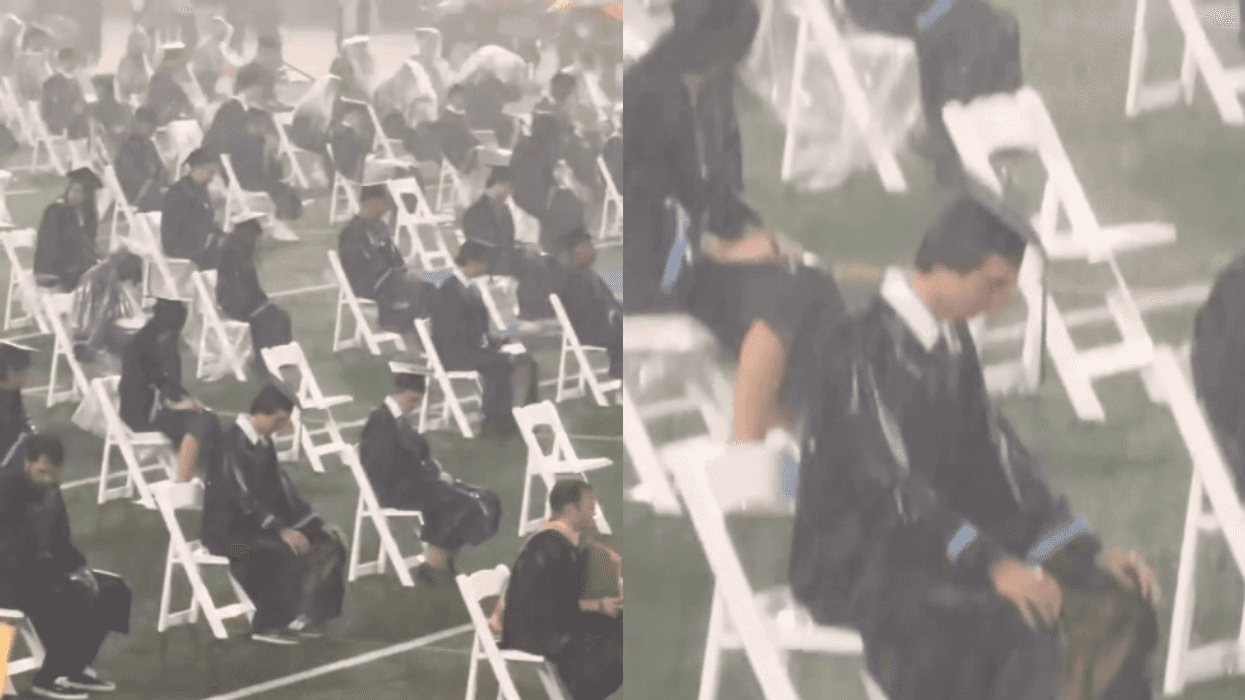
Last Thursday, heavy rain impacted the outdoor graduation ceremony for the students of Centennial High School and Franklin High School in Tennessee—but the staff, students, and their families proceeded with the event anyway.
Rain was allegedly in the day's weather forecast, but it was only expected to rain after the festivities were over. However, according to several families who were present, the rain started at the beginning of the first speech, and it didn't just rain—it poured.
Instead of immediately canceling or rescheduling the event or swiftly moving it indoors, the ceremony took place on the Centennial High School football field. Speeches were given, diplomas were distributed in plastic packaging, students took rain-soaked graduation photos, and friends and family members watched from the football stands, all in the pouring rain.
You can see a video here:
Another video was shared on the "Well That Sucks" subReddit, featuring miserable-looking graduates sitting in their seats as they're pelted with heavy rain.
Redditor Conscious-Weight4569 gave further context for the event:
"Centennial High School’s graduation in Williamson County, Franklin, Tennessee, went ahead as scheduled despite heavy pouring rain last Thursday (May 21st, 2026), leaving students and families soaked as the ceremony took place on the football field."
"Many attendees questioned the decision to continue outdoors given the forecast, with some wondering whether a backup indoor plan should have been used."
"While graduates still received their diplomas, reportedly protected in plastic sleeves, the downpour turned the event into an uncomfortable experience."
Fellow Redditors were shocked that the students were treated this way.
"They didn’t have an auditorium or gymnasium? Now that school is a laughing stock… How dumb!!" - Regal66618
"We don't want that memory captured on video in the dingy cafeteria. A heroic rain-soaked walk across the stage is much better!"
"Grandma has to choose between watching and dying? Test her mettle." - Whole_Risk_2695
"Franklin, TN, is an affluent suburb of Nashville. Some dipsh*t super didn't want to change his plans. If that had been one of my kids, I would have walked out on the field and grabbed them to go home. F**k tradition where health and safety are involved." - 87YoungTed
"That’s a helluva metaphor for what this class has facing it."
"Bureaucracy rains supreme, you will be subjected to stupid decisions that will negatively impact you and your family, and most importantly, you do not matter. Sit down and accept it."
"Welcome to the world, Class of '26!" - teleheaddawgfan
"You have to be a special kind of stupid to think the forecasts are accurate enough to schedule an important event in between heavy rain bursts. Plus, unless that's turf, it's going to be muddy during the pause anyway." - Orchid_Significant
"I live in this area in Franklin, TN. Some parents are already requesting the school have a do-over. LOL." - Jobu99
Others agreed, citing their own events that had been rescheduled or reorganized due to weather.
"The f**k? It rained for my high school graduation, and we just... went inside." - SamlamGreenEggsNoHam
"It ended up raining on the day of my HS graduation, so they moved it to the gym at the last second. Because of that, there was suddenly only room for every graduate to have two people watch them, and I had family come down to see me walk."
"My parents ended up staying, but the rest of the family had to just chill out at our house until it was over. Sucks, but it is what it is. I would've assumed that having an indoor backup was standard, considering schools do this every single year..." - Morbig187
"My HS graduation was inside an auditorium anyway. My college graduation was outside, with a rain plan that involved an indoor venue for the graduates and one or two spectators each, then overflow remote viewing via live broadcast from several other indoor locations on campus (like the dining halls and chapel)."
"That should be the standard."
"Though, hot take, any outdoor ceremony taking more than 30 minutes can suck: sun or rain, someone is probably uncomfortable unless you get that perfect overcast day." - AFK_Tornado
"In sunny San Diego, there was a hint of rain in the forecast, so our graduation from MARINE CORPS BOOT CAMP was indoors!!!"
"Not for our benefit, mind you, but for all the families who came to see it. Too bad a high school couldn't do the same for them." - ernest7ofborg9
"I remember when I graduated, the school had a backup plan to hold the ceremony indoors if it rained. Apparently, that’s not the standard, though it should be." - cold_kingsby
In response to the criticism, Williamson County School Superintendent Jason Golden stated:
“Based on forecasts and radar, we expected to complete last night’s ceremonies at Centennial and Franklin before the next wave of rain began, but unfortunately, changing conditions brought rain during the events."
"While the rain impacted those two ceremonies, it could not diminish our pride in our Centennial and Franklin graduates.”
Making sudden changes can be hard, but this was a valid health and safety concern. If the school was worried about tradition, they could have at least been worried about how terribly the photos were going to turn out.
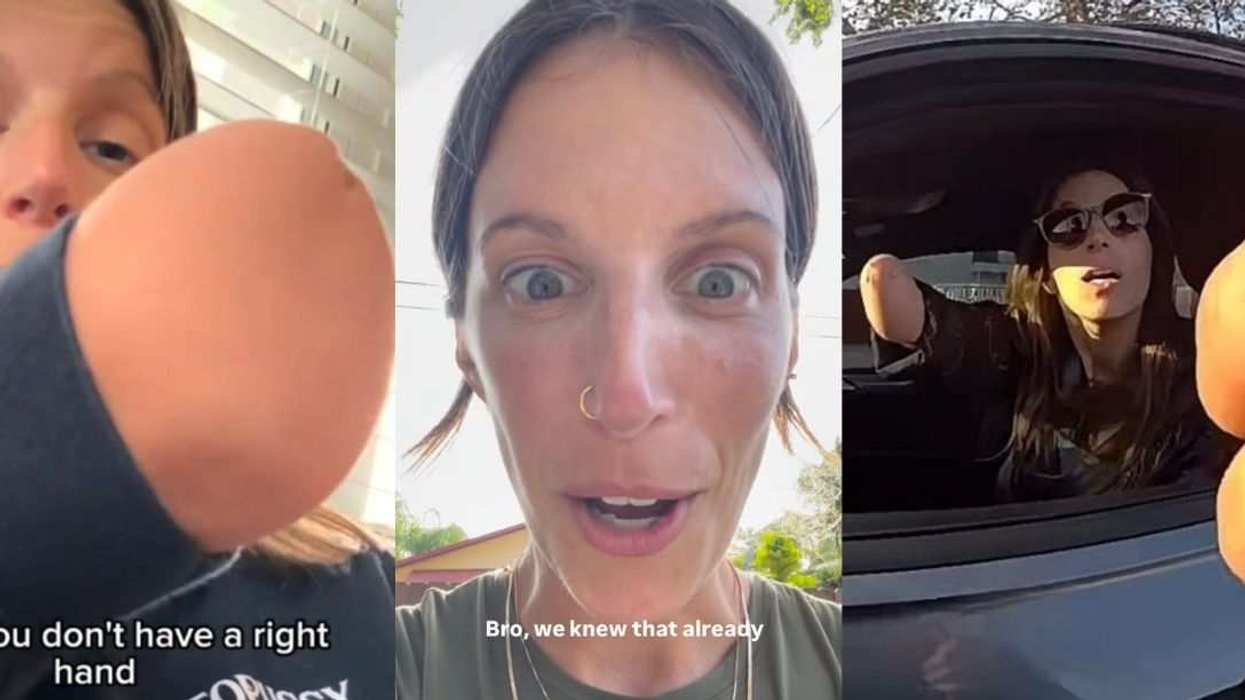
A traffic stop in Palm Beach County is going viral for a painfully obvious reason: a deputy accused a woman of driving with her phone in her right hand—even though she literally does not have a right hand.
Kathleen Thomas, 36, was pulled over in February by a Palm Beach County Sheriff’s Office deputy over an alleged distracted driving violation captured on both Thomas’ phone and police body cam footage.
In the now-viral video, the officer identified himself before explaining the reason for the stop:
“This is why you’re being pulled over: the city of Lake Worth today, we’re doing an operation for distracted driver, and you drove past me holding the phone with your right hand, manipulating that phone.”
Florida’s texting-while-driving statute prohibits drivers from manually typing or entering letters, numbers, symbols, or other characters into a wireless device, along with sending or reading data for non-voice communication while operating a vehicle. The law also includes exceptions for navigation, emergency reporting, safety alerts, and certain voice communication.
Unfortunately for the deputy, the stop quickly turned into a real-life “you sure about that?” moment.
Thomas then held up her right arm, which ends above the elbow, and said:
“So, obviously not, so, you want to just call this a day?”
Rather than taking the extremely available exit ramp, the deputy continued pressing the issue.
He doubled down, saying:
“I don’t want to call it a day. You had a hand up, manipulating the phone.”
Apparently, somebody was determined to meet their quota that day.
A visibly stunned Thomas repeatedly reminded the deputy that he specifically claimed he saw her using her right hand. The exchange only grew more awkward as the officer attempted to walk back the statement, then repeatedly asked whether she had been holding her phone at all, which Thomas denied.
The interaction somehow became even more surreal when the deputy asked Thomas to swear “hand to god” that she was not using her phone. When she raised her right arm, he reportedly asked her to lift “the other hand.”
You can view the body cam footage released by CBS News here:
- YouTubeCBS News
The deputy ultimately reviewed Thomas’ license and registration before issuing her a citation for allegedly violating Florida’s law on wireless communications while driving.
Thomas reacted to the citation on Instagram:
“Turns out you can still get a ticket for driving with a device in your right hand even if you don’t have a right hand…”
The content creator, known online as @slightlyoff.balance, is an adaptive athlete and influencer whose videos often focus on “Doing One Arm S–t.”
You can watch her video on the incident here:
The citation, issued February 11 at approximately 8:04 a.m. along North Dixie Highway, listed the charge as “Wireless Communication. Device/Handheld While Driving – First Offense” under Florida Statute 316.305(3)(a), carrying a civil penalty of $116.
Thomas’ traffic stop has since racked up millions of views online, where people immediately filled the internet with “single-handedly” jokes.
Commenters had plenty to say:
And to absolutely no one’s surprise, Thomas challenged the citation in court and updated her audience Wednesday after the case was dismissed for, wait for it, “lack of evidence.”
You can view Thomas’ follow-up video here:
Funny how the citation suddenly vanished once actual evidence entered the chat.
Following the viral fallout from the stop, Thomas is now set to appear on CBS Mornings tomorrow at 7:00 AM. Meanwhile, the body cam footage continues making the rounds online as viewers roast the deputy for accusing an amputee woman of using a hand she does not have.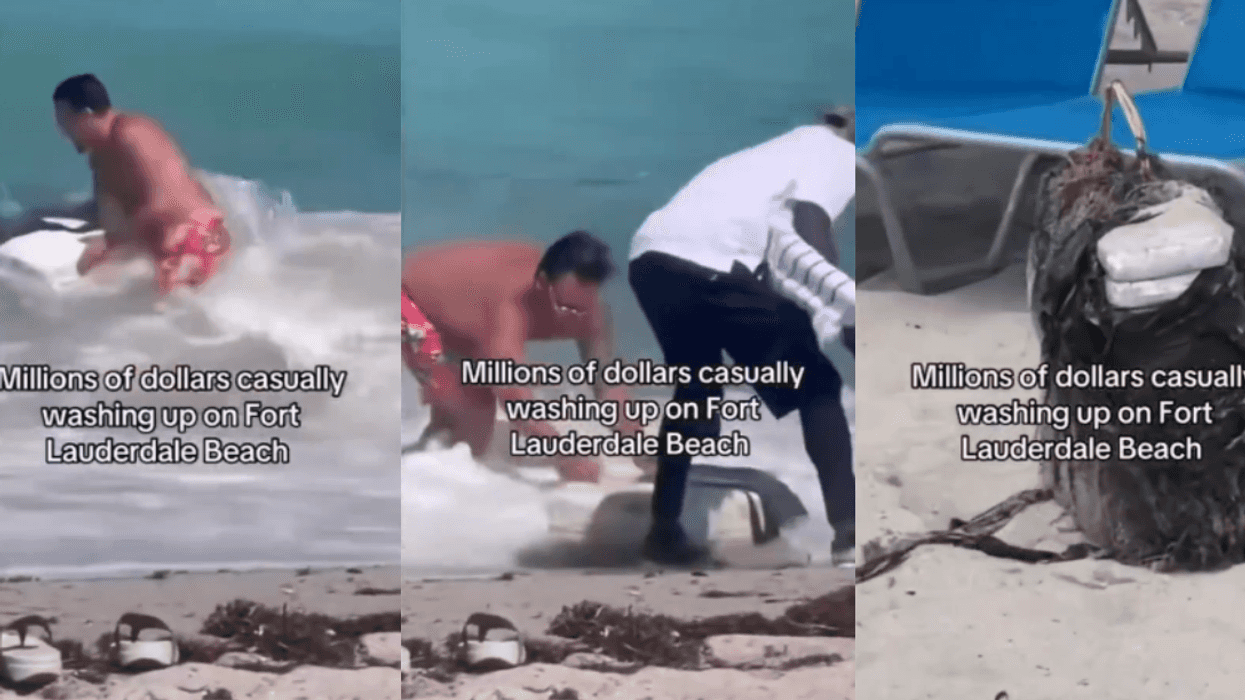
A video has gone viral, featuring a man from Florida pulling a large package out of the ocean on Fort Lauderdale Beach and immediately calling the police to turn it in.
As it turns out, the package included millions of dollars in cash and was suspected to also contain illegal drugs.
You can watch the video here:
Some were angry with the man for throwing a golden opportunity away.
Others were certain that the man had done the right thing by calling the police.
The video also became popular on the "Sips Tea" subReddit, where Redditors were divided over the logistics of the situation.
Some were confident that they would be leaving that beach with that package.
"That's a lot of cash. I would take my chances. Hide a couple of bundles if I need a lawyer." - dontgetittwisted_fr
"Life advice: If you find a wallet with a bit of cash and a person's ID in it, return it. If you find bundles of cash floating in the ocean, never speak a word about it to anyone." - RussianPravda
"I think if I were alone and unobserved, I would flick through it for trackers. Then stash it somewhere and observe."
"But any risk, I'm clearing out. I suspect if untracked dealers wouldn't go looking for this cash because it could essentially wash up anywhere, or more likely never wash up at all."
"Problem is, there are cameras everywhere on car parks, street intersections, people recording on the beach, etc." - bsnimunf
"Lay on the cash like it's a floatie and gently float your a** up and down the shoreline until the sun sets. Toss it over your shoulder in the darkness and head home. Whoever had that money has no idea where it wound up. The only people you're hiding from are bystanders with phones." - unitedgondwanaland
"If we take the title literally, it's plural millions, so at least two. A million dollars in hundreds weighs a hair over 22 pounds. So 44 pounds minimum. Yup, that's a lot of weight to lug back to the parking lot. I don't know what I would have done, but I think I'd have opened it up to have a peek before deciding on a course of action."
"Drugs? Call the cops, obviously. I wouldn't know the first thing about offloading an eight-ball of cocaine, much less kilograms. I would have a 100% chance of ending up murdered or imprisoned. No thanks."
"Cash? Well, that's a horse of a different color. Step 1: Try to attract the attention of whoever I'm with and try to work out a plan while we just bob in the surf. I've seen 'No Country for Old Men.'"
"Assuming we could get it off the beach without drawing attention, that sh*t is staying mobile until it's been searched. Accomplice drives while I sit in the back, popping bands. It's 100 bands per million, but it'll only take a few seconds, so not that much time."
"I'm reasonably confident that bricks of cash floating in the ocean, even if they have one or more trackers in them, are not being monitored closely enough to intercept a moving vehicle within the hour or less it would take to go through all of them."
"The real problem is storing the loose bills. It will take up a lot more space after popping the bands. Hopefully, there's enough space in whatever bags we brought to the beach. Not sure I would risk stopping to pick up some hefty bags. Maybe have an accomplice go buy a couple of large duffel bags while I wait in the water for nightfall?" - Pedantic_Pic1
Others were concerned about all it would take to even pull this off.
"Damn. Broad daylight, too many witnesses, someone even recording you. Not seeing a lot of ways to get away with this one." - jackrabbig323
"To be fair, you find a satchel with a gazillion dollars in it you're not doing anything other than looking left, then right, then getting the Hell outta there!"
"Buuuuuut, that said, the US really is vast enough that you could pull over to the side of the road in the middle of nowhere, and for the next four hours, no one would come along while you took a closer look at the bucks to check for a tracking device or some such."
"My first thought, in any case, certainly wouldn't be to drive straight home." - SirDanielFortesque98
"It would be really hard to leave with that package unnoticed, especially with every fricking human on earth video recording every single thing... If it were the 80's or even the 90's, you could have just taken that with you, no issues, and take a few packs and leave the rest... But oh well, bless the tech revolution..." - freddyr0
"Let’s be real here for all the people posting, 'why didn’t he keep it.' That was money just floating on a Florida beach; that’s 100% cartel money that fell out of a cigarette boat."
"Nah, I’m good. I’ve seen that movie too many times to know how that will go." - Guessmyname
"Well, he wasn't alone, and he was being filmed by a third person. Good chance he'd be reported by one of the onlookers if he took it for himself. Also, wrapped up like that, he might not have been able to see it was cash and not drugs." - TwillAffirmer
Though it might be tempting to take a package like this, especially in today's economy, it simply isn't legal to do that, and it would be harder than ever for someone to pull this off since there always seems to be someone with a camera at the ready.

You know what they say: you can't eat everyone's cooking. As it turns out, you can't eat the food delivered by every delivery driver, either!
The internet was left collectively grossed out when camera footage went viral that featured a DoorDash delivery driver who had dropped a smoothie on the hallway floor just feet away from his destination.
Rather than take accountability for his mistake and telling the customer what happened, he instead stooped down on the ground and scooped as much of the spilled smoothie back into the cup as he could.
Based on the camera footage, the cup was nearly full again when he was done, though long, bright yellow streaks were left on the hallway floor where he had tried to cover up his fumble.
The driver then turned the hallway corner and set the food down in front of the apartment he nearly reached before the spill. He included the "refilled" drink—with the lid placed back on top—as if nothing had happened and left the scene.
You can watch the video here:
X users were disgusted by the camera footage.
Truth be told, there are a lot of people in the world who do not care that much about things that do not belong to them, whether it's personal possessions, cars, or food. If it belongs to someone else, they're pretty careless and apathetic about it.
But when it comes to food, attitudes really shouldn't stoop this low. This was an incredibly gross thing to do, because that smoothie that someone will drink had been on the floor where countless people had walked with their dirty shoes on.
It might have been one thing if the delivery driver was trying to be kind and clean up as much of the mess as he could to save a cleaning employee's time later on, followed immediately by telling the customer what happened and discussing what needed to happen next to fix this issue.
But the fact that he left it along with the rest of the food, with the lid placed back on top as if nothing had happened, obviously meant that he was ready to put the hallway floor smoothie behind him.