
Latest Stories
Start your day right!
Latest News
Don’t Miss Out
More from
Elon Musk Ripped After Accusing South Africa Of Denying Starlink License Due To Anti-White 'Racism'
Apartheid—the word for "apartness" in Afrikaans—was a legalized system that instituted racial segregation and discrimination in South Africa enacted by the National Party government from 1948 to 1994.
The party enforced a system of White minority rule by stripping "colored"—anyone non-White, but not Black—and Black South Africans of their rights based on their skin color and ethnicity.
At the bottom of the social hierarchy were the population majority of Indigenous Black South Africans who were stripped of their citizenship, land, and civil rights while entrenched at the top were the people descended primarily from 17th-century Dutch, German, and French Huguenot White colonizers who labeled themselves Afrikaners.
This system of White supremacy resulted in oppression and violence for the lower classes and privilege for the ruling class before finally ending in 1994. Billionaire Elon Musk was born and raised in this environment of racial segregation and confiscated wealth and resources; he left in 1989, just before turning 18, to avoid mandatory military conscription.
Such a background of enforced White supremacy and inherited wealth is likely why Musk exemplifies the adage, "for those who've only known privilege, others gaining equality can feel like oppression."
Musk often decries diversity, equity, and inclusion (DEI)—which he, like many Americans, defines as anyone non-White, female, and/or LGBTQ+ existing in spaces that were once reserved for White, heteronormative men—as racism aimed at White men like himself.
Musk whines about anti-White racism a lot in a country where 46 of 47 Presidents were White men and it took over 200 years for an Indigenous woman to be a member of Congress.
But Musk clearly misses the days when things were handed to him without question because of his wealth and Whiteness.
His latest claim of victimhood is aimed at his home nation of South Africa over their failure to give him what he wants. Musk was seeking a license for Starlink, a satellite-based internet service operated by Musk’s SpaceX.
On Sunday in a post on the social media platform he owns, X, Musk wrote:
"South Africa won’t allow Starlink to be licensed, even though I was BORN THERE, simply because I am not Black!"
"We were offered many times the opportunity to bribe our way to a license by pretending that a Black guy runs Starlink SA, but I have refused to do so on principle."
"Racism should not be rewarded no matter to which race it is applied."
"Shame on the racist politicians in South Africa. They should be shown no respect whatsoever anywhere in the world and shunned for being unashamedly RACISTS!"
To legitimize his claim, Musk included a quote post from DogeDesigner, a Musk propaganda account on X.
DogeDesigner is a notable "Musk-associated" account that posts pro-Musk content and gives Musk the chance to promote himself from a third party account while his primary account interacts with it, similar to MAGA Republican President Donald Trump's use of his John Barron alter-ego. Musk often replies to, likes, or reposts DogeDesigner content to boost his ego and image.
According to TimesLIVE, a prominent South African online news platform based in Johannesburg, Musk refused to comply with South African law regarding foreign-based companies, unlike hundreds of other American-based companies working in South Africa.
Apartheid left millions of Black Indigenous South Africans living in tin shacks in massive ghettos after the White government stole their homes and land. In order to recover without confiscating everything stolen from them, the country enacted laws requiring investment by foreign companies in this underserved population.
Under Independent Communications Authority of South Africa (ICASA) regulations, foreign telecommunications licensees must allocate 30% equity to historically disadvantaged groups as part of the Broad-Based Black Economic Empowerment (B-BBEE) policy.
Musk insists that law shouldn't apply to him, even though he doesn't pay taxes in South Africa, nor does his U.S.-based business. Starlink has repeatedly been denied a license for failing to comply with these equity requirements.
South African officials pointed out the regulations apply equally to all companies, regardless of race or ethnicity of the ownership, and are not directed at any specific individual. They maintain they are the best option for recovery after almost 50 years of racial discrimination without impacting the lives of current White South Africans.
South African presidency spokesperson Vincent Magwenya told Musk if he didn't want to be subject to South Africa's laws, again, he could move on like he did in 1989 by moving to Canada to avoid the White South African mandatory military service law.
Magwenya posted on X:
"There are currently 193 member states in the United Nations. Surely, there's good money to be made out of 192 markets. It's okay to move on!"
Musk’s minions on X tried to hit back at Magwenya, but were quickly schooled on what was actually happening.
When Department of International Relations spokesperson Clayson Monyela pointed out other American ccompanies had no issues following the laws of countries they do business in, Musk responded like the petulant child Monyela implied he was.
Monyela posted a clip of a pouting child captioned:
"[Elon Musk] watching the more than 600 USA companies investing more in [South Africa], complying with [South African] laws & thriving. Zero drama!!"
Musk responded:
"Stop being such a f*cking racist, you a**hole"
People were quick to call out Musk’s latest claim of oppression on the platform he bought for $44 billion.


SpaceX, along with its subsidiary Starlink, is one of the only companies Musk didn't buy controlling interest in after others created the technology.
In 2002, Musk decided he wanted rockets, but after failing to buy any from Russia, he founded SpaceX. The team of scientists and engineers he hired developed SpaceX's rocket and satellite program that created Starlink.
Musk has used his money to sell SpaceX and Starlink to multiple governments as the answer to their space travel and communication needs.
According to the Washington Post, as of 2025, Musk enjoyed at least $38 billion in U.S. government funding which included contracts, subsidies, and grants.
Most Read
Turns Out Trump Had Another Alternate Name For The Gulf Of Mexico—And Yep, That Tracks
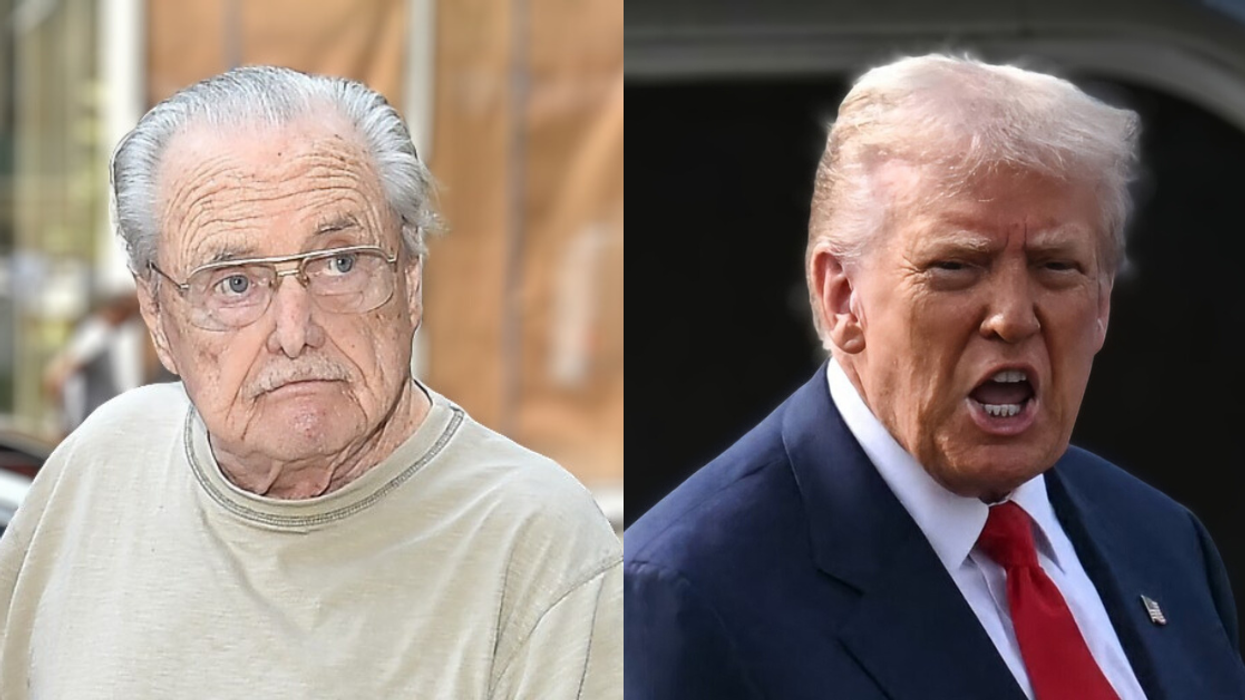
President Donald Trump had people rolling their eyes after he told Fox News host Maria Bartiromo that he had a different rebrand in mind for the Gulf of Mexico but that he ultimately "decided not to do it."
On the first day of his second term in office, Trump signed an executive order changing the "Gulf of Mexico" to the "Gulf of America." The order also reversed an Obama-era decision and changed the name of the Alaskan mountain "Denali" back to "Mount McKinley."
Typically, changing a geographic name involves a lengthy process, taking at least six months as the U.S. Board on Geographic Names consults with states, tribes, mapmakers, and other stakeholders. However, Trump’s order called for the change to take effect within just 30 days. This received significant pushback from news organizations and politicians alike.
Trump revealed the following:
"I was thinking about calling it the Gulf of Trump but I decided not to do it. I think that one maybe wouldn't have worked out. I'm not so sure, you'll have to tell me."
"But I was thinking about it's gonna be called the Gulf of Trump, but I thought, 'You know, that's not gonna play too well.'"
Trump insisted "You [Bartiromo] know I'm kidding," before Bartiromo smiled and said she believes Trump was "being facetious."
You can hear what Trump said in the video below.
Considering how much Trump loves to slap his name on things—like his effort to rebrand the Kennedy Center and the move to name a new class of warship after himself—people were not surprised by this narcissistic display.
News organizations like The Associated Press have maintained their usage of "Gulf of Mexico," citing its longstanding global recognition and consistency. The AP emphasized its role as a global news agency that delivers information to an international audience, requiring it to use widely recognized geographic names.
Similarly, Encyclopedia Britannica said it would not comply with Trump's executive order because "the Gulf of Mexico is an international body of water, and the U.S.’s authority to rename it is ambiguous."
The company, via its Twitter account, stressed that the body of water "has been called the ‘Gulf of Mexico’ for more than 425 years. But it’s important to note the distinction between international and domestic areas."
People Are Convinced JD Vance Is Cursed Following Hungary's Election Result—And They've Got A Point
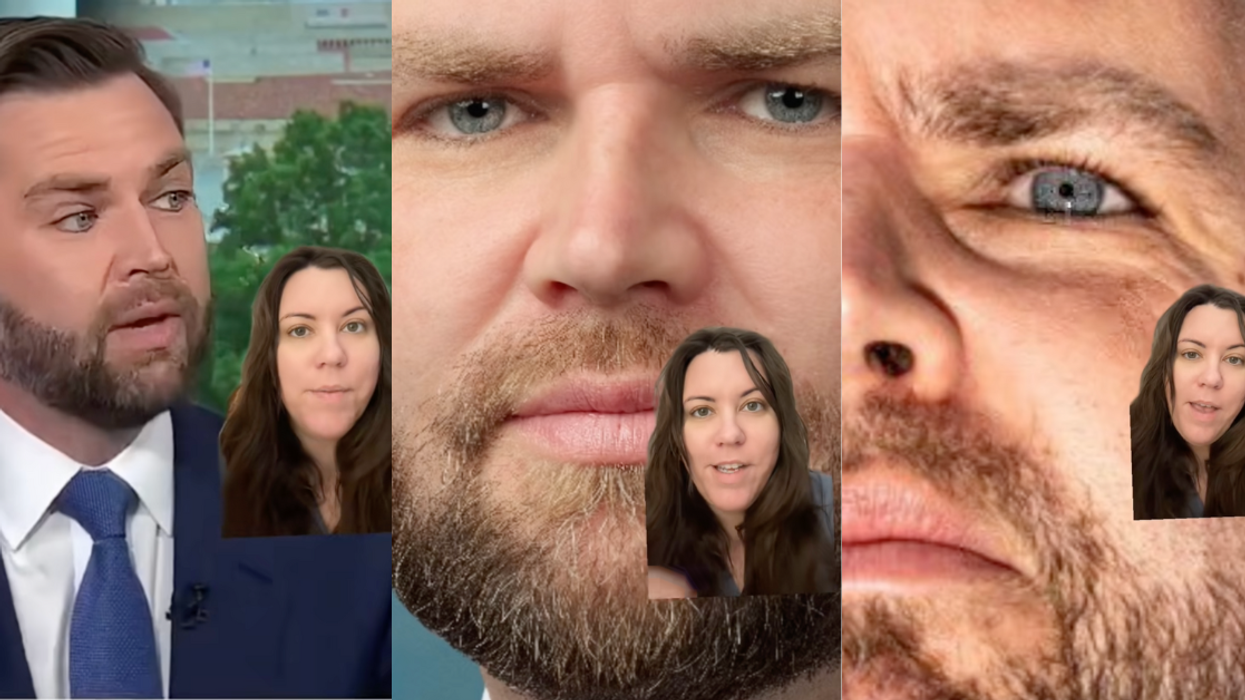
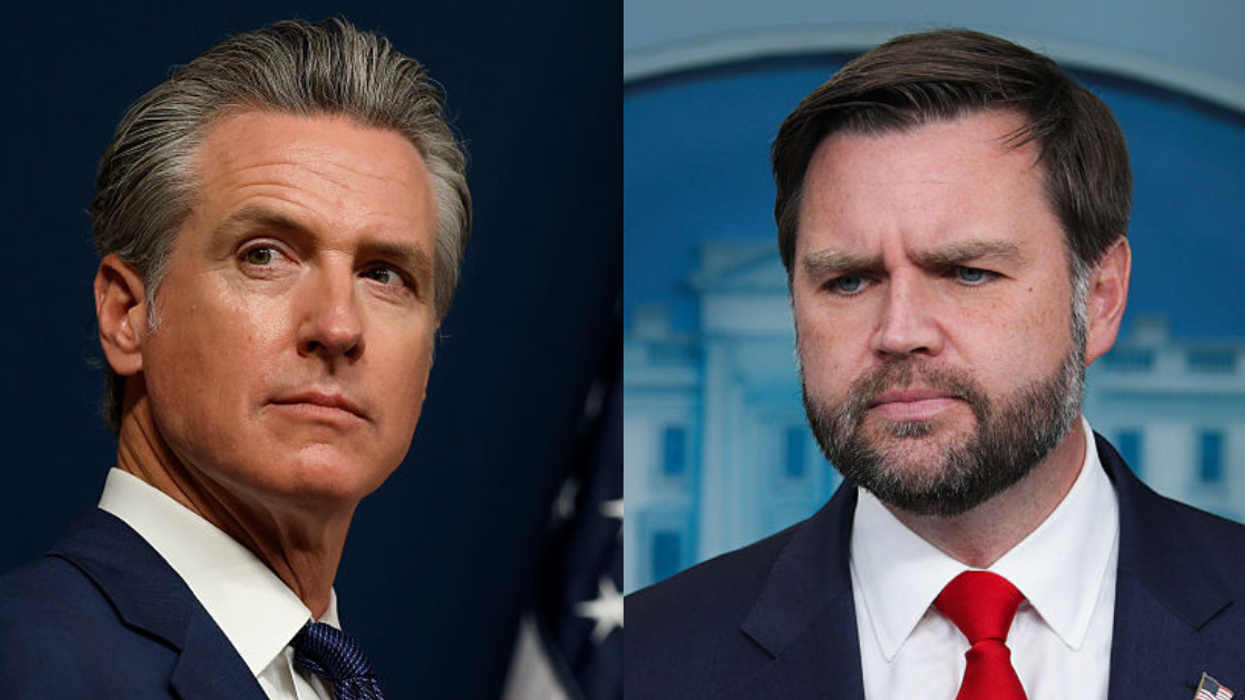
Social media users are convinced Vice President JD Vance is cursed after Hungarian voters turned out to end Prime Minister Viktor Orban's rule in its latest election.
Orbán's 16 years in power are over after losing to Péter Magyar of the center-right Tisza party, which is on course for 138 seats, with Orbán's Fidesz on 55. Orbán's loss came mere days after Vance traveled to Budapest and voiced the Trump administration’s support for Orbán ahead of the vote.
Orbán's loss prompted many to bring up the possibility that a curse follows Vance wherever he goes.
Consider the fact that Vance was among the last to see the late Pope Francis before the Pope died the following day. Vance told the Pope, who was wheelchair-bound, that "it's good to see you in better health" mere hours before the Vatican announced the Pope had passed.
The developments for Hungary are another professional blow to Vance, who recently, after more than 16 hours of closed-door talks in Pakistan, emerged visibly discouraged, signaling that negotiations between the United States and Iran had failed to produce any agreement.
Vance acknowledged “shortcomings” and “bad news,” admitting the talks had not made meaningful progress. He offered few specifics, took only a handful of questions, and quickly departed.
Embarrassingly for him, the New York Times reported that he "did not address whether the two-week cease-fire with Iran would hold or what would happen to the Strait of Hormuz or if President Trump would now follow through with his threat to wipe Iranian civilization off the map."
On a lighter note, there was also the time Vance was mocked following his fumble on live television after he attempted to hoist the CFP National Championship Trophy into the air, only for it to break apart in his hands.
The golden football-shaped top promptly popped off the black base. Vance fumbled both parts, with running back TreVeyon Henderson swooping in to catch the top mid-air. The base wasn’t so lucky—it hit the ground and rolled away as Vance scrambled to recover it.
And how could we forget the time Vance's endorsement actually cost his half-brother, Cory Bowman, a bid for mayor of Cincinnati?
Vance called Bowman "a good guy with a heart for serving his community" but his words didn't do a thing to move the needle—Bowman lost the election to Aftab Pureval, a Democrat who won reelection with more than 78% of the vote.
People are starting to wonder if Vance is just a bad luck charm.
It's just never a good day to be Vance. We hope he keeps it up.
Christian Dad Slammed After Suing His Gay Son For 'Breach Of Contract' After He Dropped Out Of Conversion Therapy
A father’s attempt to legally punish his son for rejecting conversion therapy is going viral and reigniting anger over the harm these programs continue to cause.
It all went down when a Christian dad took his own son to TV court for $6,000, claiming his gay son owed him the money after failing to complete a summer conversion therapy program.
The dispute played out on a recirculated episode of Equal Justice with Judge Eboni K. Williams. Gregory Talbert told the court he discovered his son, Michael Talbert, kissing another boy the previous year, when Michael was 17. Text messages shown in court revealed Gregory threatened to kick his minor son out if he “didn’t stop being gay.”
In one message shown during the episode, the father made his position unmistakably clear:
“Michael, I'm so disappointed in your behavior. You cannot kiss another man, especially in my house. If you want to live a homosexual lifestyle, you'll need to move out.”
Faced with that ultimatum, Michael told his father he would “do whatever you need me to do.” Gregory’s response: “Let’s fix this.”
Days later, Michael found a religious conversion therapy program, requiring attendance every weekday from 8 a.m. to 5 p.m. for three months, aimed at changing his sexual orientation.
Michael told the court he felt he had no real choice, saying the threat of being forced out, combined with his family’s conservative, church-centered environment, left him fearing he could “end up on the streets.”
Describing the pressure he faced from his father:
“You were going to kick me out because of who I am? You were valuing the money you had spent into this program over your relationship with your son. That makes no sense. Who could do that to their kid?”
In messages to his father shown to the court, Michael admitted he was “scared to go,” but said he didn’t want “to lose you and mom.”
Gregory, however, framed the situation differently in texts:
“I like the director's philosophy about how no one is born homosexual. It's behavioral, and it can be fixed. Are you sure you want to do what it takes? The program is $6000!”
Michael ultimately dropped out, and that’s when his father filed suit, arguing “breach of contract.”
In court, Gregory downplayed his earlier threats as a “bluff.” Michael disagreed, saying he took them seriously and describing the program itself as deeply harmful.
Michael detailed his traumatic experience in the program:
“The director ... who my dad chalked up to be a great guy, said I was cursed, said that I was going to hell and called all of us there monsters, that we were unworthy and that we needed the program to fix ourselves.”
He also reiterated that he left after being told he was “cursed” and a “monster” for being gay.
But Gregory remained focused on the money, insisting his son “needed to finish what you started.” Judge Eboni K. Williams, noting the irony, pointed out that Michael was effectively being told he couldn’t leave because “dear dad here spent $6,000 of his hard-earned money.”
Michael’s testimony prompted an emotional response from Judge Williams, who stood up and addressed him directly, taking his hands.
Offering her support and reassurance to Michael:
“Young man, you are not cursed. 'You are as loved and as worthy, Michael, as your father, your mother, and everyone else who gets the privilege to reside on this earth, young man.”
You can view a clip from the episode here:
😳 A father is suing his own son after he came out as gay — demanding to be repaid for every expense from raising him, calling it a “worthless investment.” pic.twitter.com/pxNlmUS4cV
— PopPulse (@PoppPulse) April 8, 2026
As the episode closed, Gregory made one final appeal, telling his son he needed to “make better choices.”
Michael’s response to his father underscored the deeper divide:
“Dad, I get that someone of your generation might not understand what it's like to be queer or on the LGBTQ+ spectrum. But until you learn to accept me and love me for who I am, this relationship is not gonna work.”
Readers quickly rallied around Michael, expressing heartbreak over his experience and outrage at the circumstances that led to it.
You can view the comments here:
Judge Eboni K. Williams ultimately dismissed the case, leaving little ambiguity about where she stood—not just on the lawsuit, but on the broader harm at the center of it.
Delivering her ruling:
“I don't care what your daddy says. I don't care what some stupid conversion therapy says, which is nothing but a bunch of hoopla and a scam and a money grab for young, vulnerable men like yourself. I see you, you are valuable, and Michael, you are perfect. You are perfect in the eyes of God.”
The full episode can be seen here:
😬Here is the full video of the father suing his son for being gay and calling him a “worthless investment💔.”in court The judge wasn’t having it… and the case was thrown out. https://t.co/oXaucPG7vv pic.twitter.com/6rFfz7GpIT
— PopPulse (@PoppPulse) April 8, 2026
In a case rooted in a practice widely condemned by major medical and mental health organizations, Williams’ decision cut through the controversy entirely, rejecting the idea that a young person could owe anything for refusing to endure it.
The ruling comes after a March 31 U.S. Supreme Court 8–1 ruling against a Colorado law banning licensed professionals from providing conversion therapy to minors. Justice Ketanji Brown Jackson issued the lone dissent, warning the decision “opens a dangerous can of worms” by limiting states’ ability to regulate harmful medical practices.
For LGBTQ advocates, it's hard to ignore that while courts debate the legality of these programs, stories like Michael’s highlight the human cost and trauma behind them.
Artemis II Astronaut Christina Koch Gives Epic Reminder About 'What Makes A Crew' In Powerful Speech After Returning To Earth
After 10 days in space, a trip around the moon, and a new record set for miles traveled from Earth, the Artemis II has returned to Earth with its crew and shuttle intact and in good health.
While out there in the great beyond, mission specialist Christina Koch learned a few key lessons about being human and what it means to be a part of an effective crew.
Koch traveled alongside mission specialist Jeremy Hansen, pilot Victor Glover, and commander Reid Wiseman on the first moon mission in the past five decades, traveling the farthest since Apollo 13.
Making their first public appearance since landing back on Earth, the Artemis II crew attended an event in Houston, Texas, where Koch explained what she thinks a solid crew is and why she felt the Artemis II mission managed to be so successful.
Koch reflected:
"A crew is a group that is in it all the time, no matter what."
"That is stroking together every minute with the same purpose."
"That is willing to sacrifice silently for each other."
"That gives grace, that holds accountability."
"A crew has the same cares and the same needs, and a crew is inescapably, beautifully, dutifully linked."
"When we saw tiny Earth, people asked our crew what impressions we had."
"And honestly, what struck me wasn't necessarily just Earth; it was all the blackness around it."
Reflecting on the duration of the trip, Koch realized that the most important moments were the really human ones, and not just the heartfelt moments aboard the Artemis II, like when they saw Earth peeking around the moon.
Rather, it was the nurse who attended to her and asked her for a hug after her return from the trip, and it was her mission manager, Sean Duval, who first urged her to go for launch. The moments of human connection were what stood out to her the most.
Koch completed her reflection, stating:
"I know I haven't learned everything that this journey has yet to teach me, but there's one new thing I know, and that is, Planet Earth, you are a crew."
You can watch the moment here:
- YouTubeyoutu.be
Viewers were touched by Koch's words.
It's easy to forget that the most important lessons often come during the journey, rather than at the destination.
It sounds like that's the kind of revelation that Christina Koch had on this trip. Rather than finding herself out in space, she recognized her connection with people and the power that lies in those you can count on.