
Everywhere you turn these days, it seems like more supervillains are being sprung from Gotham jail.
In these unsettled times, where hate speech, misinformation, doxxing, and grift are proliferating online, it seems a particularly bad time to open the prison gates and let the mayhem ensue unchecked.
Yet this appears to be where we are headed, not only in our online platforms but also in our Congress.
Today, let’s take a helicopter ride over the current landscape of platforms and free speech and note some developments to keep our eyes on.
Let’s also assess whether the “marketplace of ideas” is functioning as a healthy exchange or simply breeding new and lethal dangers.
I’ll conclude with a stab at what “free speech” really appears to boil down to in 2023.
Orange is the new block.
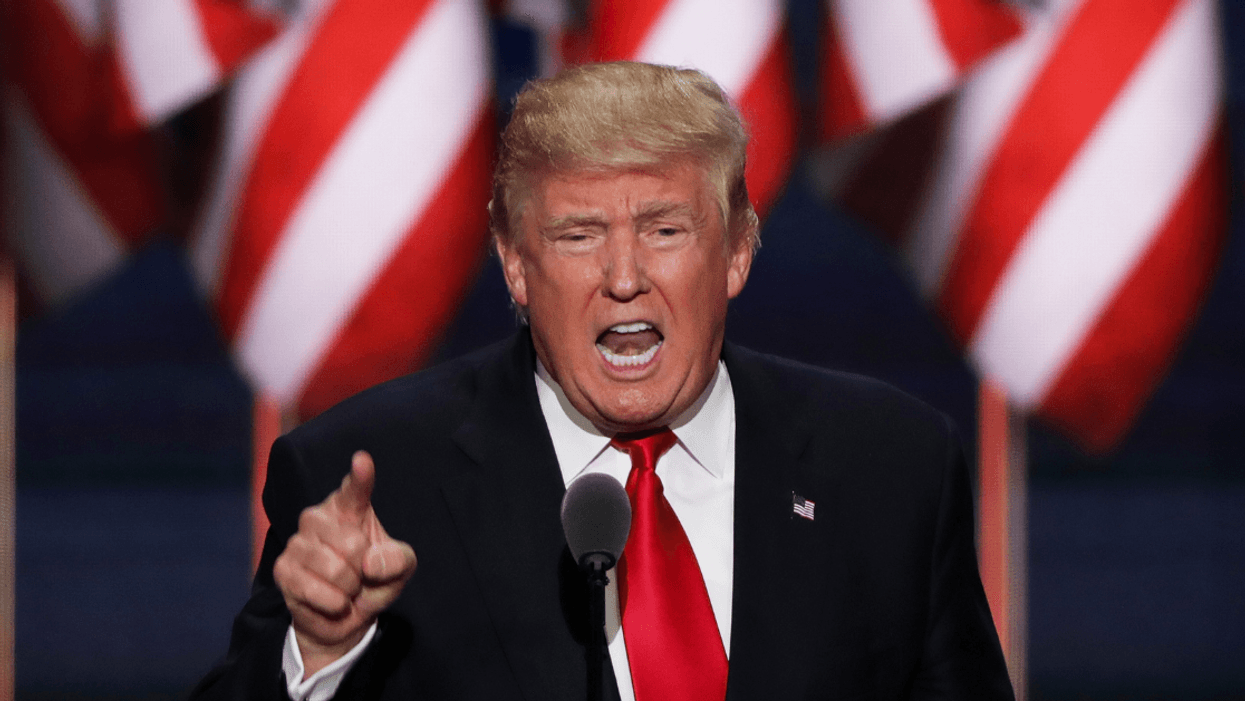
In a much anticipated decision, Meta—the parent company of Facebook and Instagram—lifted its ban on former President Trump’s accounts on those platforms, saying he would be permitted back later this month.
This followed an earlier announcement by Twitter’s new billionaire owner, Elon Musk, restoring Trump’s account there.
Trump, who now owns a competitor social media platform with the ironic name of “Truth Social,” has not yet tweeted. But he is reportedly preparing to relaunch with a series of tweets announcing his return to his 81 million followers.
Meta’s reasoning, like Twitter’s, isn’t all that important.
Its Oversight Board claims the original suspension was due to the very real danger Trump posed in the wake of January 6th, but now the danger has subsided considerably, it’s all good, here you go, have at it again.
Taking in the bigger picture, with the Republicans in charge of the House, including threatened hearings over the power of big tech and with Trump already an announced candidate for the 2024 presidential election, Meta likely simply succumbed to the on-the-ground realities: Like it or not, Trump is a figure of national significance to our politics.
Keeping him banned from the biggest social media platform in the world would put Meta in the position of censoring the right and its chief political voice.
Those who once argued, as a private company, Meta had an unassailable right to ban Trump in the first place are left without a strong argument for why it can’t reverse course today. The same goes for Twitter, which had once issued a “permanent” ban that wound up not so permanent once there was a new owner.
This highlights the problem of giving companies full free speech rights as if they were people: When they act in ways we don’t like, we have no legal leg to stand on.
Those who don’t want to see Trump’s tweets and posts can block him, of course, but that’s not really the problem.
We know Trump was a prime vector for election conspiracies and misinformation, and that he even used social media to gather his followers to launch an attack upon the Capitol on January 6, 2021.
The platforms claim they will be more proactive in clamping down on behavior that threatens this kind of violence, but few believe they will be effective.
It will be up to online citizens and journalists to raise the alarm and for law enforcement to take such threats seriously, now that we all know a little bit better.
One day you’re in, the next you’re out.
The de- and re-platforming of Trump follows other sagas of right-wing celebrity trolls whose access to online audiences has created turmoil and head-spinning reversals, both of policy and of fortunes.
Anti-Semitic rapper Ye was let back on to Twitter only to get resuspended shortly thereafter for tweeting out a swastika. White nationalist Nick Fuentes suffered a similar fate, with his account restored by Musk on Tuesday of this week then suspended for policy violations the very next day.
And we all know what happened to infamous misogynist and accused rapist and sex trafficker Andrew Tate when he went back on Twitter with some personal videos, inadvertently cluing in Romanian authorities on his whereabouts and enabling them to arrest him in Bucharest.
A similar saga is playing out in the halls of Congress, with right wing GOP chaos agents Georgia Representative Marjorie Taylor Greene and Arizona Representative Paul Gosar, who were previously removed from their committee assignments by a Democratic majority for threatening violence against other officials, now reappointed to plum positions.
Meanwhile, their Democratic political nemeses, including California Representatives Adam Schiff and Eric Swalwell and Minnesota Representative Ilhan Omar, are being removed from their committee assignments as part of the dark bargain Republican Speaker Kevin McCarthy struck with extremists, who pressed for the move as retaliation for the removals of Greene and Gosar in the last Congressional session.
But as Greene and Gosar themselves showed, the punishments meted out against them only made them political martyrs in the eyes of their supporters.
Schiff, Swalwell and Omar are similarly likely to receive far more press and attention for being targeted by McCarthy, and they seem to understand this.
Rep. Schiff tweeted:
"Kevin McCarthy just kicked me off the House Intelligence Committee."
"And here’s why: I fought him and Donald Trump when they tried to tear down our democracy."
"If he thinks this will stop me, he will soon find out differently."
...to which he then cleverly added a campaign donation link in the comments, prefacing, “This political retribution from Kevin McCarthy is only going to make me fight harder. Stand with me against Kevin McCarthy.”
Without fees they’ll freeze.
Accounts of yet another major deplatforming broke on Wednesday. Newsmax, the No. 4 cable news network in the country, which caters to a far-right audience, was cut off from most of its viewers by service provider DirecTV.
Ostensibly, the dispute was over whether Newsmax should start receiving “carriage fees” from DirecTV’s 13 million subscribers, rather than rely solely on advertising for its revenues.
Newsmax insisted upon such fees, but DirecTV refused, leading to an impasse and DirecTV taking the cable news network off its offerings line-up beginning Wednesday night.
That is a potentially deadly blow to Newsmax, if the fate of OANN, another extremist cable network, is any guide. In two back-to-back blows, DirecTV declined to re-up its distribution agreement with OANN in April 2022, and then Verizon Fios declined to renew its carriage fee deal with that company in July.
This led to the quick downfall of the network, which relied almost exclusively on these carriers for its audience. Like Newsmax, OANN had peddled many false conspiracies around the election, and both networks were being sued for defamation by the election machine companies including Dominion Voting Systems.
They also both spread vaccine misinformation while remaining staunch cheerleaders for ex-president Trump, especially after Fox News began to distance itself from him after the 2020 election.
With declining subscribers to its services, AT&T sold a controlling stake in DirecTV to the private-equity firm TPG Capital, whose management was less keen on keeping these right wing extremist networks in its offerings.
Seeking the help of its allies in Congress, Newsmax hosts on Wednesday urged their viewers to call Congressmembers and “demand they investigate AT&T and DirecTV for potential discrimination against conservative media.” This is unlikely, however, to sway TPG Capital’s management.
There’s simply too much power in the hands of too few.
The banning and unbanning of Trump, the tendency of the deplorables to get themselves rebanned quickly, the likely bouncebacks of officials banned from Congressional committees, and the deplatforming of OANN and Newsmax from DirecTV and other carriers might seem to imply that the system is trying to work out its kinks and is somehow ultimately self-correcting.
But what it really shows is something else entirely.
In each of these cases, the decision whether to silence or unleash speech was not made by some invisible hand of the market, but rather by the whims of a few rich and powerful men.
It was Mark Zuckerberg who made the call to ban Trump, and it is his rather impotent “oversight board” that is letting him back on. Elon Musk is deciding whether the likes of Ye and Fuentes are allowed on or kicked off his platform.
Speaker Kevin McCarthy, bound to do the bidding of the far right extremists, is the one exacting revenge on Congressional Committees. And a bunch of private equity guys are deciding whether the far right can still get its IV drip of extremism from networks like OANN and Newsmax.
This isn’t a marketplace of ideas, it’s an oligopoly.
The sooner we admit this and truly act to defend our system from the undue influence of this oligarchy, the sooner we can arrive at the heart of the matter: How should our society balance the right of free speech against the dangers of disinformation and violence?
Wherever you fall on this question, those on the right and left might at least agree on one thing: that such decisions shouldn’t be left in the hands of a few people who are largely unaccountable to the public.

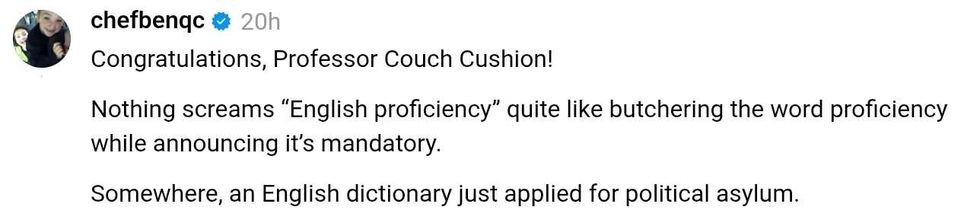 @chefbenqc/Threads
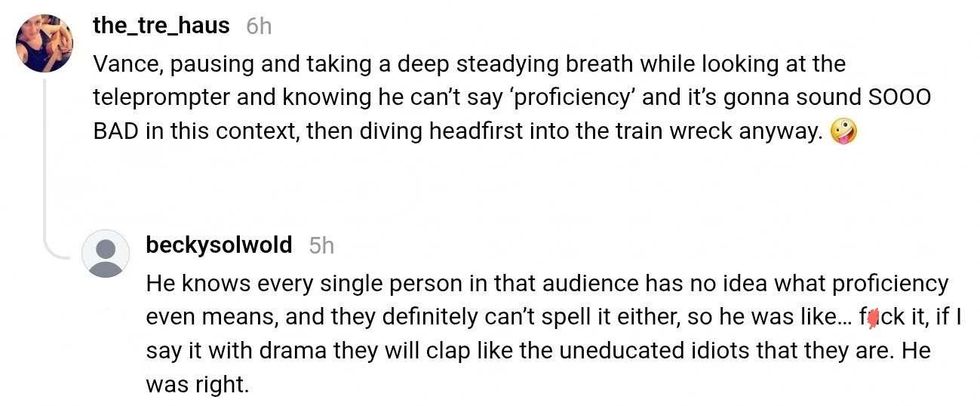 @the_tre_haus; beckysolwold/Threads
 Ron Jarvis/Facebook
 @kasialove/Bluesky
 Barbara Boetsch/Facebook
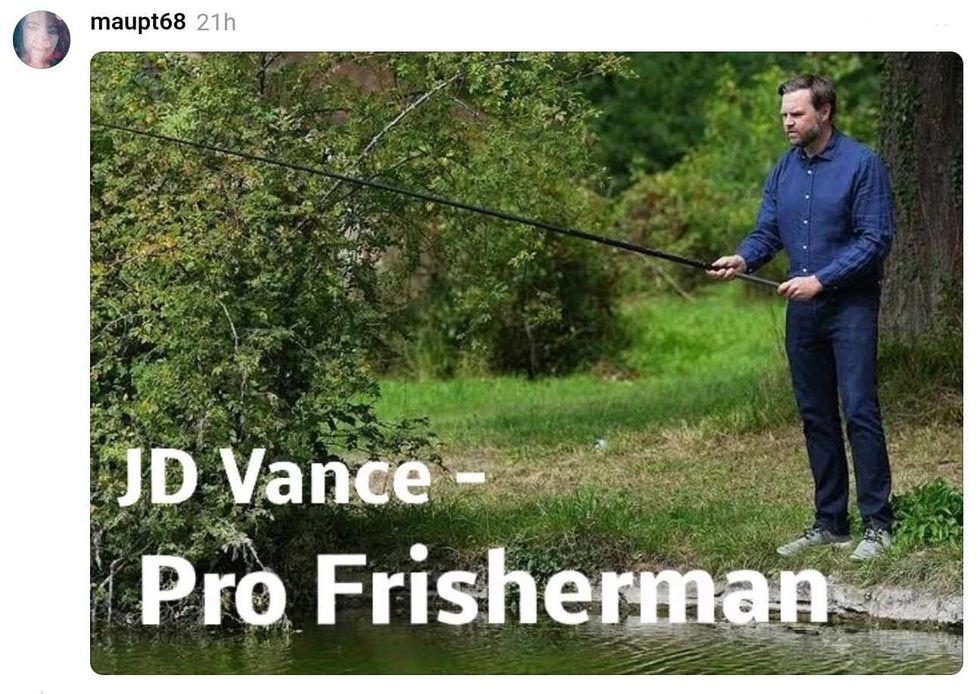 @maupt68/Threads
 @leftofliberal2025/Threads
 @pattistraus/Threads
 @sugarpillseattle/Threads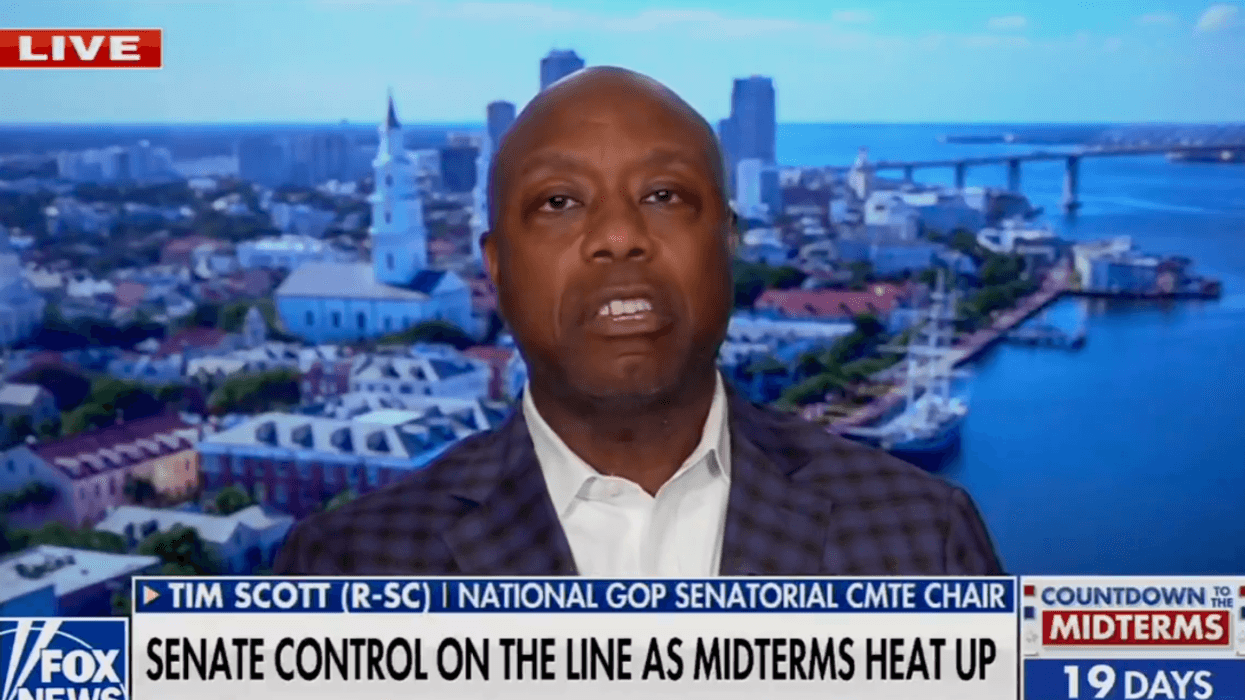
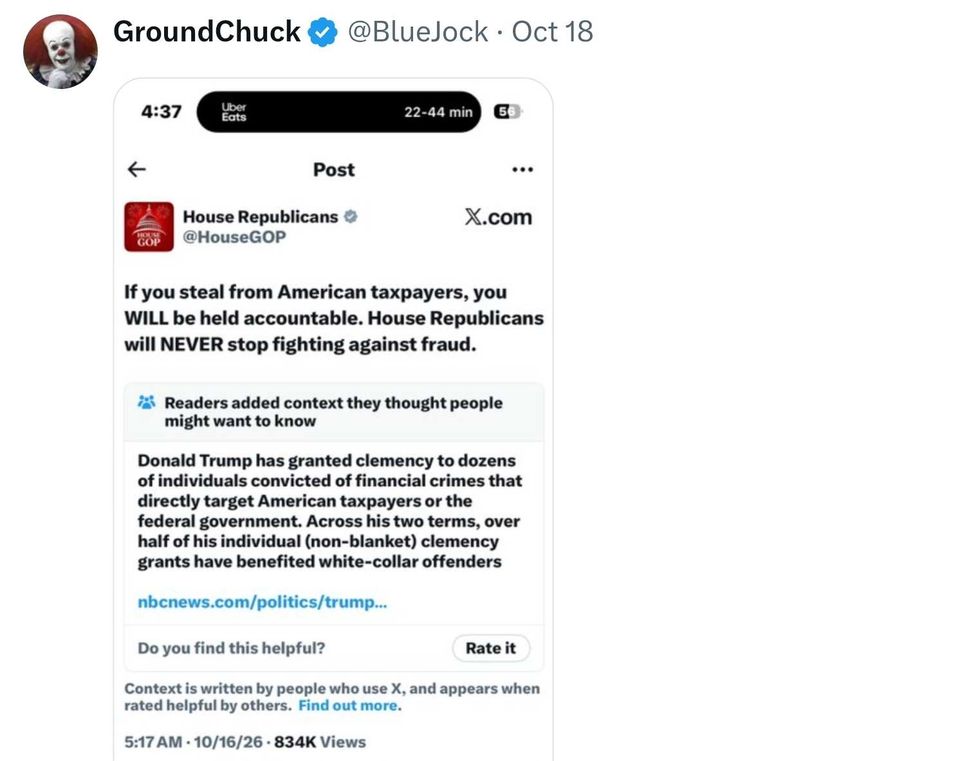 @BlueJock/X
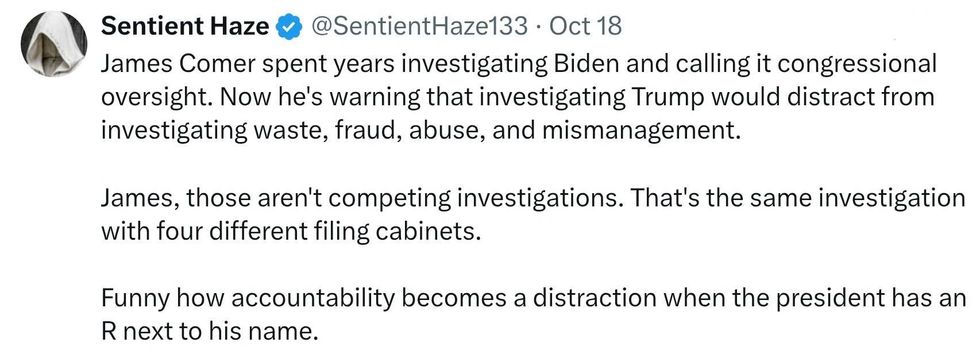 @SentientHaze133/X
 @DivinyPete/X
 @SeanCasten/X
 @IAmJoeTrudeau/X
 @sensiblemiddle/X