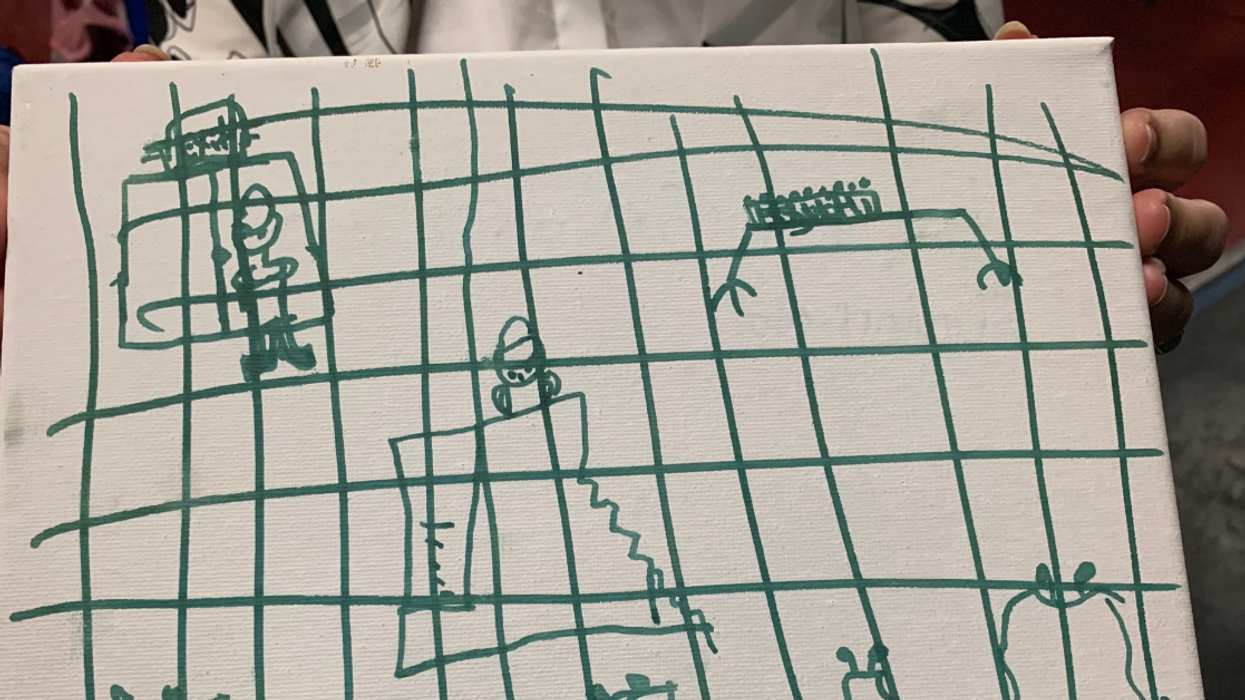
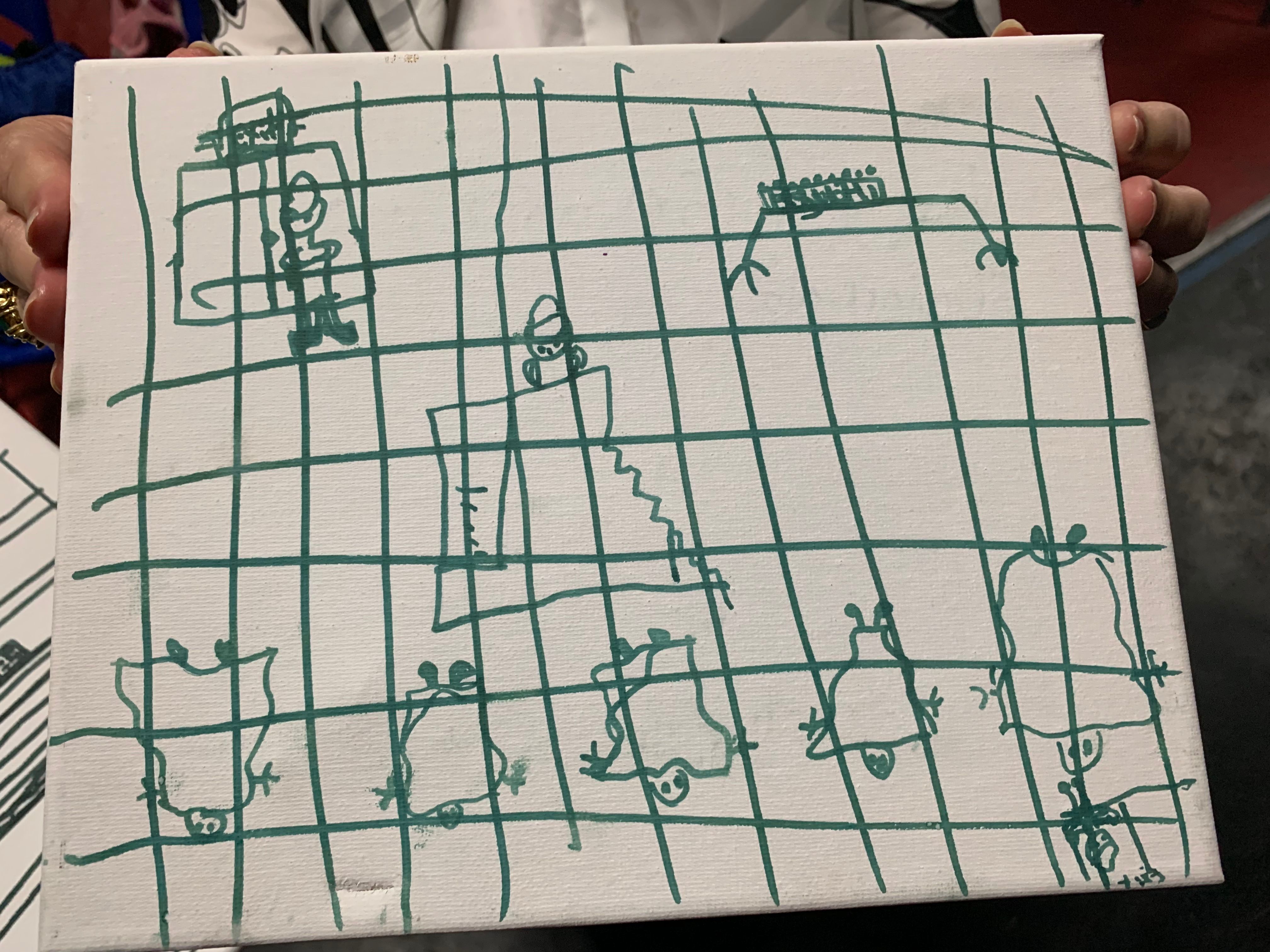
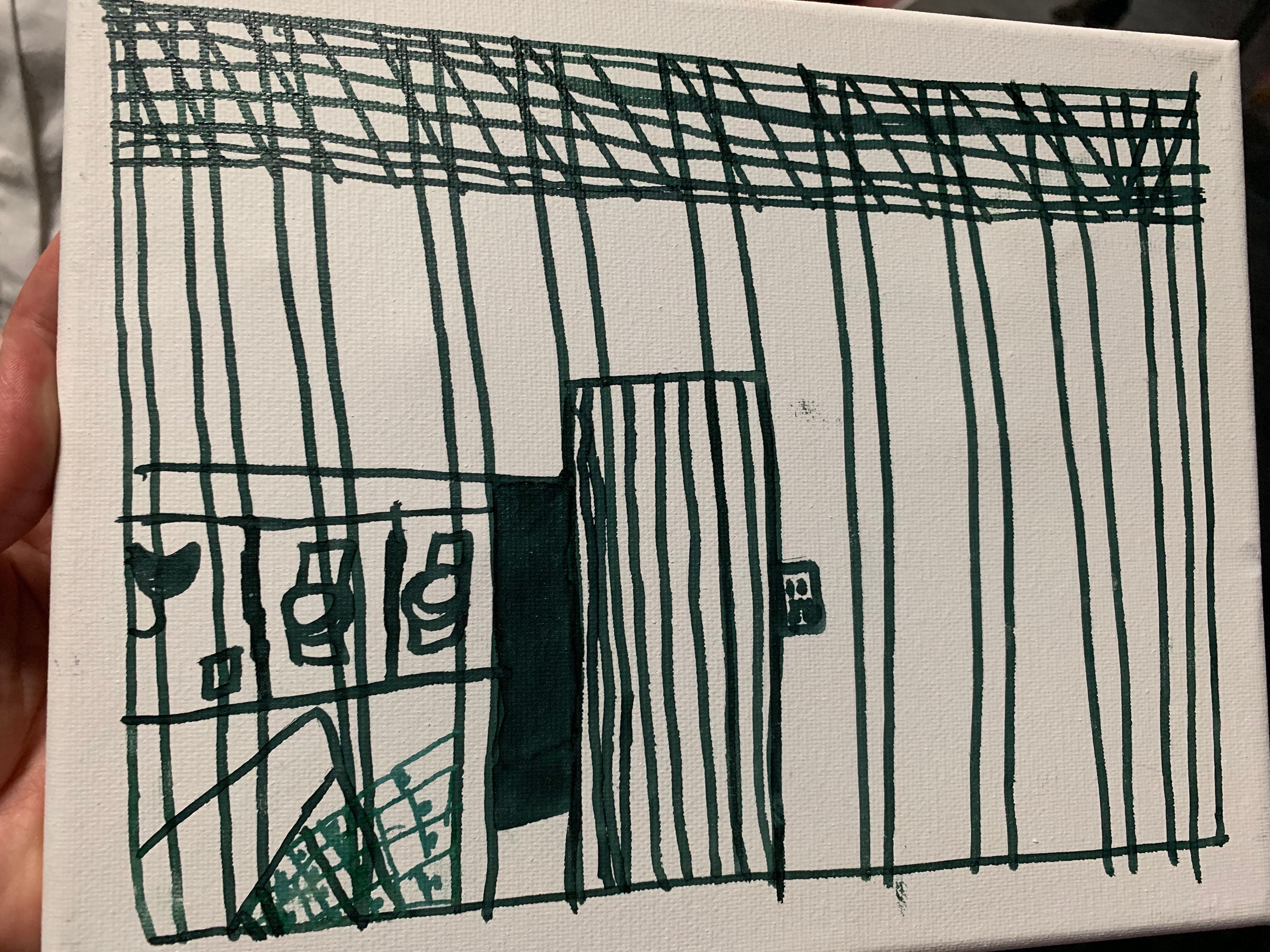
Pictures drawn by children recently detained by the United States border force depict their “inhumane" treatment, with figures of people in cages. The pictures were drawn by children following their release by U.S. Customs and Border Protection (CBP).
Detention centers are the first places children go after they are picked up by customs officials.
“The cages they are kept in are metal cells. They are kept cold, there is not enough food or water, and they are crowded. There are open toilets and the lights are kept on 24/7," Immediate past president of the American Academy of Pediatrics (AAP) Colleen Kraft said.
While they are waiting to be processed in the system the children are separated from their parents. And, after they are released the children are sent to the Catholic Charities Humanitarian Respite Centre in McAllen, Texas, to be reunited with their families.
The respite center is where many families get their first shower, clean clothes and a hot meal after arriving in the US.
During their time there, the children were asked to draw canvases depicting their time spent in CBP custody.
These pictures were drawn by a 10-year-old boy from Guatemala and an 11-year-old from Guatemala. The third picture was drawn by another 10-year-old, of unknown origin.
They were held in the detention center for five days to a week. Kraft said the trauma of these conditions put the children at risk of developing PTSD and many children leave the centers with chicken pox, the flu, and dehydration.
“We have seen children die because some of these conditions are so awful," she said. “It is a sad sign of this administration's policies."
Incoming AAP president Dr Sara Goza visited the detention centers and said she did not meet any pediatricians onsite.
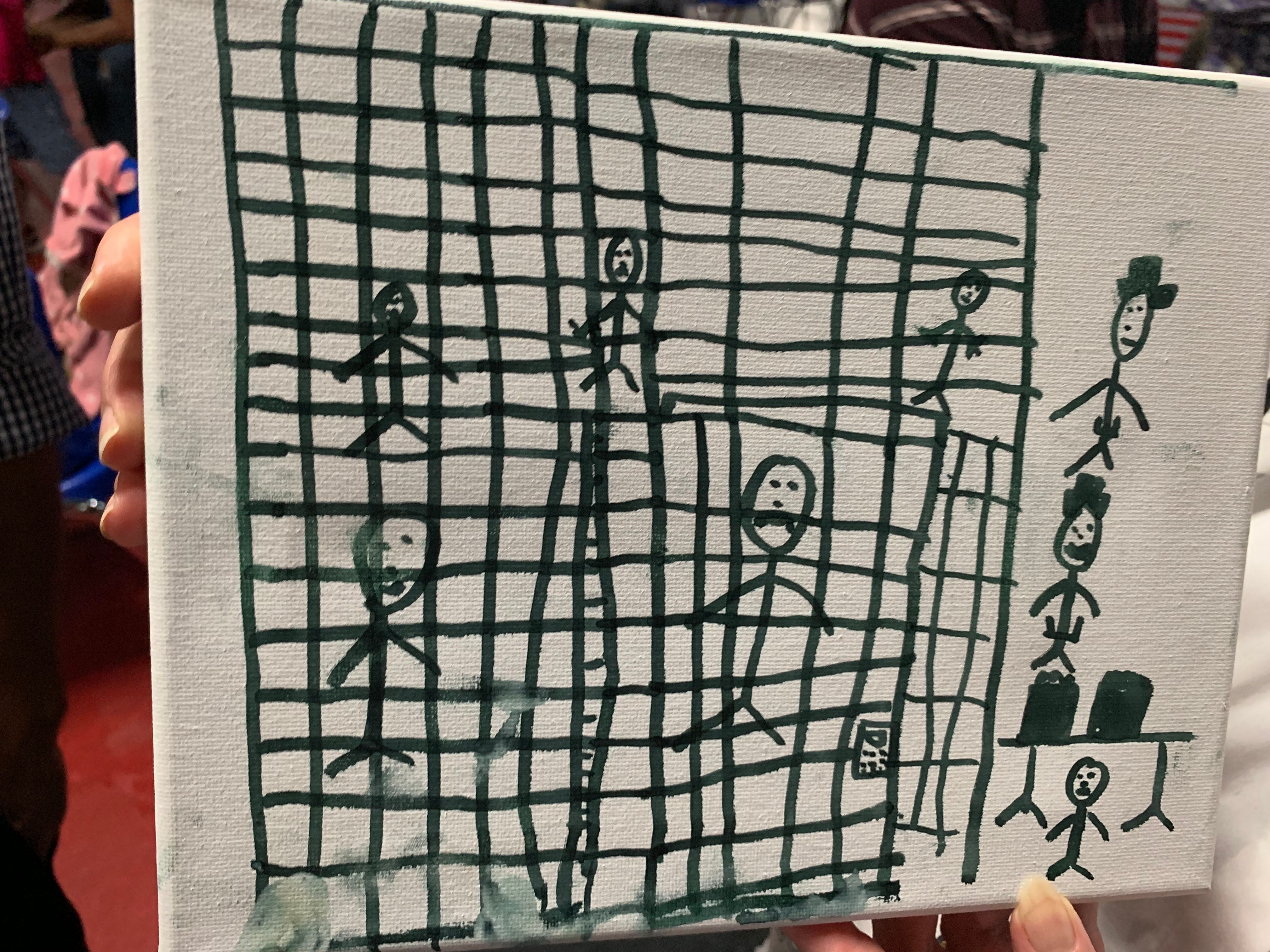
“The smell that immediately hit me when I stepped foot inside a CBP processing center — it was a combination of urine, feces and sweat," she continued. “I saw so many children with bloodshot, bulging eyes. They were expressionless and they were exhausted. I visited the facility during the mid-morning and most of the children I saw were asleep or lethargic."
These conditions were portrayed by the kids' drawings, and are the same conditions many activists are trying to fight.
“Children are kept in metal cages with a guard tower in the middle of the room looking down over the children at all times," Kraft continued. "The 'sea of silver' from mylar blankets completely covered the concrete floors. I could hardly tell that children were underneath them. The only sound I heard was crinkling mylar as they moved. No talking, no laughter, no interacting."
You can donate to help the children here.




 Brendan Smialowski/AFP via Getty Images
 Brendan Smialowski/AFP via Getty Images
 Brendan Smialowski/AFP via Getty Images





 @hannahhrevels/TikTok
 @hannahhrevels/TikTok
 @hannahhrevels/TikTok
 @hannahhrevels/TikTok
 @hannahhrevels/TikTok
 @hannahhrevels/TikTok
 @hannahhrevels/TikTok
 @hannahhrevels/TikTok
 @hannahhrevels/TikTok
 @hannahhrevels/TikTok
 @hannahhrevels/TikTok
 @hannahhrevels/TikTok
 @Raye455/X
 @JoJoFromJerz/X
 @phlynnmartin/TikTok
 @phlynnmartin/TikTok
 @phlynnmartin/TikTok
 @phlynnmartin/TikTok
 @phlynnmartin/TikTok
 @phlynnmartin/TikTok
 @phlynnmartin/TikTok
 @phlynnmartin/TikTok
 @phlynnmartin/TikTok
 @phlynnmartin/TikTok
 @phlynnmartin/TikTok
 @sailors.mama/TikTok
 @sailors.mama/TikTok
 @sailors.mama/TikTok
 @sailors.mama/TikTok
 @sailors.mama/TikTok
 @sailors.mama/TikTok
 @sailors.mama/TikTok
 @sailors.mama/TikTok
 @sailors.mama/TikTok
 @sailors.mama/TikTok
 @sailors.mama/TikTok
 @sailors.mama/TikTok