
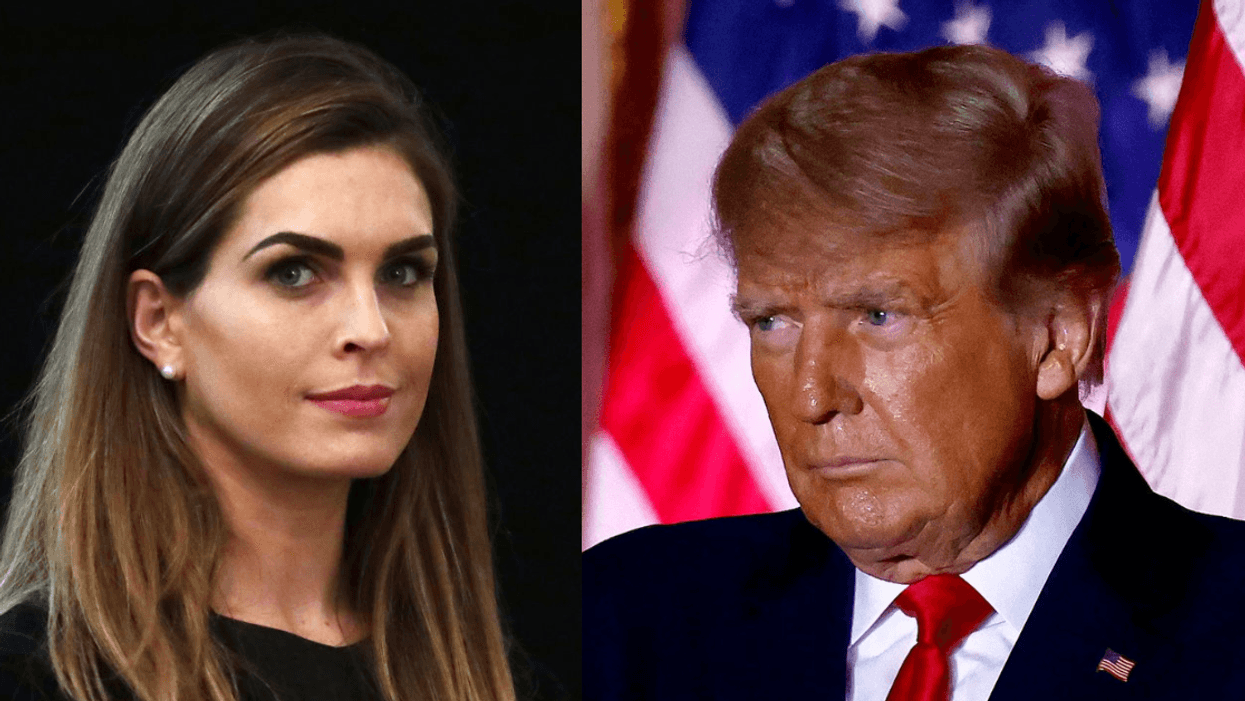

Monday’s tenth and final hearing of the January 6 Committee delivered a stinging condemnation of former president Trump, along with some historic criminal referrals. These include the serious and rarely charged crime of insurrection, which, were Trump convicted of it, could end his hopes of ever holding federal office again.
Legal observers were waiting to see if the Committee revealed its hand any further on specific evidence against Trump, and they leaned in when the Committee played video testimony of former White House senior advisor Hope Hicks.
Hicks was the third Communications Director for the Trump administration. She left the White House in 2018, then returned to assist Trump in his reelection campaign.
Two pieces of evidence provided by Hicks went off like bombshells, going straight to the question of Trump’s guilty state of mind. Her testimony and evidence could prove crucial should Trump be indicted and brought to trial.
Hope Isn’t on Trump’s Side
In a text exchange on January 6 with Trump Campaign press secretary Hogan Gidley, Hicks revealed that in the days leading up to the rally, she had been pressing Trump to make a public announcement about wanting there to be no violence.
Tellingly, Trump had refused.
Gidley: Hey I know you’re seeing this. But he really should tweet something about [b]eing NON-violent.
Hicks: I’m not there. I suggested it several times Monday and Tuesday and he refused.
In her witness interview, outlined in the January 6 Committee’s Executive Summary of its report released yesterday, Hicks recalled that Trump attorney Eric Herschmann had earlier advised Trump to make a preemptive public statement calling for no violence on January 6, but that no such statement occurred.
She noted this was the context behind her text with Gidley.
On the question of the Big Lie about a stolen election, Hicks testified that Trump had dismissed her concerns about his claims of election fraud.
In a video aired during the hearing, Hicks stated:
"I was becoming increasingly concerned that we were damaging—we were damaging his legacy.”
According to Hicks, Trump said something along the lines of:
“Nobody will care about my legacy if I lose, so that won’t matter."
"The only thing that matters is winning.”
Her testimony is in line with Robert Costa’s reporting in his book Peril, where he describes a meeting between Hicks and Trump in the days after the election.
Trump told her:
“I don’t care about my legacy.”
“My legacy doesn’t matter. If I lose, that will be my legacy.”
Okay, So How Is This Evidence Good for Prosecutors?
The January 6 Committee chose to reveal this evidence from Hicks for good reason. Hicks was very close to the ex-President, and he considered her one of his most trusted advisors. Her text on January 6 and her testimony goes directly to two major questions—Trump’s intent and his knowledge.
The Committee and now the Department of Justice, must answer:
- Did the ex-President intend violence to occur on January 6, and
- Did the ex-President know that he had legitimately lost the election?
Intent and knowledge are notoriously difficult to prove, especially with someone like Trump who leaves very little paper trail and often has loyalists willing to take the fall for him. With respect to the referred charges around January 6, Trump’s state of mind will need to be proven through his actions and by what others observed.
Did Trump intend the violence to occur on January 6?
Question (1) relates directly to the referred charge of insurrection, which imposes a prison sentence of up to ten years on anyone who incites, assists, or engages in an insurrection against the government. In order for Trump to be found guilty, prosecutors would need to show he personally intended the insurrection, meaning a violent uprising against the government, to occur.
Hick’s evidence will show that days before the rally, Trump’s advisors were warning him about the possibility of violence and that Trump did nothing to prevent it. The reason is obvious, prosecutors would argue: Trump wanted violent elements present for leverage.
Then, on the day of the rally, knowing that many of his followers had arrived with dangerous weapons, he riled up the crowd and unleashed them on the Capitol.
More strikingly, once the violence began, Trump again did nothing to quell the violence. For 187 minutes, he took no action to cause the rioters to disperse.
He didn’t call in the National Guard.
He didn’t tweet his dismay at their actions.
Instead he watched, fascinated, even giddy, as the rioters attacked the Capitol building and threatened to halt the electoral count. Trump then riled them up even further by attacking Mike Pence as a coward who didn’t do his duty to stop the electoral count.
That tweet pushed the crowd to a murderous frenzy.
But what evidence could Trump’s lawyers cite of Trump’s supposed non-guilty intent? They would certainly note that Trump told the crowd at the Ellipse rally to be peaceful.
But prosecutors could counter that Trump already knew that they were armed and primed for combat, and that a single cover-your-ass remark, delivered as he sicced the armed crowd on Congress, does not absolve him.
Trump’s lawyers would also likely rely heavily upon a tweet by Trump on January 6 asking the crowd to “remain peaceful” with “no violence” and “to support our Capitol Police and law enforcement.” But that is clearly not the same as asking the rioters to leave the premises, as his staff and family implored him to do.
In any event, that tweet came far too late, at 3:13 pm, long after the violence had begun and the Capitol was under siege.
Trump could of course take the stand to explain how he had wanted a peaceful protest, but the prosecution would likely cross-examine him on why he refused to say so in the days before the insurrection, citing Hick’s evidence among others, as well as why he refused all entreaties by his advisors and family members to call off the mob.
Importantly, there does not currently appear to be any witness willing to testify as to Trump’s innocent state of mind, or any contemporaneous written evidence that Trump intended only a peaceful rally. On the other hand, there is plenty of evidence now showing Trump had no such intent.
Did Trump know he had lost the election?
Question (2) relates to the charge of conspiracy to defraud the United States, in this case via a concerted campaign of disinformation around an allegedly stolen election. Trump’s defense will be that he sincerely believed the election was fraudulent, and therefore didn’t have the requisite guilty state of mind.
Prosecutors will need to show otherwise.
Hick’s testimony will help demonstrate that all Trump really cared about was winning, and that at best he showed a callous disregard for whether what he was saying was actually true or not. All the adults in the room (i.e., “Team Normal”) told him, over and over, that there was no evidence of fraud, but he continued to repeat the lie.
Trump’s lawyers will either need to put him on the stand to explain his state of mind or call as witnesses members of the Kraken legal team (i.e., “Team Crazy”) to buttress Trump’s claims. These individuals, however, would likely plead the Fifth rather than try to explain their wild conspiracy theories before a jury.
What Trump is saying
Trump responded yesterday to the hearings, declaring on his Truth Social platform that “I DID NOTHING WRONG!” He predictably labeled the Committee a “corrupt and partisan” body that “goes after” him, then shamelessly hurled whataboutisms concerning the alleged criminality of Joe and Hunter Biden.
Notably, however, Trump also argued in that post that he “pushed for 20,000 troops to prevent violence on Jan. 6” and “went on television and told everybody to go home.” This is useful information for prosecutors because it shows two of Trump’s likely lines of defense.
He also tellingly omits the facts that (1) he never actually acted to call in any troops that day, and (2) it took him over three hours to make any kind of public statement of dispersal to the rioters.
Even then, Trump did not condemn what had taken place.
Instead, in his video address the afternoon of January 6th, he justified the attack as something that happens when an election is stolen, and he told his violent supporters they were “very special” and “We love you.”
In short, even Trump’s own words that day reveal he shared the objectives and celebrated the violent behavior of the insurrectionists.
Given another clear chance to publicly condemn the violence, he once again refused.
 @MuffinsNsuch/X
 @serena_loscalzo/TikTok
 @serena_loscalzo/TikTok
 @serena_loscalzo/TikTok
 @serena_loscalzo/TikTok
 @serena_loscalzo/TikTok
 @serena_loscalzo/TikTok
 @serena_loscalzo/TikTok
 @serena_loscalzo/TikTok
 @serena_loscalzo/TikTok
 @serena_loscalzo/TikTok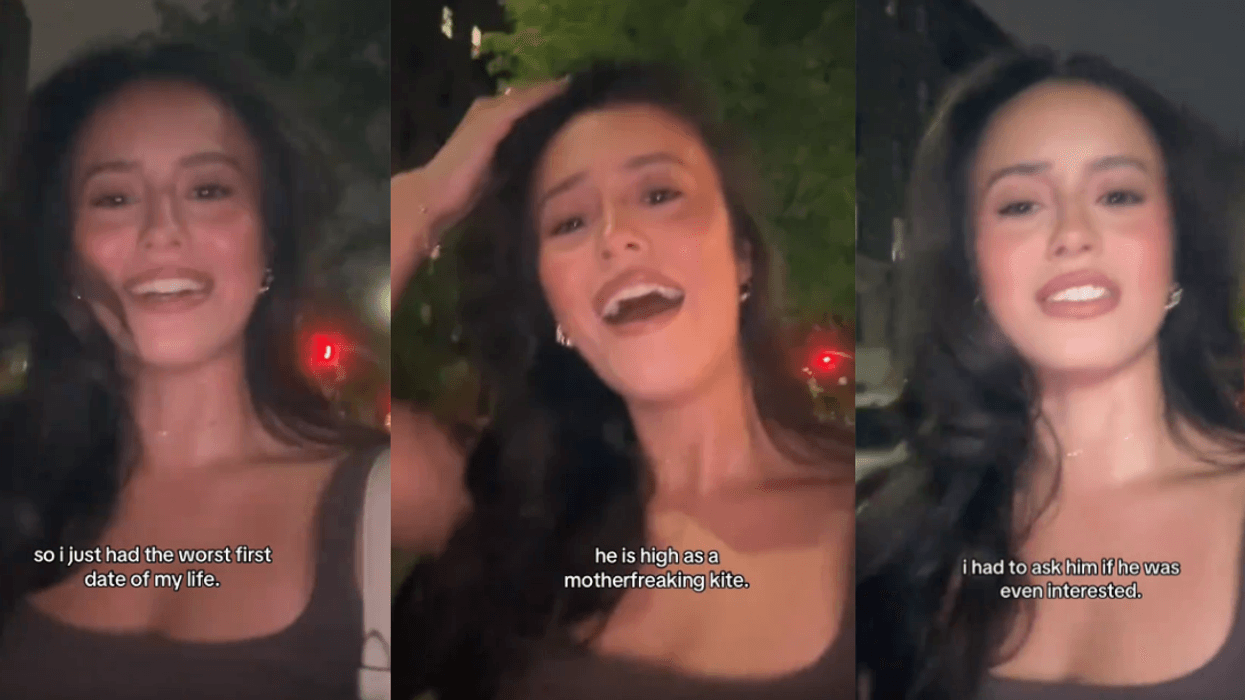
 @itsvictoriavega/TikTok
 @itsvictoriavega/TikTok
 @itsvictoriavega/TikTok
 @itsvictoriavega/TikTok
 @itsvictoriavega/TikTok
 @itsvictoriavega/TikTok
 @itsvictoriavega/TikTok
 @itsvictoriavega/TikTok
 @itsvictoriavega/TikTok
 @itsvictoriavega/TikTok
 @lolxdlolxdlolxd23455/TikTok
 @lolxdlolxdlolxd23455/TikTok
 @lolxdlolxdlolxd23455/TikTok
 @lolxdlolxdlolxd23455/TikTok
 @lolxdlolxdlolxd23455/TikTok
 @lolxdlolxdlolxd23455/TikTok
 @lolxdlolxdlolxd23455/TikTok
 @lolxdlolxdlolxd23455/TikTok
 @lolxdlolxdlolxd23455/TikTok
 @lolxdlolxdlolxd23455/TikTok
Larry David's New Satirical Essay Mocking Democratic Socialists Isn't Sitting Well With People