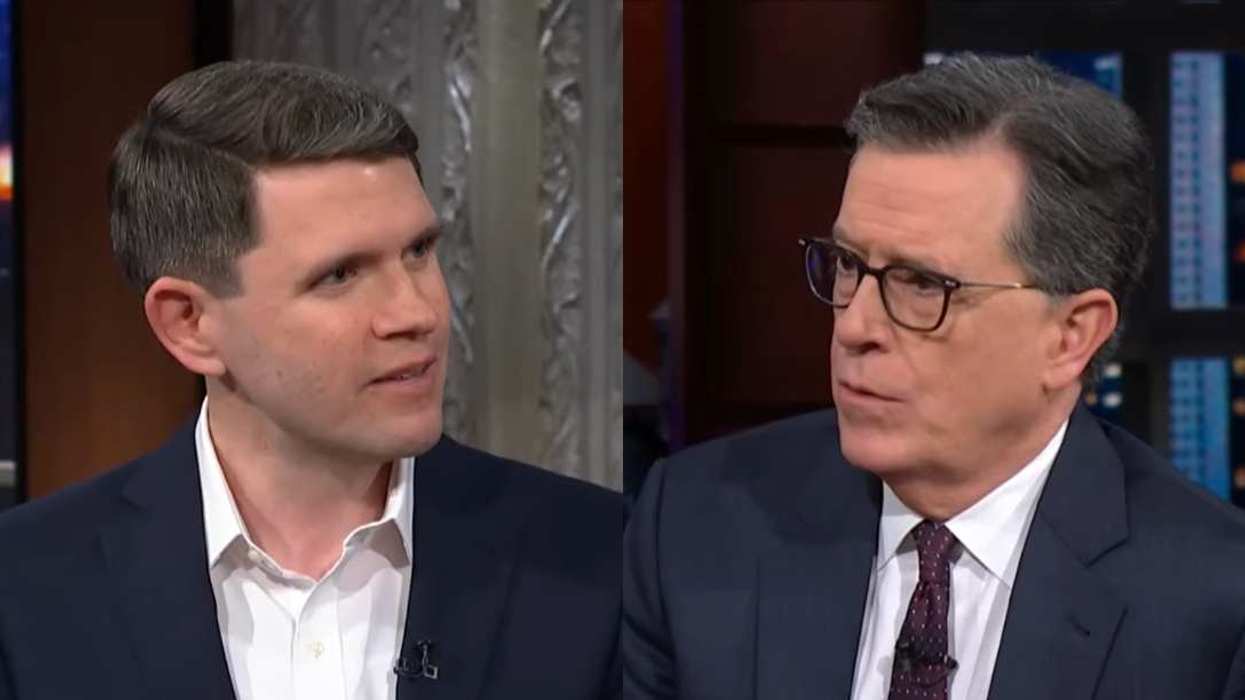
Late-night host Stephen Colbert criticized CBS for attempting to ban him from interviewing Texas Senate candidate James Talarico, and from even mentioning the interview on air, due to threats from Brendan Carr, the chair of the Federal Communications Commission (FCC).
Talarico, who represents Texas in the state House, has previously made headlines for calling out Texas Republicans for "trying to force public schools" to display the Ten Commandments and has generated significant buzz as a forceful voice for Democrats in a state largely in the hands of the GOP.
Colbert informed his viewers that Talarico "was supposed to be here, but we were told in no uncertain terms by our network’s lawyers, who called us directly, that we could not have him on the broadcast." He added that "I was told, in some uncertain terms, that not only could I not have him on, I could not mention me not having him on."
Interestingly, Talarico described Republicans during the interview as "the party that ran against cancel culture, and now they are trying to control what we watch, what we say, what we read"—words that resonate in the wake of the interview being pulled from the air.
Talarico himself described his appearance on Colbert's show as "the interview Donald Trump didn’t want you to see," adding that "Trump is worried we’re about to flip Texas."
You can see Talarico's full interview that didn't air below:
Colbert said the banned interview followed updated guidance from Carr, who floated applying the “equal time” rule more strictly to late-night programming. The policy requires broadcasters to offer comparable airtime to competing political candidates. Traditionally, news and talk show interviews have been exempt from that requirement.
But as Colbert noted, Carr’s recent comments suggested he may reconsider that carve-out for late-night shows, arguing that some programs appear to operate with overtly partisan intent.
Then he called out Carr's hypocrisy:
“Well, FCC you. I think you are motivated by partisan purposes yourself. Sir, you smelt it because you dealt it. Let’s call this what it is: Donald Trump‘s administration wants to silence anyone who says anything bad about Trump on TV because all Trump does is watch TV. He’s like a toddler with too much screen time.”
“It’s no surprise that two of the people most affected by this threat are me and my friend Jimmy Kimmel.”
He next rolled Carr’s rebuttal to the way he and fellow late-night host Jimmy Kimmel had tackled the revamped Equal Time rule on their respective programs:
“If Kimmel or Colbert want to continue to do their programming and they don’t want to have to comply with this requirement, then they can go to a cable channel or a podcast or a streaming service and that’s fine.”
In response, Colbert quipped:
“Great idea, Man Whose Job Is to Regulate Broadcast TV! Suggest everyone leave broadcast TV!”
Colbert added that, in line with Carr’s suggestion, he would publish the complete Talarico interview on YouTube:
“The network says I can’t give you the URL or a QR code, but if you go to our YouTube page, you’ll find it.”
“At this point, [Carr has only] released a letter that says he’s thinking about doing away with the exception—but my network is unilaterally enforcing it as if he had. But I want to assure you, this decision is for purely financial reasons."
“And this doesn’t just affect interviews. The rules forbid any candidate appearance, including by voice or picture. So I can’t interview James Talarico, I can’t show any pictures of James Talarico, and I’m not even sure I can say the words ‘James Talarico.'"
He then joked that "what I can show you is what we always show when we have to pull material at the last minute–this tasteful nude of Brendan Carr"—and showed a mock-up of a nude Carr with his privates covered by a cactus.
You can hear what Colbert said in the video below.
- YouTube youtu.be
Colbert's words struck a chord and exposed CBS, Carr, and the FCC to heavy criticism.
Colbert has been speaking out despite pushback since CBS' cancellation of The Late Show with Stephen Colbert.
Colbert has consistently been at the top of the late-night ratings, but last year, CBS, citing economic concerns, announced that his program would go off the air in May—news that came as its parent company, Paramount, sought government approval for a merger with Skydance.
The FCC later approved the merger and Paramount paid $16 million to settle a lawsuit brought by President Donald Trump, which Colbert said amounted to a payoff to secure approval for the merger.
Months later, Paramount Skydance CEO David Ellison unveiled a deal—reportedly valued at $150 million—to purchase Bari Weiss’ contrarian outlet The Free Press, while also installing her as the top editorial leader at CBS News. The move fueled speculation among media analysts that Ellison was attempting to bolster the network’s credibility with Trump and the broader MAGA base.
Last month, the network came under fire for airing a cringey tribute to Secretary of State Marco Rubio complete with AI-generated memes portraying Rubio in a series of exaggerated roles, including prime minister of Greenland, head of Hilton Hotels, and the Michelin Man.
Weiss was also called out for killing a 60 Minutes segment about El Salvador's notorious CECOT prison facility. The planned segment was reportedly set to sharply criticize the Trump administration’s handling of migrants detained by ICE and sent to the prison.
After the decision, correspondent Sharyn Alfonsi, who led the investigation, went public, openly challenging her boss and sharing internal details about how and why the story was killed. She said in a letter leaked to media outlets that killing the story "after every rigorous internal check has been met, is not an editorial decision, it is a political one."
 Liam McBurney/PA Images via Getty Images
 @MysterySolvents/X
 @Bill43111/X
 @liberalpuppy/X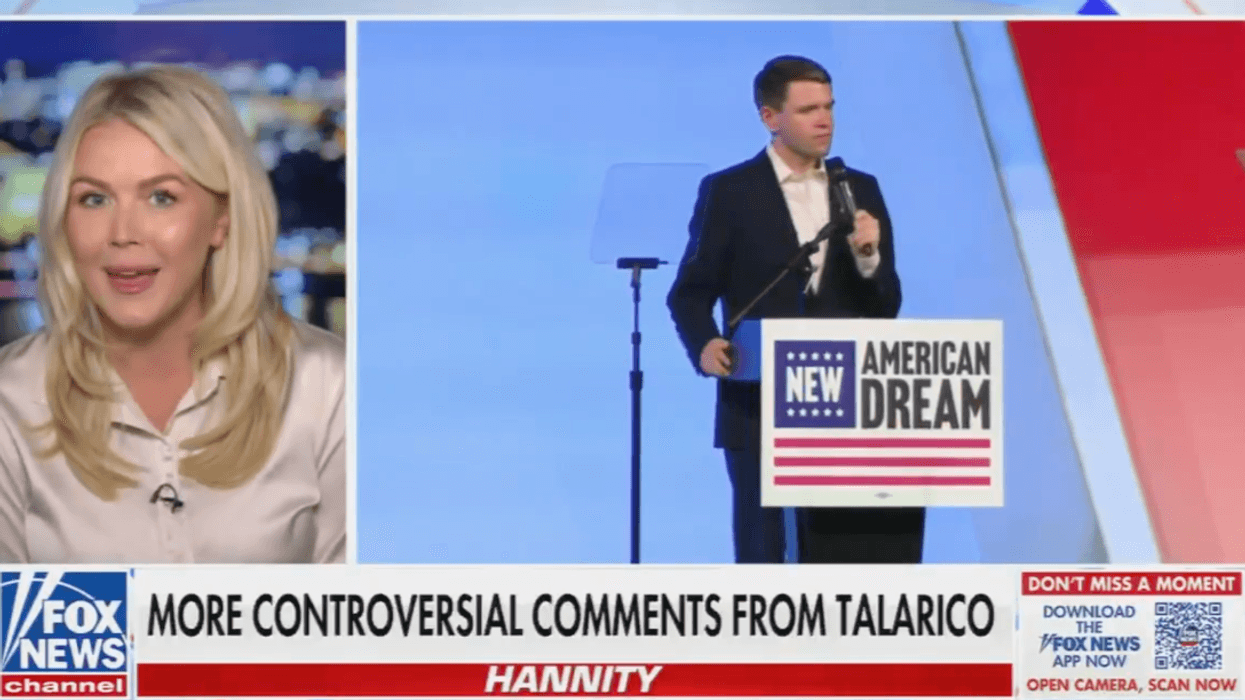

 @realDonaldTrump/Truth Social