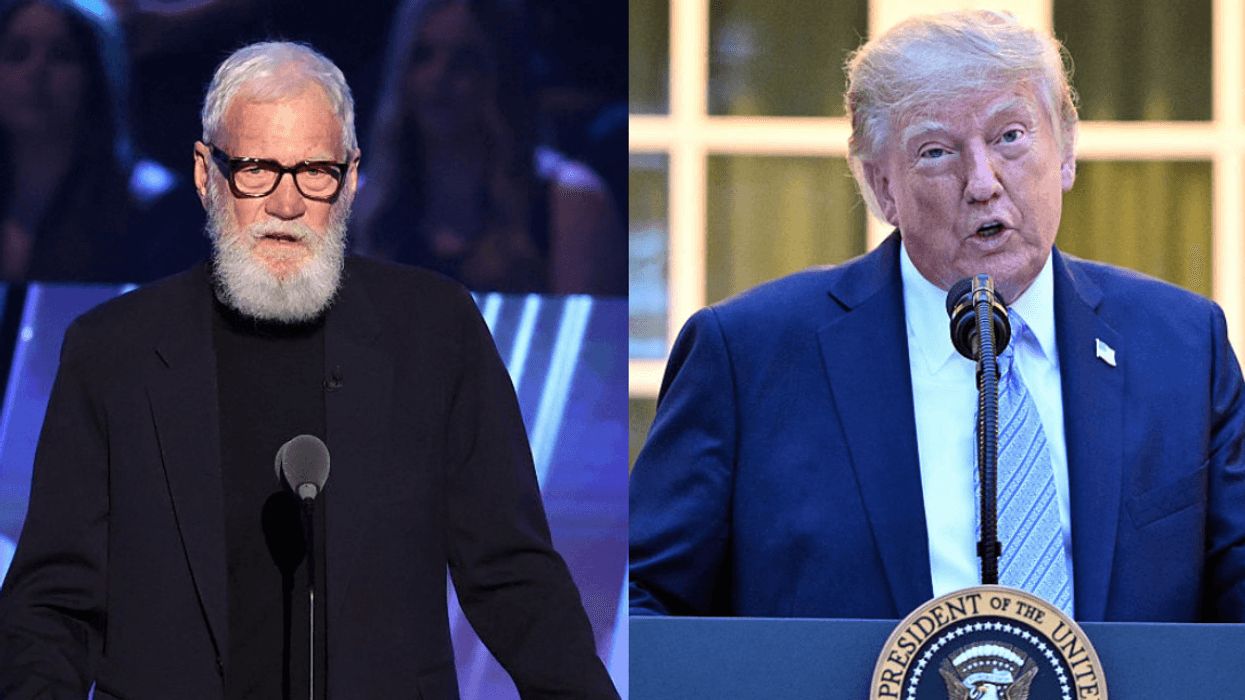
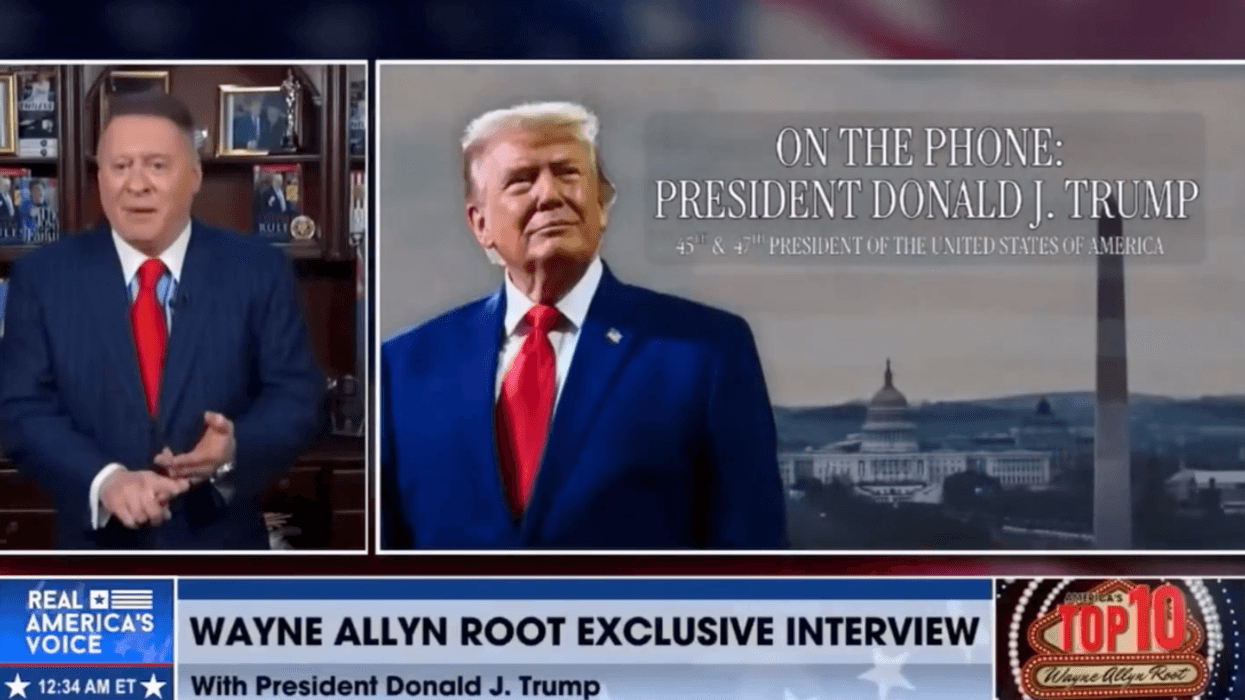

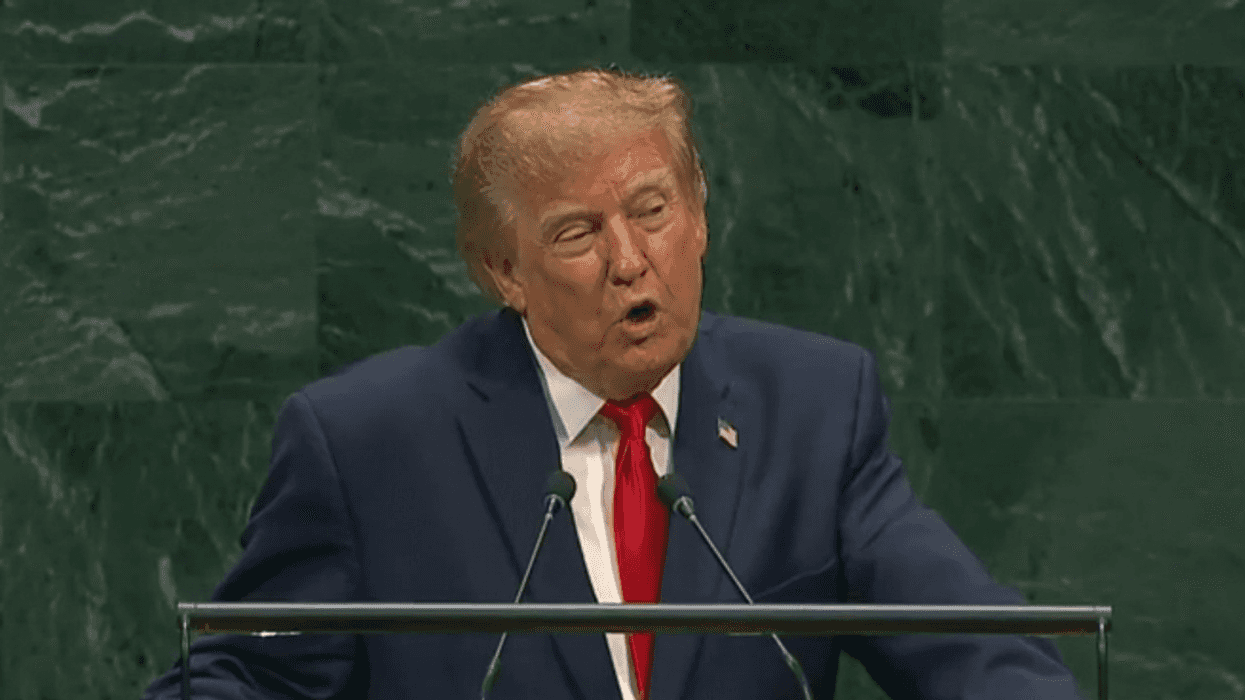
President Donald Trump was criticized after floating the idea of declaring a "national security emergency" ahead of the November midterms.
Real America's Voice host Wayne Allyn Root brought the idea up to Trump while discussing the "SAVE America Act," a sweeping federal elections bill that, among other things, complicates voting for individuals whose legal name does not match their birth certificate and poses a restrictive photo ID requirement for voting that disproportionately impacts minorities.
Root cited INS v. Chadha as support, but the Supreme Court case actually dealt with the constitutionality of a one-house legislative veto—whether one chamber of Congress could unilaterally override an executive-branch decision. It was not specifically a ruling about presidential declarations of national emergencies.
Root said:
"Let me put an idea in your head, OK? Because it’s so hard to get the Senate to do anything – now they’re on recess. They don’t get anything done."
“If they never get the SAVE America Act done, you have the right to declare a national security emergency for elections, and the Supreme Court ruled in 1983 under Reagan – INS vs Chadha – that if you declare a national security emergency as the president of the United States, they can’t challenge it."
“It can only be overturned by a two-thirds vote of both houses of Congress. So if you do this in the next month, we will get photo ID, proof of citizenship and a limit to mail-in ballots…”
Trump then butt in:
“Let me just say that stranger things have happened, OK? I’ll leave it at that.”
You can hear what Trump said in the video below.
Critics are now sounding the alarm.
Proponents like Trump and Rooney argue that requiring photo identification at the polls is crucial for safeguarding against voter fraud and upholding the integrity of the electoral process. However, the evidence suggests otherwise.
These laws tend to disproportionately affect marginalized groups such as Black individuals, Native Americans, the elderly, and students. Moreover, despite their purported purpose of enhancing election integrity, voter ID laws have not proven effective in addressing legitimate concerns in this regard.
Republicans have also railed against early voting and vote-by-mail procedures in recent years, spurred by Trump's lies that they helped Democrats "steal" the 2020 election.
Research shows early voting greatly increases voter turnout, and a study from Stanford University’s Democracy and Polarization Lab published in April 2020 found that, contrary to the widely-held belief among the GOP that vote-by-mail gives Democrats an advantage over Republicans, vote-by-mail options do not actually benefit one party more than another.


 @joannawietrzyk/Instagram
 reply to @joannawietrzyk/Instagram
 reply to @joannawietrzyk/Instagram
 reply to @joannawietrzyk/Instagram
 reply to @joannawietrzyk/Instagram
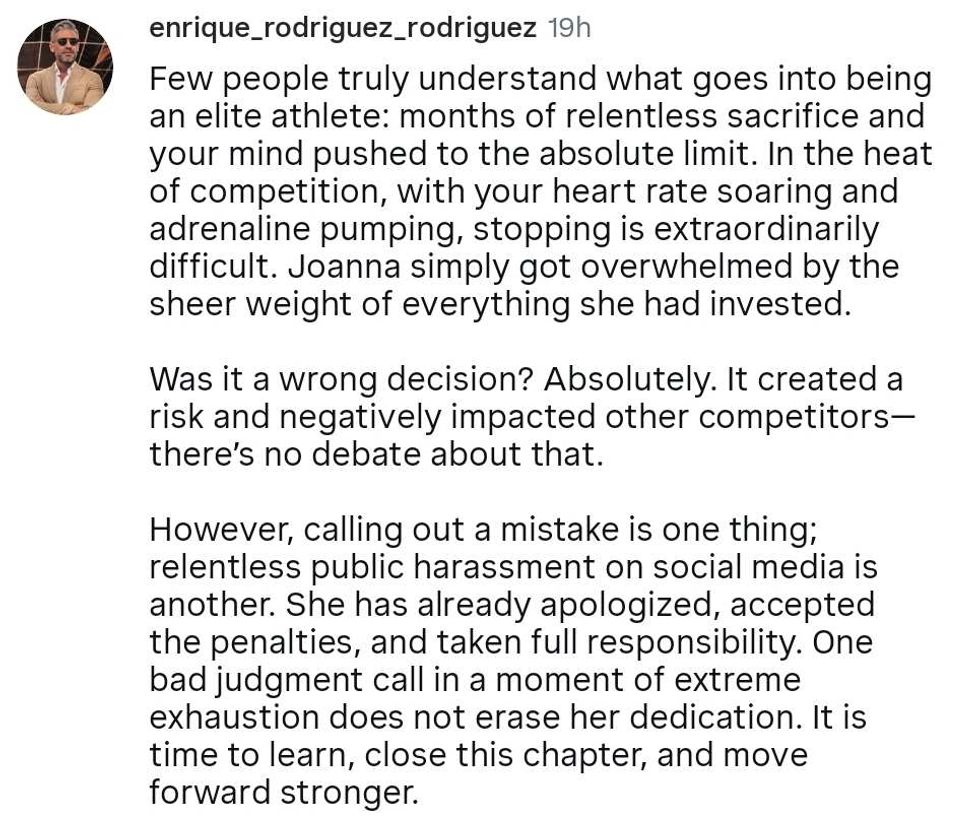 reply to @joannawietrzyk/Instagram
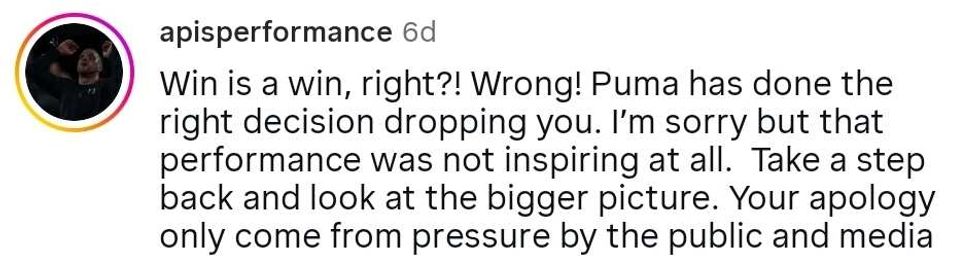 reply to @joannawietrzyk/Instagram
 reply to @joannawietrzyk/Instagram
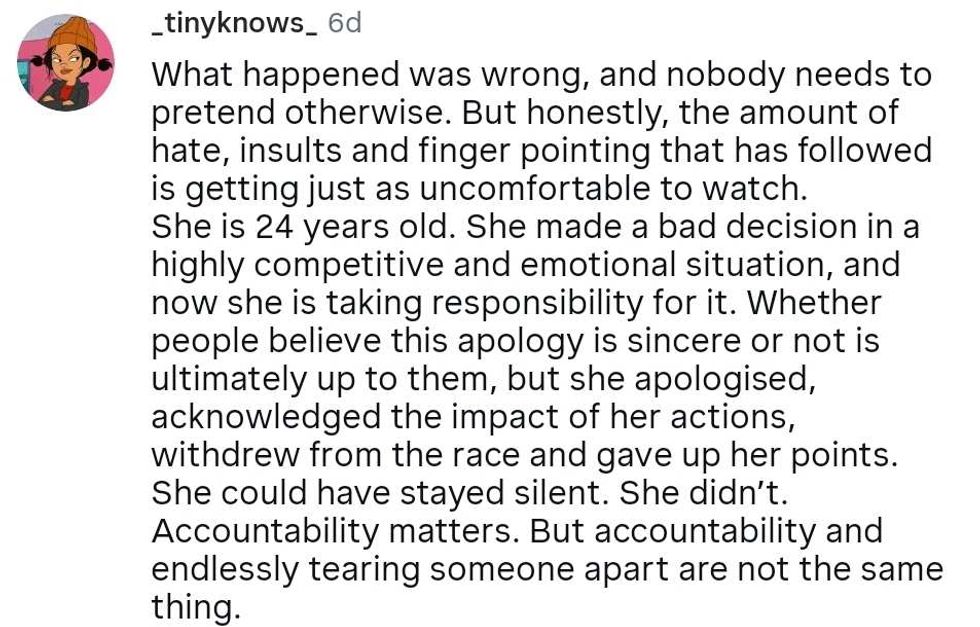 reply to @joannawietrzyk/Instagram
 reply to @joannawietrzyk/Instagram