
Star Trek: Starfleet Academy premiered on Paramount+ on January 15, 2026. The season finale dropped on March 12, 2026.
On March 23, 2026, CBS Studios and Paramount+ dropped the hammer on the series, announcing the show would end after the already filmed second season.
In a joint statement, the companies said:
"We’re incredibly proud of the ambition, passion, and creativity that went into bringing 'Star Trek: Starfleet Academy' to life. The series introduced audiences to a bold new group of characters, welcomed familiar faces, and expanded the Star Trek universe in exciting new ways."
"We’re grateful to Alex Kurtzman, Noga Landau, Gaia Violo, and the entire cast and crew who pushed storytelling boundaries in the spirit of Gene Roddenberry’s vision. We look forward to sharing the upcoming second and final season with everyone, and continuing to celebrate the cast, crew, and all that was accomplished with this series."
The show was heavily targeted with criticism and outright hate online for its "wokeness" before it even premiered, like many projects in the last decade without a focus on a White male lead and a majority White cast.
CBS and Paramount, who have capitulated to MAGA Republican President Donald Trump with his anti diversity, equity, and inclusion policies in the past, didn't specify the anti-woke backlash as the reason for the abrupt cancelation, but many got that message from the move.
Den of Geek headlined their story about the cancelation: "Star Trek: Starfleet Academy’s Cancellation Is a Bad Sign, Even If You Didn’t Like It." Other websites and publications sounded the alarm too, calling the cancelation "scary" and a "tragedy."
And the cast is speaking out as well.
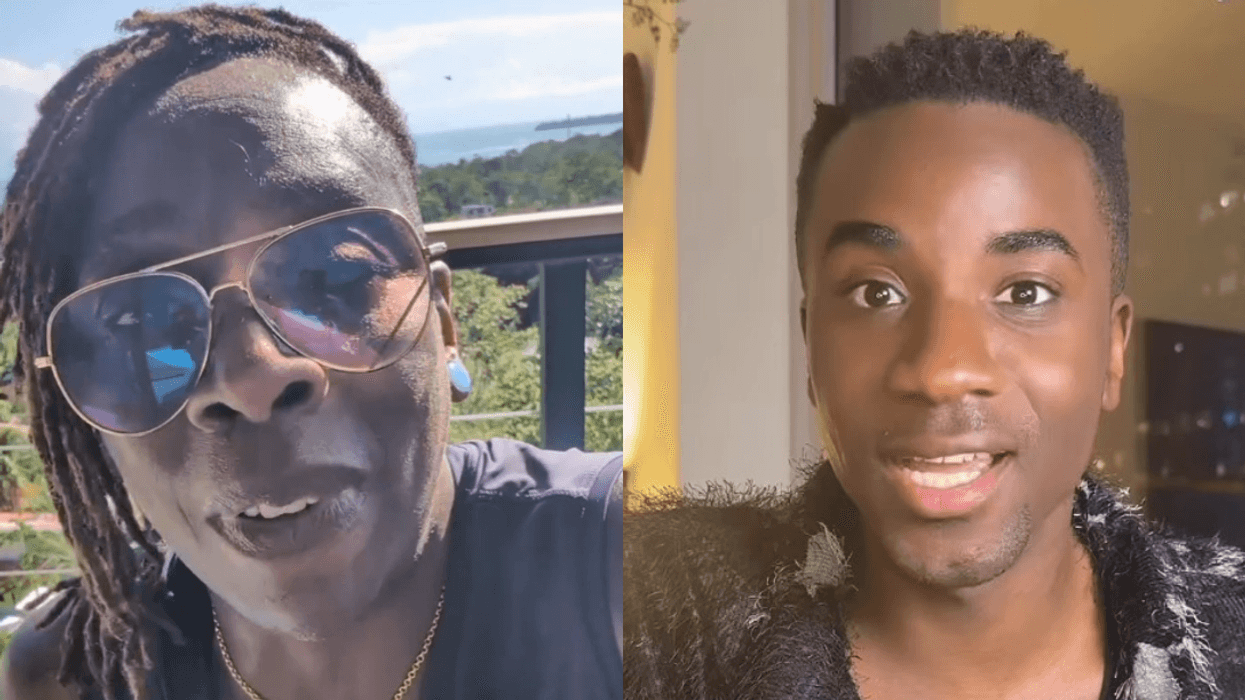
Gina Yashere who stars as half-Klingon/half-Jem'Hadar Commander Lura Thok, and Karim Diané who portrays Klingon cadet Jay-Den Kraag, took to Instagram with video messages for the show's fans. Both characters are openly gay in the series.
Yashere wrote:
"I'll let you guys come to your own conclusions as to why we didn't get to continue building on this wonderful legacy."
"Right now, I'm just grateful at having been part of it, and in a business that veers often between feast & famine, I've been able to build the life of my dreams, being able to tell authentic stories, an ability which I truly believe is now under attack."
"Be safe out there peeps."
"Stay woke"
"Wokeywoke. Wokest of the woke. Wokeyliscious. A cacophony of woke."
You can see her video here:
Diané wrote in a comment on his Instagram video post:
"season 2 is GAY AF, and I have SOOOOO much [behind the scenes] content coming your way. Please prepare to be sick of me."
"I'm going to be EVEN LOUDER and more annoying about this beautiful gay Klingon."
"we going out IN FLAMES"
Fans shared their love and outrage in the comments.
 reply to @ginayashere/Instagram
 reply to @team_karim/Instagram
 reply to @ginayashere/Instagram
 reply to @team_karim/Instagram
 reply to @ginayashere/Instagram
 reply to @team_karim/Instagram
 reply to @ginayashere/Instagram
 reply to @team_karim/Instagram
 reply to @team_karim/Instagram
A message by Starfleet Academy showrunners and executive producers Alex Kurtzman and Noga Landau, shared after the cancelation, paid credit to the father of the Star Trek universe, the late Gene Roddenberry, and his "transformative vision of the future."
They wrote:
"That incomparable vision was fueled by an inexhaustible optimism. Star Trek places its bet on the best in human nature."
"It dares to imagine a society of 'infinite diversity in infinite combinations,' free of war, hate, poverty, disease, and repression, and dedicated to the spirit of scientific inquiry and respect for all life, whether carbon or silicon-based, green-skinned or blue."
They also noted Roddenberry was no long-haired '60s hippie, despite the show's 1966 premiere date just after the '63-'65 height of the civil rights movement.
Kurtzman and Landau wrote:
"Gene Roddenberry wasn’t some starry-eyed dreamer. He was a decorated Army bomber pilot in the Pacific Theater. He had seen first-hand the grim consequences of the worst of human nature. And his vision of the future wasn’t just a promise of hope. It was also a warning."
"In a fraught, frightening time of intolerance and violence [the 1960s], 'Star Trek' said: Look! We made it! But just barely. First, we had to put all those ancient scourges [of bigotry] behind us."
"It said that what makes us glorious as a species, and gives us hope for the future and the galaxy is inextricably linked to what makes us dangerous to each other, to this one world we presently inhabit, and to ourselves. That dual message—of hope and of warning—isn’t just a pretty dream but a call to action, to think about who we are in a different way."
They concluded with a quote from Roddenberry himself on what Star Trek is about, writing:
"Please don’t take our word for it. Take Gene’s"
Roddenberry said in 1976:
"'Star Trek' was an attempt to say that humanity will reach maturity and wisdom on the day that it begins not just to tolerate, but take a special delight in differences in ideas and differences in life forms."
"If we cannot learn to actually enjoy those small differences, to take a positive delight in those small differences between our own kind, here on this planet, then we do not deserve to go out into space and meet the diversity that is almost certainly out there."
As with other entertainment projects without a White male lead and with more than one Black, brown, or Asian cast member, or *gasp* LGBTQ+ characters, Starfleet Academy’s most virulent haters online were heteronormative White males.
They decried Starfleet Academy as too woke, too diverse, too feminist, misandrist, and unworthy of being part of the now 60-year-old franchise.
They clearly don't know Star Trek.
For those fans who have embraced the realization of Roddenberry’s original vision, even if a show wasn't their cup of tea, through the evolution of what was allowed by studio executives on each show—from Black, female and Asian representation (and that interracial kiss) in the original series, to LGBTQ+ representation in Starfleet Academy—the father of the franchise would probably have only one message to share.
Live long and prosper. 🖖🏼






 @joannawietrzyk/Instagram
 reply to @joannawietrzyk/Instagram
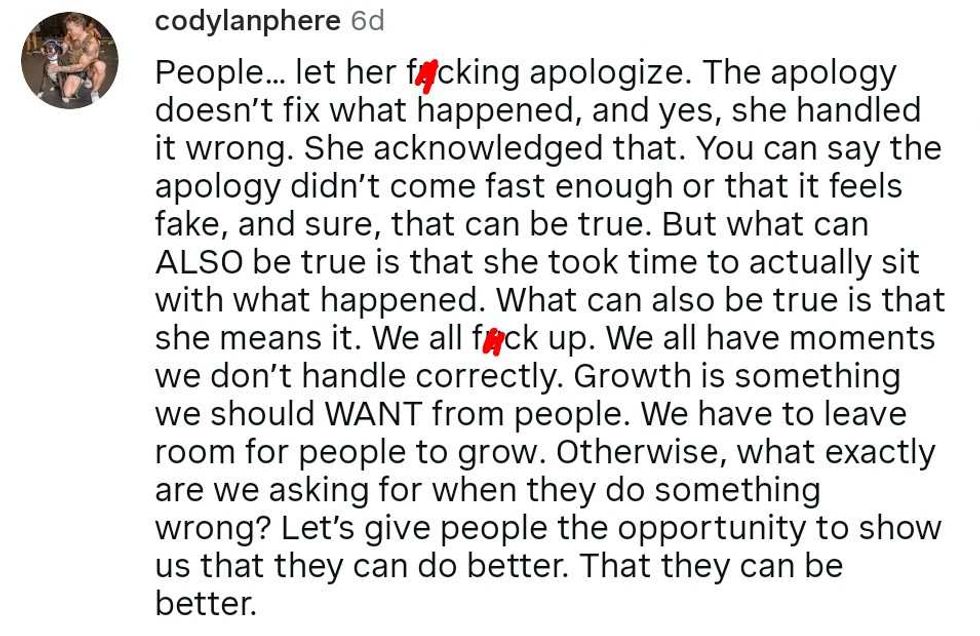 reply to @joannawietrzyk/Instagram
 reply to @joannawietrzyk/Instagram
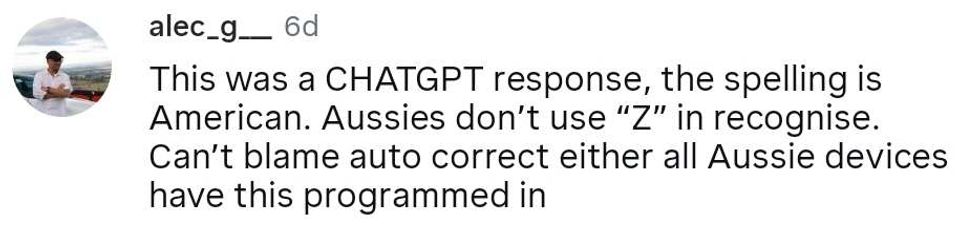 reply to @joannawietrzyk/Instagram
 reply to @joannawietrzyk/Instagram
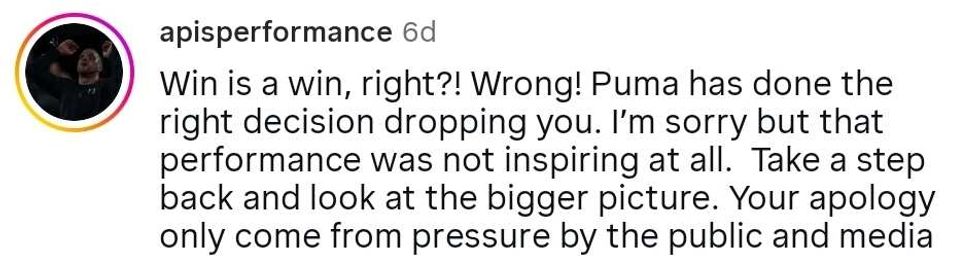 reply to @joannawietrzyk/Instagram
 reply to @joannawietrzyk/Instagram
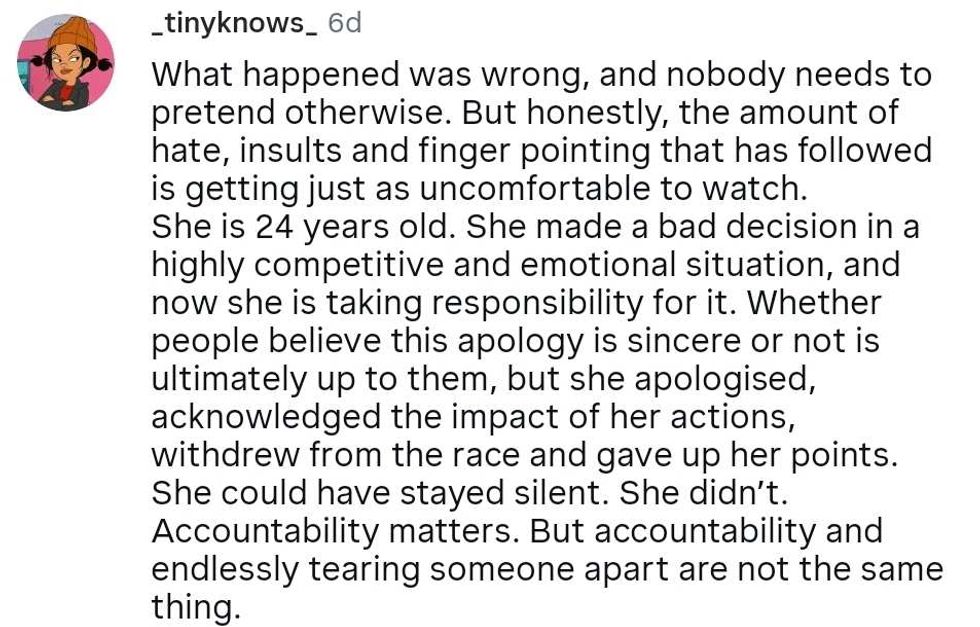 reply to @joannawietrzyk/Instagram
 reply to @joannawietrzyk/Instagram