


As if climate change weren't already forcing us to reckon with a host of different and complex problems––displacement as a result of climate change and increasingly inclement weather come to mind––new research suggests the phenomenon will affect the gender ratio among newborns.
According to a recent study in Japan, climate change could alter the proportion of male and female newborns, with more boys born in places where temperatures rise and fewer boys born in places vulnerable to other environmental changes. Researchers analyzed the yearly and monthly mean temperature differences between 1968 and 2012.
Although the team led by Dr. Misao Fukuda, of the M&K Health Institute in Hyogo, does not know how external stress factors affect gestation, Fukuda theorized in an email to CNN that "subtle significant changes in sex ratios" occur as a result of the vulnerability of Y-bearing sperm cells, male embryos and/or male fetuses to stress.
Last year, Fukuda and his colleagues released a study analyzing how environmental stressors––like the Kobe Earthquake of 1995 and the Great East Japan Earthquake of 2011 and the nuclear disaster at the Fukushima Daichii power plant that followed––affect the ratio of male to female babies.
The researchers found that the proportion of male babies born in these prefectures decreased by between 6 and 14 percent from the previous year, when the environmental stressor took place.
According to Ray Catalano, a professor at the University of California, Berkeley, who studied babies born in Scandanavian countries between 1878 and 1914 and found that the sex ratio averages 103 to 106 males born for every 100 females, temperature affects a child's sex and overall gestational survival rate. More male babies were born during warmer years; the opposite was true for females.
Catalano concluded that "ambient temperature affects the characteristics of human populations by influencing who survives gestation, a heretofore unrecognized effect of climate on humanity."
"If you start to change the environment relatively quickly — within 100, 150 years; in evolutionary time, that's a blink of the eye — what that means is that you're going to change the environment in which human gestations occur," he said.
Whoa.
Catalano also posted that global warming will shape the selection process in utero.
"If you start to change the environment relatively quickly — within 100, 150 years; in evolutionary time, that's a blink of the eye — what that means is that you're going to change the environment in which human gestations occur," Catalano said. "What they predict is that things will get less predictable. We'll have greater swings of temperatures with higher highs, lower lows, and faster oscillations between the two extremes."
Catalano theorizes that the response to these changes will be human adaptation:
"When you change the climate the way we're changing it, you will change, profoundly, the characteristics of the population," he said.
Steven Orzack, president and senior research scientist of the Fresh Pond Research Institute in Cambridge, Massachusetts, offers a different take: He believes we still lack enough evidence to confirm that climate change will significantly affect the newborn sex ratio. While there is a trend in certain countries towards a less male-biased sex ratio at birth, he's not certain that global climate change is directly responsible for it. He theorizes the effects may be due to pollution, and that this phenomenon "may be a secondary consequence of global climate change."





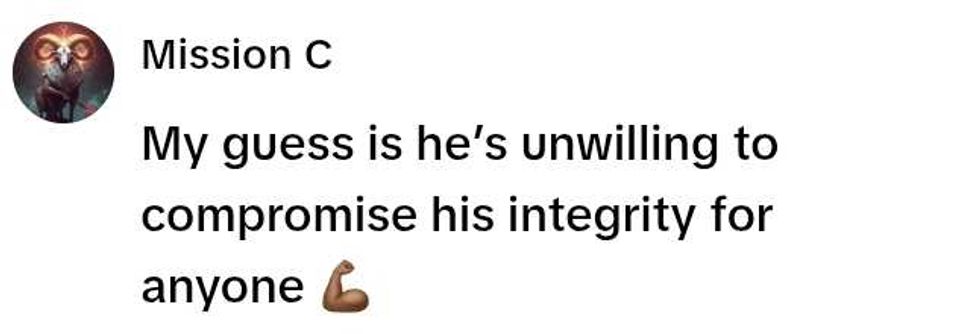 reply to @kwqc.news/TikTok
 reply to @kwqc.news/TikTok
 reply to @kwqc.news/TikTok
 reply to @kwqc.news/TikTok
 reply to @kwqc.news/TikTok
 reply to @kwqc.news/TikTok
 reply to @kwqc.news/TikTok
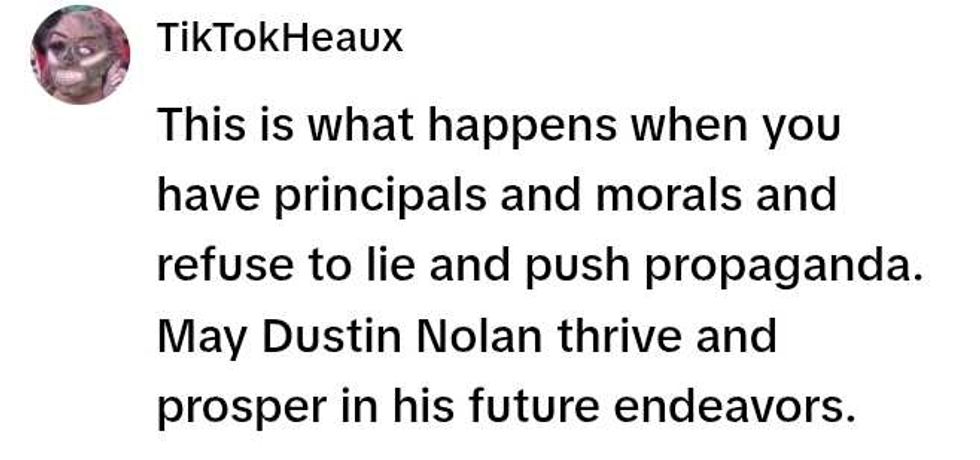 reply to @kwqc.news/TikTok




 @realDonaldTrump/Truth Social
 @StephenKing/X


 @annehathaway/Instagram
 @annehathaway/Instagram
 @annehathaway/Instagram
 @annehathaway/Instagram
 @annehathaway/Instagram
 @annehathaway/Instagram
 @annehathaway/Instagram
 @annehathaway/Instagram
 @annehathaway/Instagram
 @annehathaway/Instagram
 @annehathaway/Instagram
 @annehathaway/Instagram
 @annehathaway/Instagram