
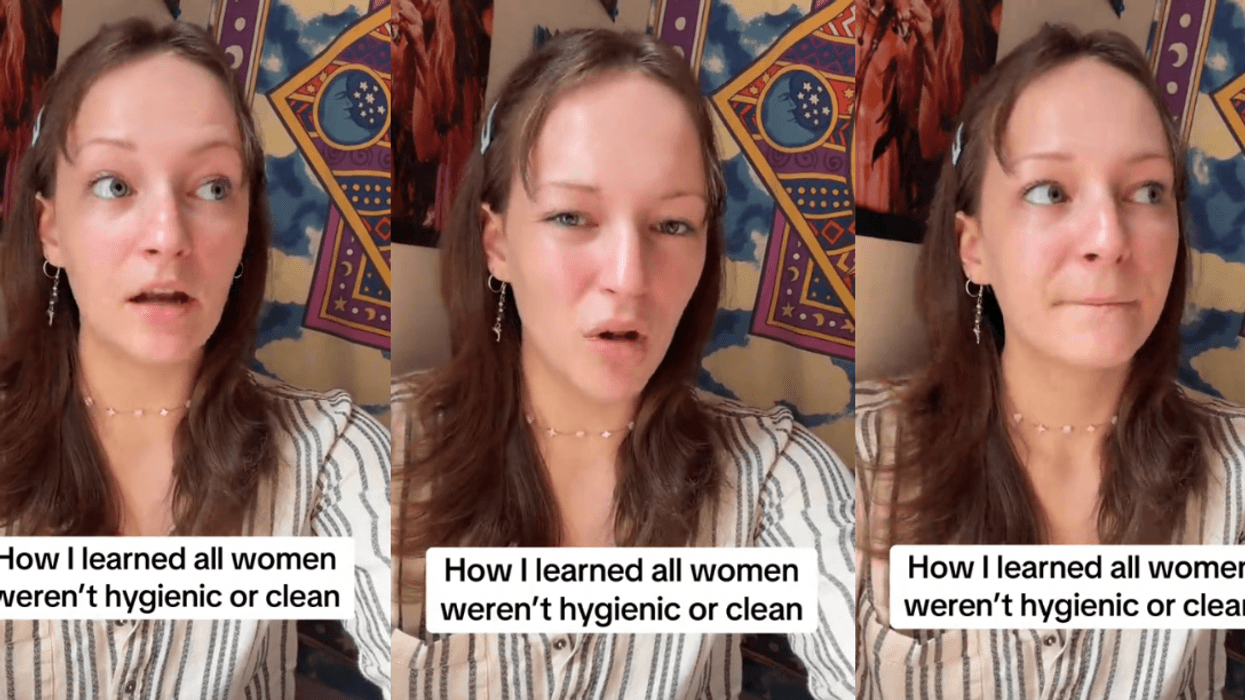

It's no secret that some people are not as tidy or as personally hygienic as other people, and sometimes other factors, like mental health, chronic illness or pain, a tough work schedule, limited access to self-care products, or even early parenthood, can play into that as well.
But an overwhelming majority of people believe that, between men and women, women are naturally going to be more hygienic, clean, and tidy than men. While that might statistically be true, that doesn't make it true for all women.
TikToker @groovyrockerchick, for example, accused herself of "living in fantasy land," because she'd always believed that women, or at least the vast majority of women, must be as clean and tidy as she is.
She gave examples of taking a shower every day, washing her hair as often as her hair required for her hair follicle type, washing dishes and wiping down countertops after cooking, sweeping and mopping at least once per week, vacuuming, and washing the walls and the windows.
But after she'd lived with a few roommates, she'd realized that not all women embrace her standards.
She gave the example of one roommate she'd lived with, just the two of them, who very infrequently showered, had noticeable body odor, did not participate in cleaning their home, and allowed her personal room to get so dirty that it smelled even when her bedroom door was closed.
You can watch the video here:
Fellow TikTokers agreed with @groovyrockerchick in her disgust.
 @groovyrockerchick/TikTok
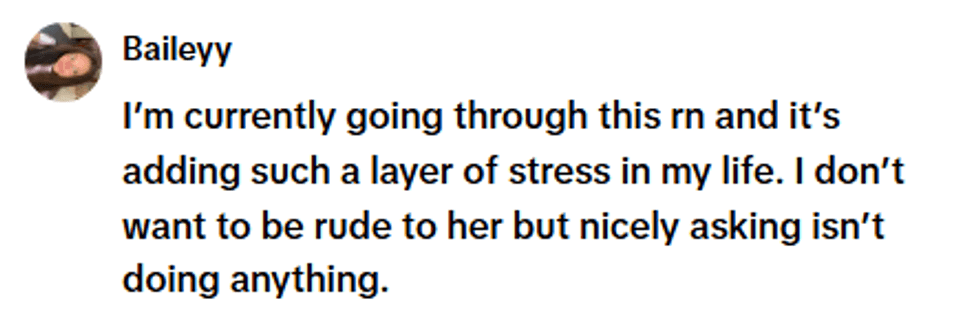 @groovyrockerchick/TikTok
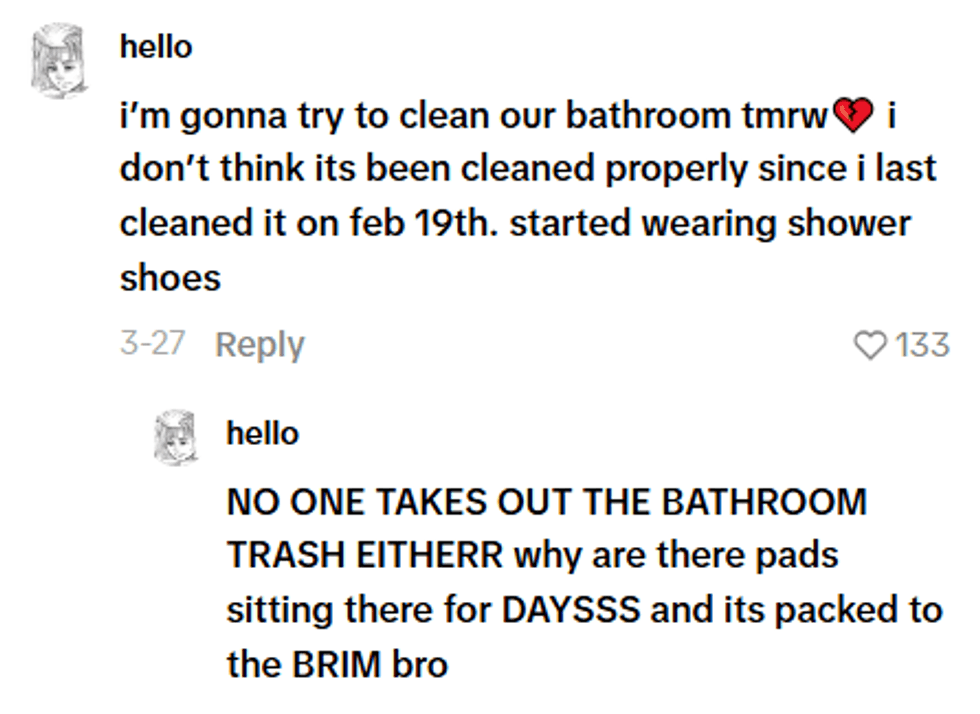 @groovyrockerchick/TikTok
 @groovyrockerchick/TikTok
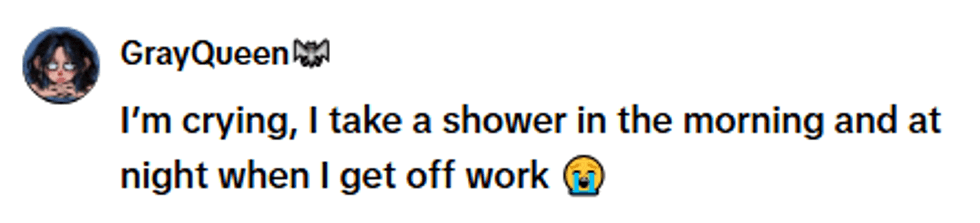 @groovyrockerchick/TikTok
 @groovyrockerchick/TikTok
 @groovyrockerchick/TikTok
But some confessed to having somewhat looser standards, often because of their relationship with showers due to their mental health, or having a finish on the walls that makes it impractical to wash them.
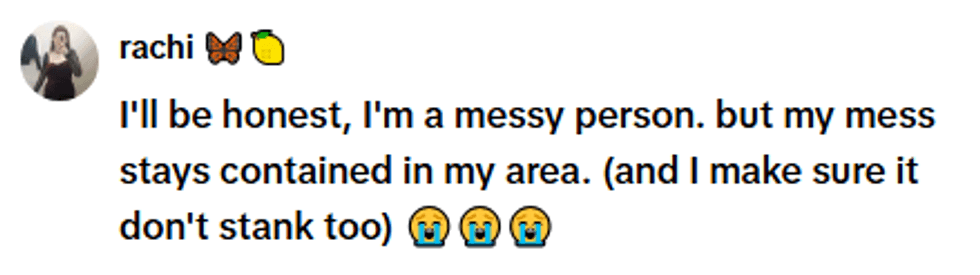 @groovyrockerchick/TikTok
 @groovyrockerchick/TikTok
 @groovyrockerchick/TikTok
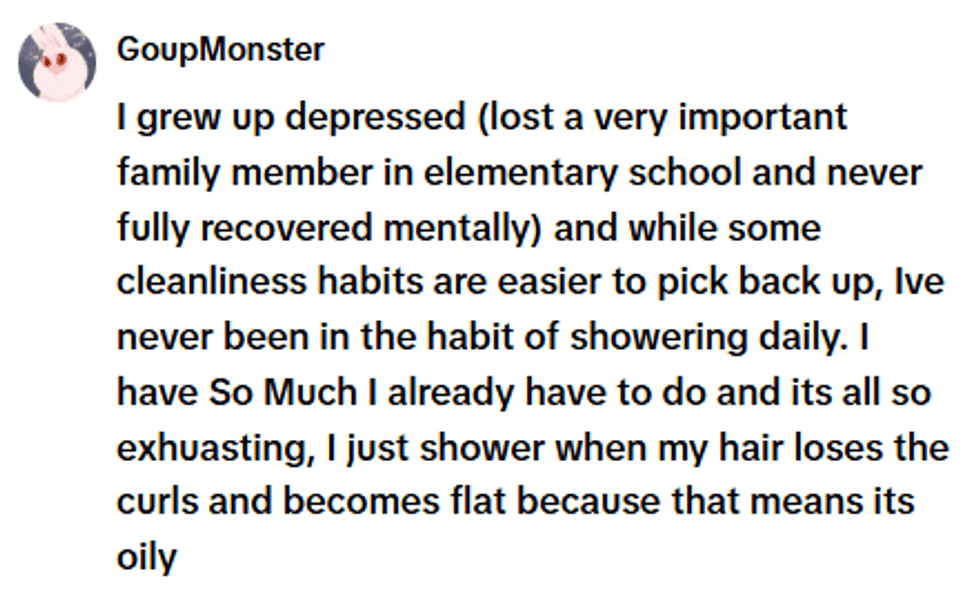 @groovyrockerchick/TikTok
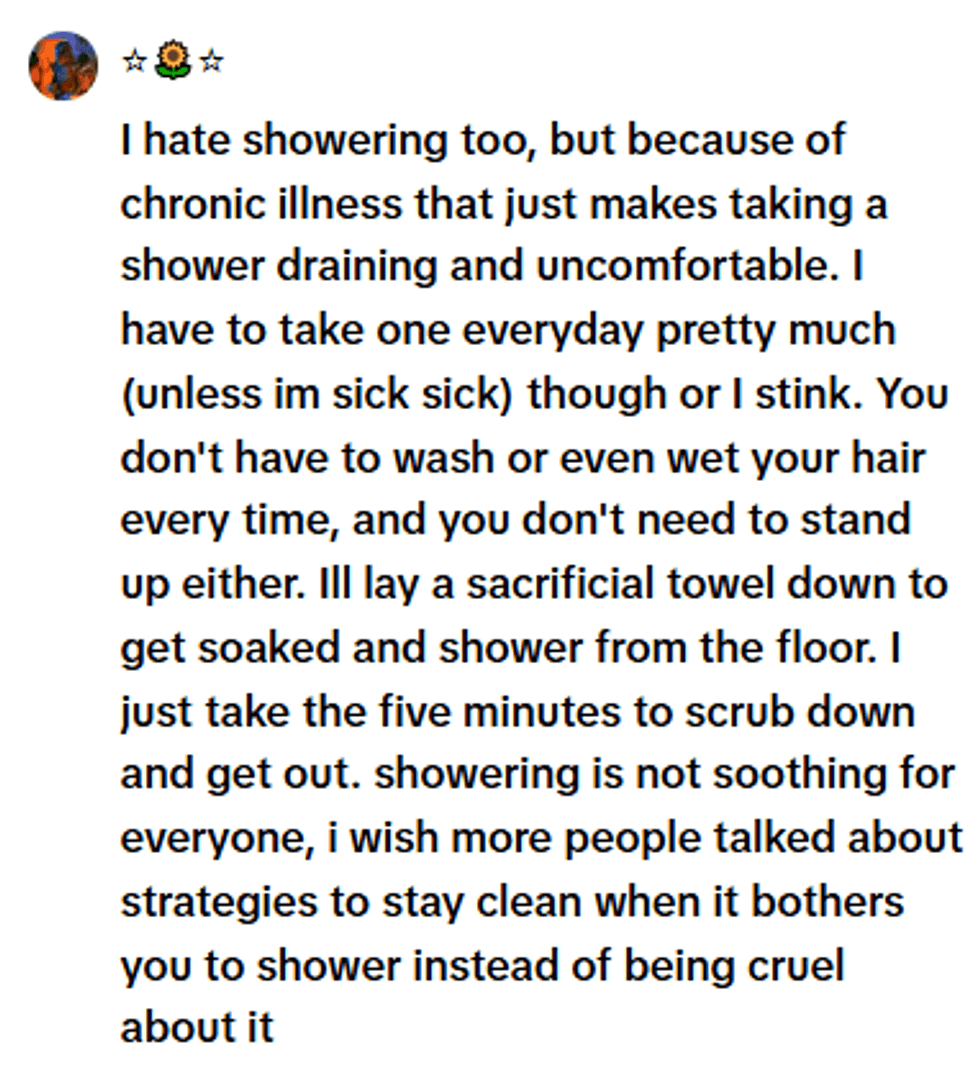 @groovyrockerchick/TikTok
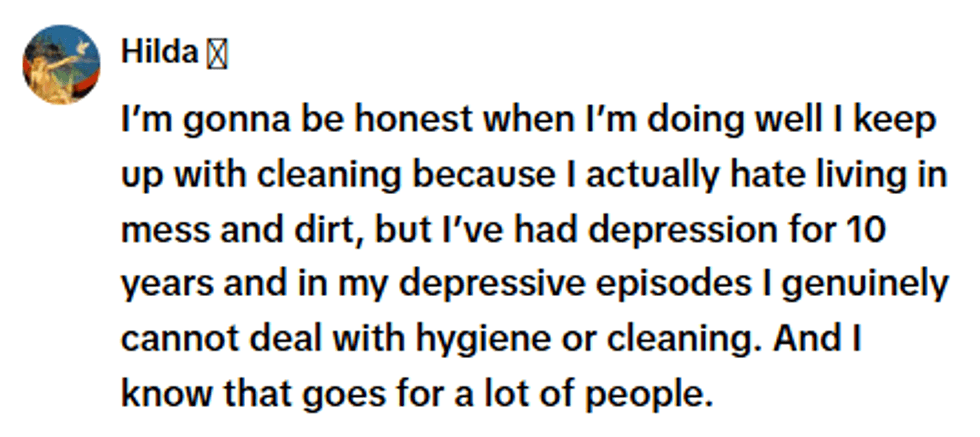 @groovyrockerchick/TikTok
Living with someone with drastically different cleanliness habits can add a lot of stress to an otherwise-tidy person's life, as they often find themselves cleaning up after another adult along with themselves—and the more adults there are, the more mess there is to clean up.
There are reasons why a person may not be as tidy, as some TikTokers pointed out, but when that is the case, a vulnerable conversation about struggles and obstacles would be helpful so that all people involved know what to expect.
Then they can work out solutions that work for everyone, rather than placing more responsibility on one person or shaming someone who may be genuinely struggling.











 @lizzobeeating/Instagram
 @itsgabywith1b/Instagram
 @marra_strength/Instagram
 @gufy.munchlax/Instagram
 @chippedteethtattoos/Instagram
 @bugmother.x/Instagram
 @iansomerhalder/Instagram
 @gorillamind/Instagram
 @mikaylajulian_/Instagram
 @originaldownside/Instagram
 @jaydisabella/Instagram
 @heather.rbby/Instagram
 @elsmerize/Instagram


 @rosie reply to @realdlhughley/Threads
 reply to @rosie/Threads
 reply to @rosie/Threads
 reply to @rosie/Threads
 reply to @rosie/Threads
 reply to @MegynKelly/X
 reply to @rosie/Threads
 reply to @rosie/Threads
 reply to @rosie/Threads
 reply to @MegynKelly/X