


Supreme Court Justice Elena Kagan took Texas Solicitor General Judd Stone II to task on constitutional rights as the Court hears arguments about Texas's anti-abortion law.
On Monday, November 1, the Court began hearing arguments in Whole Woman's Health v. Jackson, a lawsuit challenging the law, which prohibits virtually all abortions after a heartbeat is detected and empowers citizens to file lawsuits against abortion providers suspected of violating the new policy.
There was friction between Stone and Kagan, and you can hear what happened in the video below.
It all began when Stone argued that the Supreme Court cannot stop the law from being implemented, saying that federal courts "don't enjoin laws, they enjoin officials who enforce the laws."
His remarks were questioned by Supreme Court Justice Brett Kavanaugh, who called it a "loophole" to constitutional rights that could apply to any right, even Second Amendment rights, and asked Stone to consider a scenario in which a state didn't ban guns but made anyone who sells an AR-15 "liable for a million dollars to any citizen."
Stone responded by claiming that his argument "does not turn on the nature of the right." He said only an act of Congress would stop states from passing such laws, adding that the Supreme Court would not be able to do anything.
That was when Kagan stepped in–and ripped Stone for his reasoning.
"Your answer to Justice Kavanaugh, which is go ask Congress, I mean, isn't the point of a right that you don't have to ask Congress?"
"Isn't the point of a right that it doesn't really matter what Congress thinks or what the majority of the American people think as to that right?"
According to Stone, the Supreme Court has to assume that Texas state court judges will "faithfully apply the Constitution," in this case Roe v. Wade, the landmark Supreme Court decision that protects a pregnant woman's right to choose reproductive healthcare without excessive government restriction.
The Supreme Court, he said, would only be able to weigh in on the law following appeals in the event a Texas state court doesn't apply Roe correctly and awards a $10,000 bounty to anyone who sues over an otherwise legal abortion.
Kagan also disapproved of that argument, noting that an appeal could come "many years from now" and cause "a chilling effect that basically deprives people who want to exercise the right from the opportunity to do so in the maybe long-term interim."
Many have praised Kagan for her remarks.
As a resident of Texas and someone who values the rule of law, 3 cheers for Justice Kagan. No matter how one feels about abortion, this is a horrifically bad law. https://t.co/WBweIlruGW
— James Pence (@JimPenceChalk) November 1, 2021
Justice Kagan is absolutely right. At the heart of this matter is state lawmakers trying to find a clever way to nullify the constitutional right to an abortion. #SB8 deserves to be struck down. https://t.co/0JfoAgBaB0
— TMF (@TMFtx) November 1, 2021
Justice Kagan is spot on👇🏻 https://t.co/yBpznil2bO
— Minimuh (@Minimuh2017) November 1, 2021
Love Justice Kagan! She really got right to the point. https://t.co/7poyXSZf2m
— Txsocialwork220 (@txsocialwork220) November 1, 2021
Justice Kagan moves past the myopia to the actual point: States can't void constitutional rights, and then avoid federal review. https://t.co/f64UyQcfvl
— davidrlurie (@davidrlurie) November 1, 2021
As per usual, Justice Elena Kagan is 🔥🔥🔥
She points out that Texas' anti-abortion law SB8 is purposefully designed to destroy constitutional rights and avoid court review. https://t.co/Wv9wcvSEY8
— Brett Edkins (@Brettkins) November 1, 2021
#SomeGeniuses in TX tried to let states violate federal constitutional rights, and got slapped down hard.
.@SCOTUS is still gonna overturn 50 years of Roe v. Wade precedent but in a less crazy case https://t.co/ERnKKli4vp
— Randy Winn (@rewinn) November 2, 2021
This 👇🏼 we need more of! https://t.co/e2Cd0rTCAS
— Diane Benitez, Ph.D. (@DianeBenitez) November 1, 2021
Hahahaha i like kagan https://t.co/tW7LRFQVgO
— CINDI ABBOTT (@cindi_abbott) November 2, 2021
The exchange between Kagan and Stone is but one example of the remarks Kagan made about the Texas law.
Earlier, she said the law is creating a "procedural morass" by placing the Court in a position where it would have to undo lower court orders:
"Tell me if I'm wrong on this, that just the procedural morass we've got ourselves into with this extremely unusual law is that we would really be telling the Fifth Circuit, again, if your position prevailed, that the district court had to be allowed to continue with its preliminary injunction ruling."
And, commenting on what might happen if the Supreme Court allows states to enforce laws much in the way Texas has crafted its anti-abortion law, she said:
"I mean, that was something that until this law came along no state dreamed of doing."
"And, essentially, we would be like, you know, we're open for business — you're open for business. There's nothing the Supreme Court can do about it. Guns, same-sex marriage, religious rights, whatever you don't like, go ahead."
In September, Jonathan Mitchell, the former Texas solicitor general considered the abortion law's architect, wrote an amicus brief to the United States Supreme Court ahead of its ruling on Dobbs v. Jackson Women's Health, a Mississippi case limiting abortion to 15 weeks.
The brief questions "lawless" pieces of legislation, namely the Lawrence v. Texas ruling, which decriminalized gay sex nationwide, and the Obergefell v. Hodges ruling, which legalized same-sex marriage.
Mitchell's approach has drawn heavy criticisms that it seeks to evade the process of judicial review, which is the power of courts to decide the validity of acts of the legislative and executive branches of government.






 reply to @lisakearnsward2/Instagram
 reply to Lisa Kearns/Facebook
 reply to Lisa Kearns/Facebook
 reply to @lisakearnsward2/Instagram
 reply to Lisa Kearns/Facebook
 reply to Lisa Kearns/Facebook
 reply to @lisakearnsward2/Instagram
 reply to Lisa Kearns/Facebook
 reply to Lisa Kearns/Facebook
 reply to @lisakearnsward2/Instagram
 reply to Lisa Kearns/Facebook
 reply to Lisa Kearns/Facebook
 reply to @lisakearnsward2/Instagram
 reply to Lisa Kearns/Facebook
 @janhunterlan/Threads; @riccigrams/Threads

 u/a_duck_in_past_life/Reddit
 u/GordEisengrim/Reddit
 u/qu33rtyc0wboy/Reddit
 u/-SnuffBox-/Reddit
 u/Kooky-Blueberry-5352/Reddit
 u/Kidgorgeoushere/Reddit
 u/OShaunesssy/Reddit
 u/eugeneugene/Reddit
 u/AvengingHero2012/Reddit
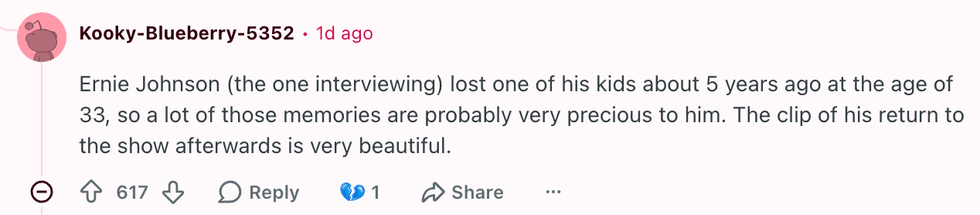 u/Kooky-Blueberry-5352/Reddit
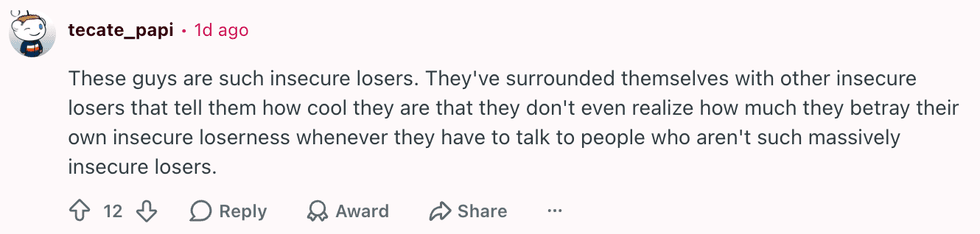 u/tecate_papi/Reddit
 u/Accomplished_Ad5811/Reddit
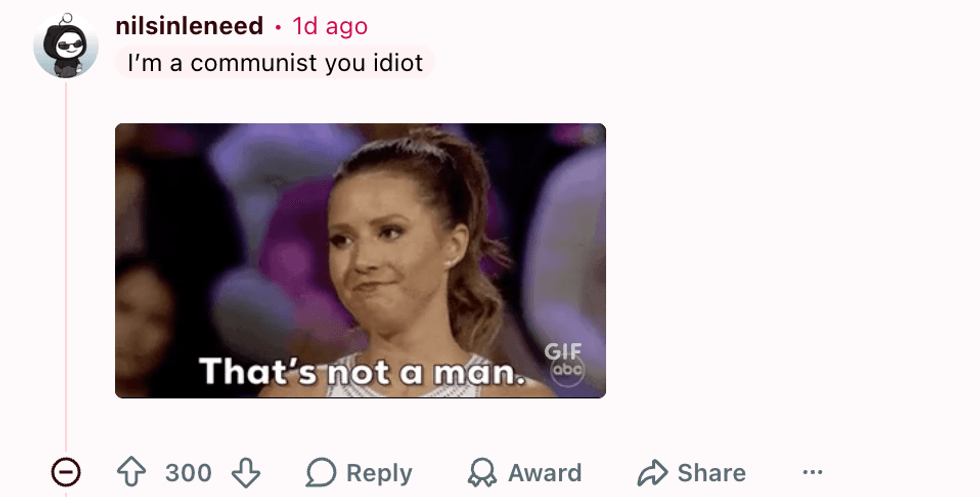 u/nilsinleneed/Reddit