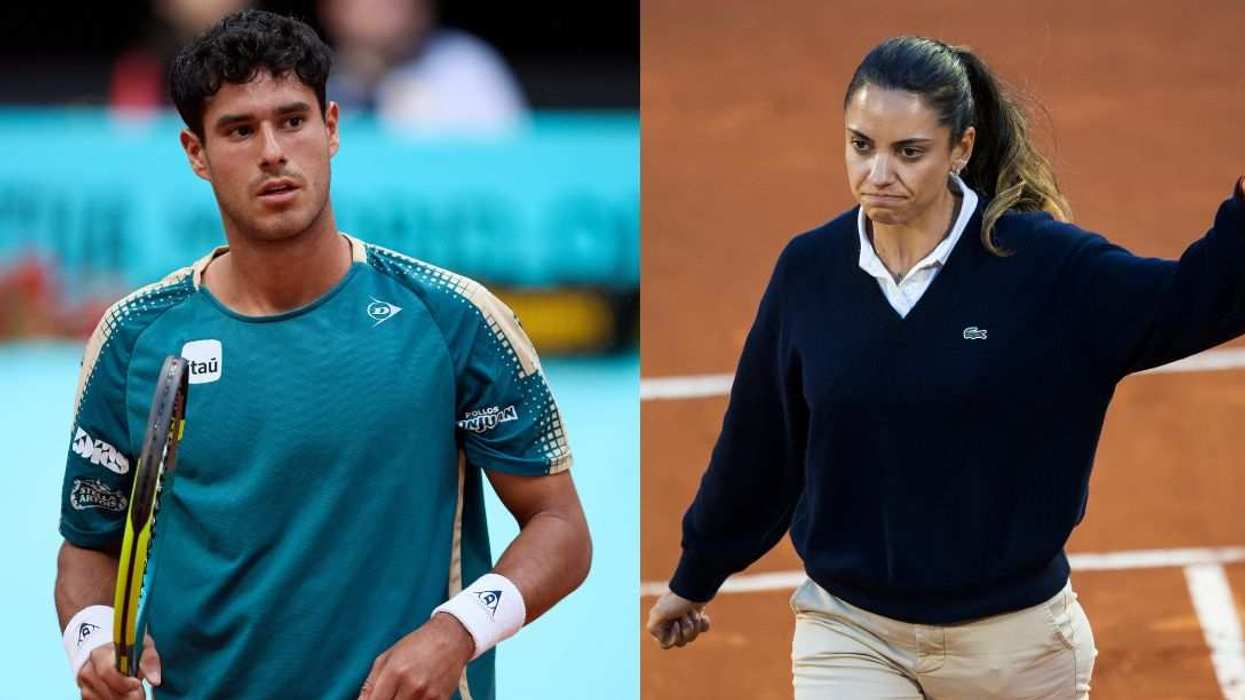

If Adolfo Daniel Vallejo was hoping to make headlines during the French Open, he succeeded. Unfortunately for him, the attention had less to do with his tennis and more to do with a sexist comment that quickly sparked backlash and left him a little lighter in the wallet.
The Paraguayan tennis player was fined $65,000—reportedly one of the largest sanctions in Roland-Garros history—after claiming his French Open match should not have been umpired by a woman. The controversy erupted following his dramatic five-set loss to French teenager Moïse Kouamé on May 28.
Kouamé, 17, was roared on by a partisan crowd on Court Suzanne Lenglen before eventually securing a 6-3, 7-5, 3-6, 2-6, 7-6 (8) victory after four hours and 56 minutes.
Speaking to tennis outlet Clay after the match, Vallejo questioned the officiating assignment:
“This sort of match needs to be umpired by a man; it’s very difficult for a woman to do it…”
The comments were pointedly directed at Brazilian chair umpire Ana Carvalho, an experienced official who holds a Silver Badge certification from the International Tennis Federation (ITF) and regularly works ATP, WTA, and Grand Slam events.
Not content to leave it there, he doubled down while discussing the atmosphere on Court Suzanne Lenglen:
“It has to be refereed by a man, because it’s a very demanding crowd and you need a lot of strength to go against the crowd.”
Sexism aside, Vallejo's broader complaint centered on his belief that Carvalho allowed Kouamé too much time between points during the nearly five-hour match. While players are generally allotted 25 seconds between points, chair umpires have discretion over when to begin the countdown, particularly when crowd noise or other disruptions affect play.
Vallejo argued the crowd ultimately worked in his opponent's favor:
“The crowd was very out of line, but I understand they are supporting their compatriot. It’s quite an intense crowd, and that’s why I was prepared. I already knew it would be like that and, to be honest, it didn’t harm me, but rather strengthened him.”
Vallejo also claimed Kouamé was given excessive recovery time during key moments of the match. The French teenager recently made headlines of his own by becoming the youngest man to win a Grand Slam match since 1991 after defeating former US Open champion Marin Čilić in his Roland-Garros debut.
Continuing to play the world’s teeniest tiniest violin, Vallejo added:
“I think he took up a lot of time on many occasions, lying on the floor or stalling. And it’s not normal for the crowd to be shouting for a full minute without any play. In a match where the physical aspect matters so much, if you give a player a lot of time, he’s obviously going to take advantage of it.”
The 22-year-old Vallejo is currently Paraguay's top-ranked men's singles player and has reached a career-high ATP ranking of No. 70. French Tennis Federation and Roland-Garros officials, however, were unmoved by his complaints and deemed the remarks unacceptable.
Tournament organizers condemned Vallejo's comments while announcing the sanction:
“The competence of an umpire is not determined by their gender, but by their professionalism and ability to officiate at the highest level. The outcome of a sporting event, whether positive or negative, can never justify or excuse such remarks. The tournament organizers will impose a significant sanction on Adolfo Vallejo in the form of a fine.”
In a lame attempt at damage control, Vallejo later posted a statement to his Instagram Stories, claiming his comments had been misinterpreted.
You can view his post here:
El descargo de Vallejo:
“Quiero aclarar que mis comentarios no fueron hechos con la intención con la que han sido interpretados.
Tengo respeto por la jueza y por el trabajo que hizo. Después de una batalla de 5 horas estaba muy acalorado y con muchas emociones. Me disculpo.… https://t.co/Hf2GNGpbJi pic.twitter.com/dCyD3LjpjB
— Gonzalo Ferreyra (@gonzaloferreyr) May 29, 2026
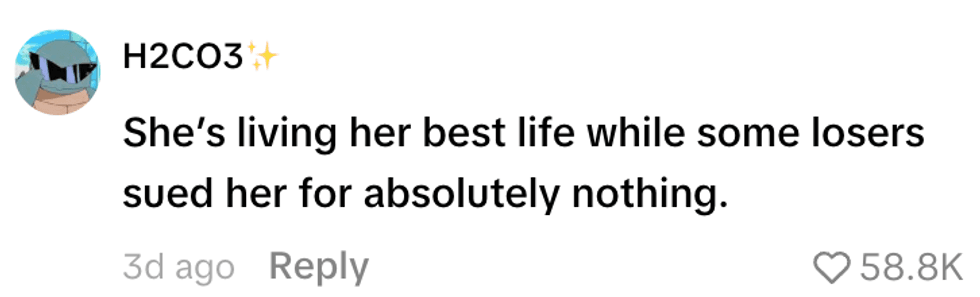
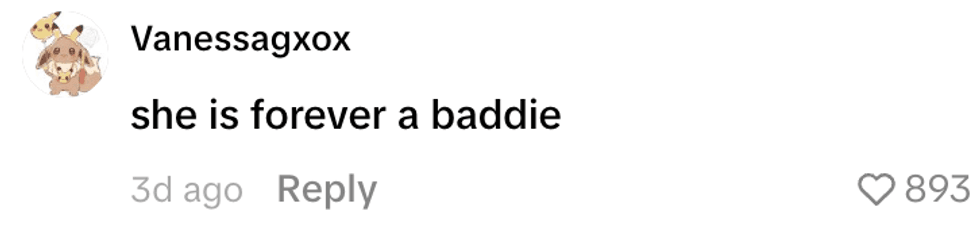
But social media users were far less interested in Vallejo's explanation than they were in what many viewed as an old-fashioned excuse for losing. Numerous commenters branded the tennis player a "sore loser," arguing that blaming a female umpire after a nearly five-hour defeat was poor form.
Unsurprisingly, the internet wasn't exactly on Vallejo's side of the tennis court:
The punishment quickly became one of the tournament's biggest off-court stories. Vallejo’s consequential fine is roughly half his prize money and one of the largest sanctions in Roland-Garros history.
The organizers also reaffirmed their support for officials and condemned sexist remarks in the sport:
“The Roland-Garros tournament strongly condemns all sexist remarks, regardless of who makes them, and offers its support to the match umpire and, more broadly, to all the tournament’s umpiring officials.”
In the end, Vallejo's five-set loss wasn't the only thing people were talking about. His comments sparked days of backlash, resulted in one of the largest fines in tournament history, and shifted the conversation away from tennis and squarely onto the issue of sexism in sports.











 @realDonaldTrump/Truth Social
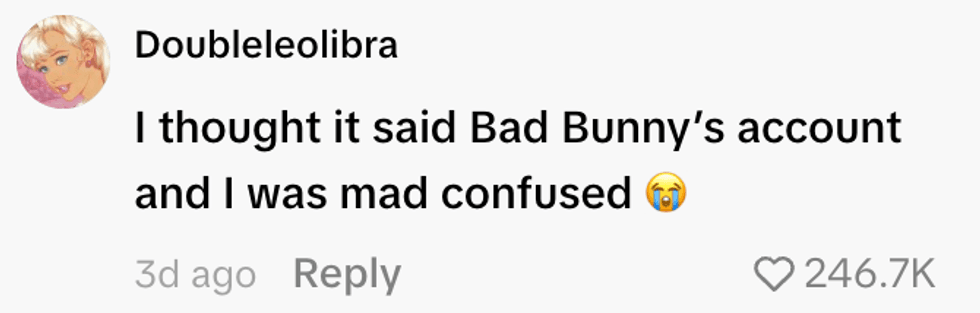 @doubleleolibra/TikTok
 @alyssaneel01/TikTok
 @dave_weissman/TikTok
 @bubbling042/TikTok
 @oreosyxc/TikTok
 @luna29xo/TikTok
 @tinita001/TikTok
 @mrgm428/TikTok
 @ana7979982/TikTok
 @piers_xd/TikTok
 @crazier009/TikTok