
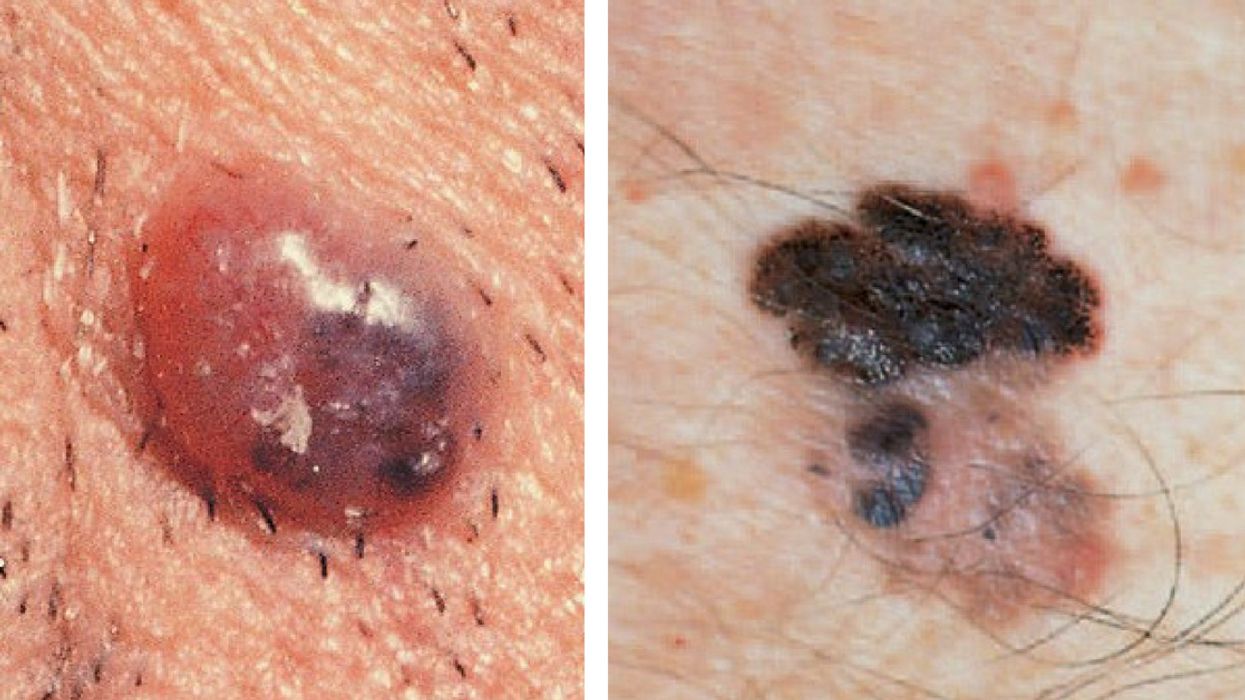

Being knowledgeable about your body can save your life. With skin cancer rates on the rise, it's more important than ever to lather up with sunscreen every time you go out in the sun, but just as important is being able to identify questionable spots when they appear.
When it comes to skin cancer, there are three varities that cause most of the problems. According to Anne McNeill, a dermatologist and spokesperson for the Skin Cancer Foundation:
The three most common forms of skin cancer are basal cell carcinoma, squamous cell carcinoma, and
melanoma.
First, let's talk Basal cell carcinoma! Here's what it looks like:
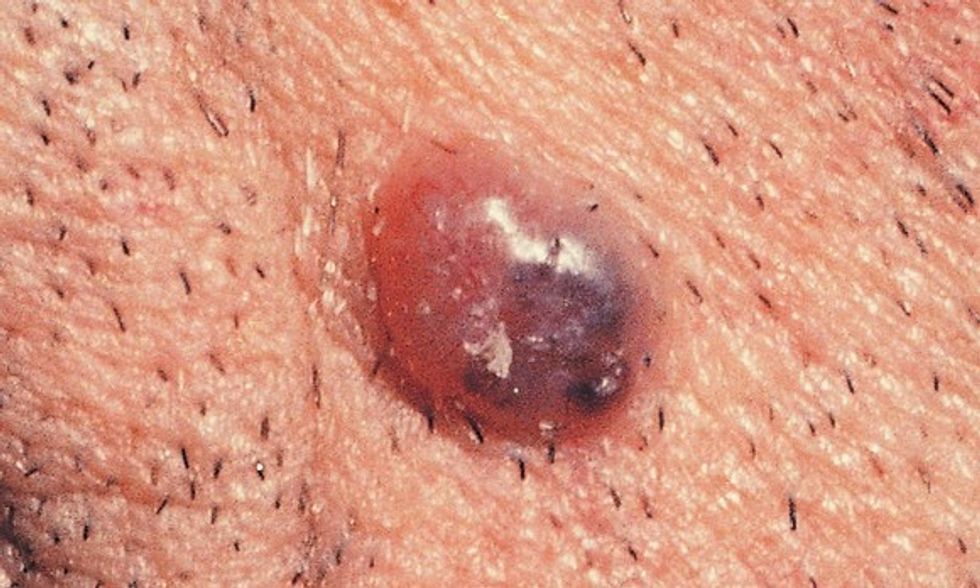 Skin Cancer Foundation
BCC is the most common form of skin cancer. There are around 4.3 million people diagnosed every year, but it ultimately kills only 3,000 according to the SCF.
So what does BCC look like? Instances of the disease often look like "little red patches or open sores." McNeill commented to Allure:
I often tell my patients if they have a spot that looks like a pimple or a sore [that hasn't healed], I want them to come in. It's probably not a pimple if it hasn't gone away after a month.
Basal cell carcinoma can be found where our bodies get the most sun: the face, ears, shoulders, or upper chest (especially if you're a lady). A human's chances of contracting BCC grow as we do - the more sun our body receives, and the more burns we've suffered, the higher the risk. And, according to McNeill, if you've had it once, you're likely to have it again:
If you've had a basal cell, wear sunscreen every single day and get regular skin exams either every six months or every year. Chances are you are going to get another one and we want to catch it early.
The good news is that BCC is extremely treatable. If caught very early, the affected patch of skin can simply be scraped or burned off. Even if the cancer has progressed to a further degree, Mohs surgery, the more serious treatment option, is a simple out-patient procedure. The doctor simply removes one layer of skin tissue at a time, until the tumor is completely gone. Voila!
Mohs surgery is designed to cause minimal scarring. Of course, the trick is to catch the cancer as early as possible.
The second most common form of skin cancer is Squamous cell carcinoma. Here's what it looks like:
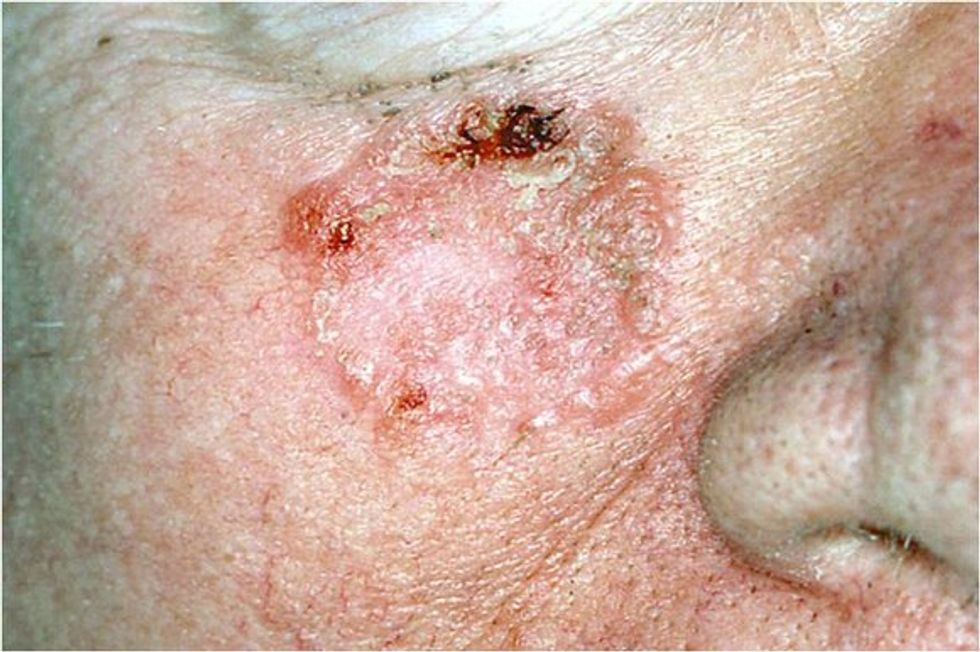 Skin Cancer Foundation
Though less common, SCC is far more deadly than BCC. 1 million people are diagnosed each year and 15,000 eventually lose their lives to the disease (though perhaps not that year). McNeill explains why:
If left untreated, squamous cell carcinomas are more likely to spread into the lymph nodes and be life threatening.
Sometimes squamous cell carcinoma looks just like basal cell carcinoma, at other times it appears as "red, scaly patches or open sores that crust and bleed." Also like BCC, SCC effects the areas of your body which receive the most UV radiation—the face, neck, scalp, etc.—and is treated fairly easily if caught early.
But there's a prominent difference between the two cancerous cousins: SCC is on the rise among people "in their 20s and 30s and in people with darker skin tones." Why? The Skin Cancer Foundation believes tanning beds are part of the problem:
People who use tanning beds are two and a half times more likely to develop squamous cell carcinoma than those who don't.
The third most common form of skin cancer also happens to be the most deadly: melanoma.
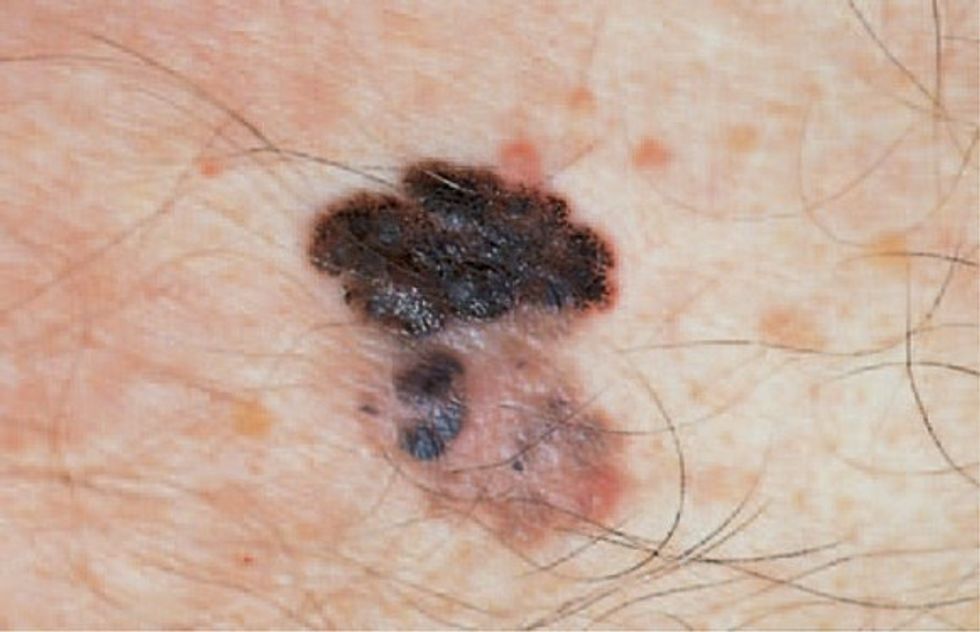 Skin Cancer Foundation
Only 1% of skin cancers are diagnosed as melanoma, but it the deadliest of the big three. 9,320 are expected to die because of the cancer in 2018, which is roughly one person an hour.
So how can we tell the difference between a melanoma, a benign mole, or BCC and SCC? Dermatologists have developed a tool to help non-doctors pick it out: the "ABCDE's" of melanoma.
A - asymmetry. If two sides of a mole don't match, it's a warning sign.
B - border. Benign moles tend to have smooth edges, melanomas tend to have jagged ones.
C - color. More specifically, variety of color. If a mole contains multiple colors, it could be a red flag for doctors.
D - diameter. Melanomas can be small, but a mole "larger than the size of a pencil eraser," likely needs attention.
E - evolution. According to Julie Karen, a dermatologist:
If you have a mole that's changing in size, shape, or color, even if that mole has been previously examined, it's worth having it looked at again.
Again, UV radiation plays a big role in causing melanoma, but genetics also make an impact. McNeill commented:
Know your family history. If one of your first-degree family members had it, that increases your chances significantly.
If you catch melanoma early enough, it can be removed by a dermatologist. If the cancer has spread, however, much more aggressive treatments like chemo-therapy may become necessary.
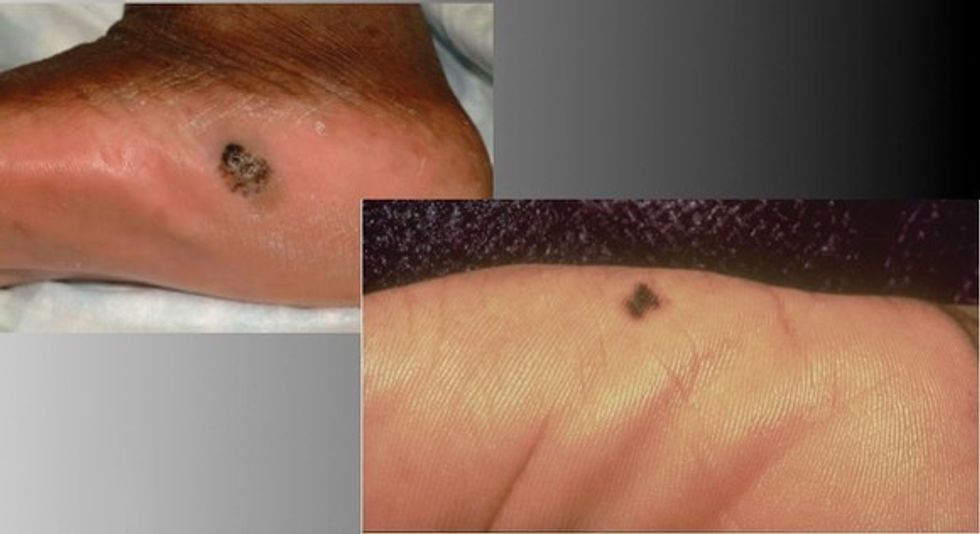 Skin Cancer Foundation
As the cancers become rarer, they become more deadly. While Merkel cell carcinoma (below) is roughly 40 times rarer than melanoma, it "kills one in three patients."
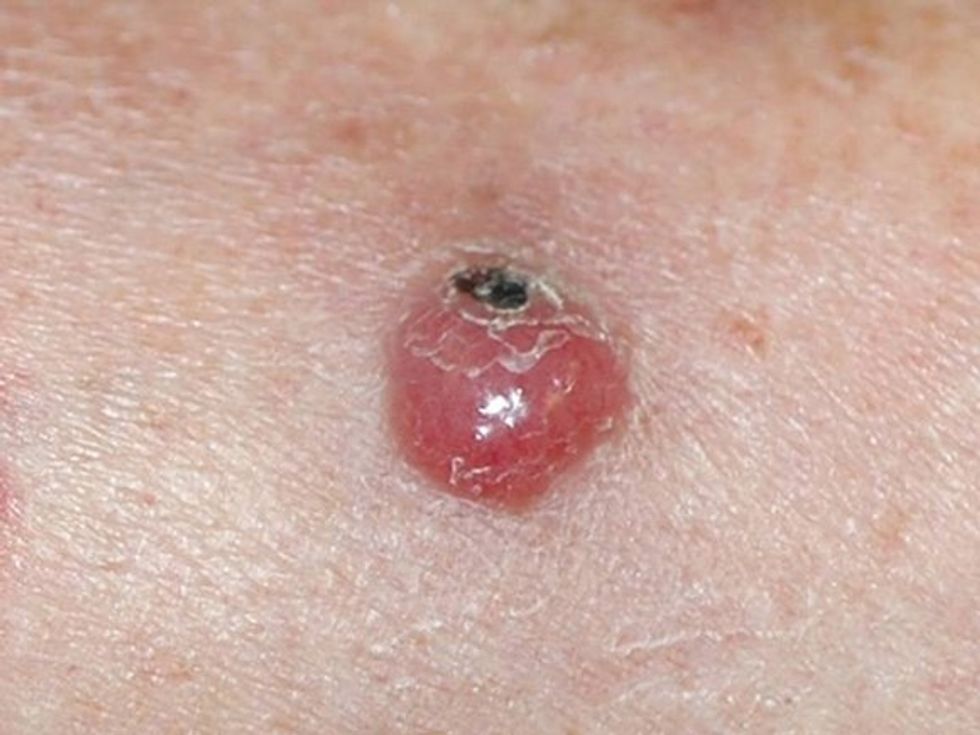 Skin Cancer Foundation
Sometimes, cancers based in other parts of the body, like the lymph nodes, breasts, or kidneys, can make themselves known through skin issues. If your skin has been acting especially strange, a dermatologist may suspect cancer and consult you to a specialist.
In the fight against cancer, knowledge is power!
H/T - Allure, Skin Cancer Foundation





 @LauraLoomer/X
 community note on post by @LauraLoomer/X
 Wikipedia; @LauraLoomer/X
 @gtconway3d/X
 @USA_Polling/X
 @GenXGirl1994 reply to @LauraLoomer/X
  @harryjsisson/X
 @evankaloudis reply to @LauraLoomer/X
 @TrumpPedophile2 reply to @LauraLoomer/X
 @NadaKaupas reply to @LauraLoomer/X
 @TadhgHickey/X







 @dsteiger1/Threads