
Apartheid—the word for "apartness" in Afrikaans—was a legalized system that instituted racial segregation and discrimination in South Africa enacted by the National Party government from 1948 to 1994.
The party enforced a system of White minority rule by stripping "colored"—anyone non-White, but not Black—and Black South Africans of their rights based on their skin color and ethnicity.
At the bottom of the social hierarchy were the population majority of Indigenous Black South Africans who were stripped of their citizenship, land, and civil rights while entrenched at the top were the people descended primarily from 17th-century Dutch, German, and French Huguenot White colonizers who labeled themselves Afrikaners.
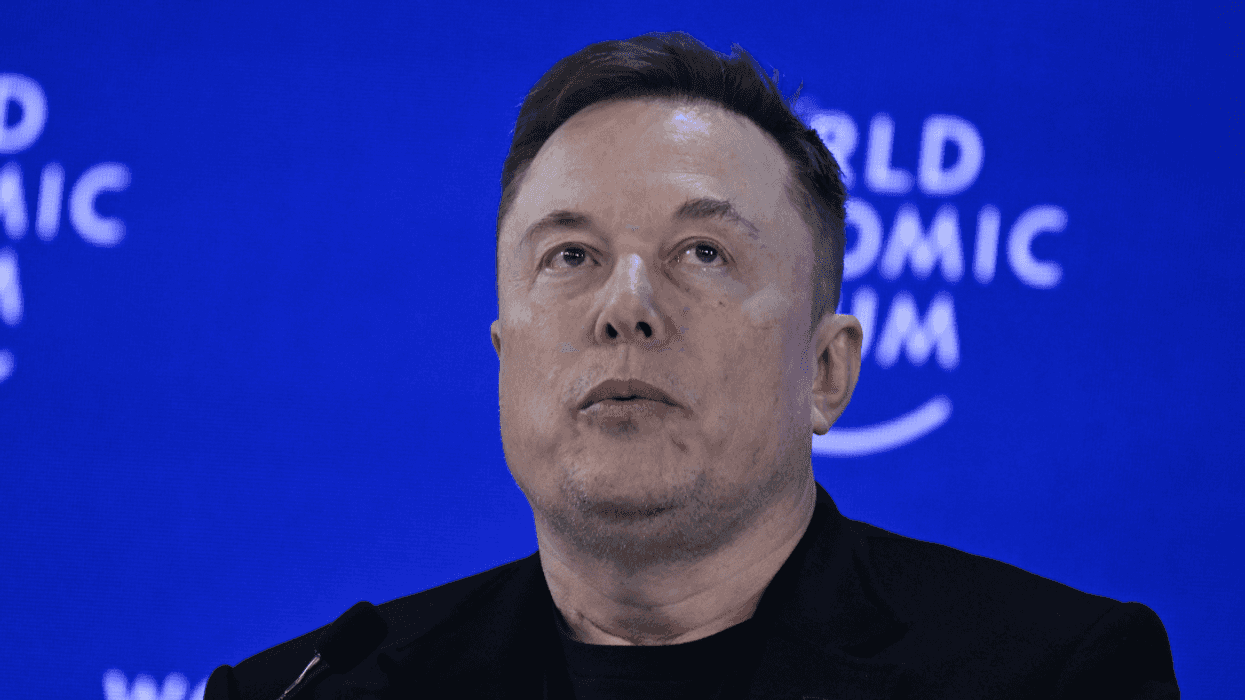
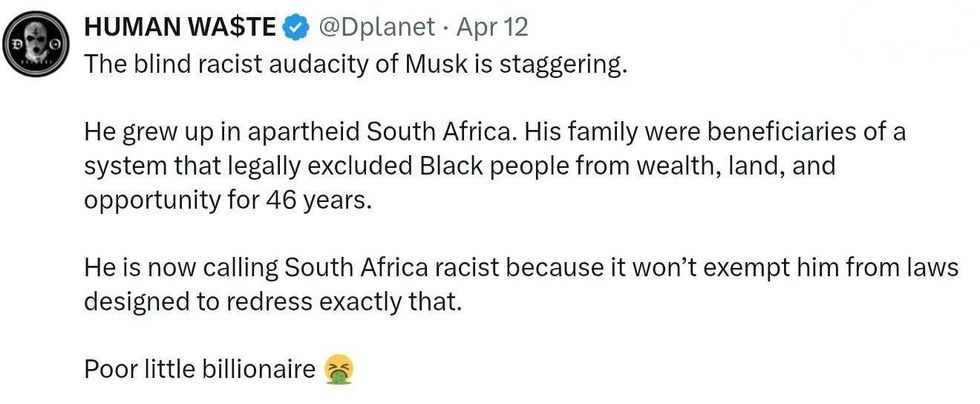
This system of White supremacy resulted in oppression and violence for the lower classes and privilege for the ruling class before finally ending in 1994. Billionaire Elon Musk was born and raised in this environment of racial segregation and confiscated wealth and resources; he left in 1989, just before turning 18, to avoid mandatory military conscription.
Such a background of enforced White supremacy and inherited wealth is likely why Musk exemplifies the adage, "for those who've only known privilege, others gaining equality can feel like oppression."
Musk often decries diversity, equity, and inclusion (DEI)—which he, like many Americans, defines as anyone non-White, female, and/or LGBTQ+ existing in spaces that were once reserved for White, heteronormative men—as racism aimed at White men like himself.
Musk whines about anti-White racism a lot in a country where 46 of 47 Presidents were White men and it took over 200 years for an Indigenous woman to be a member of Congress.
But Musk clearly misses the days when things were handed to him without question because of his wealth and Whiteness.
His latest claim of victimhood is aimed at his home nation of South Africa over their failure to give him what he wants. Musk was seeking a license for Starlink, a satellite-based internet service operated by Musk’s SpaceX.
On Sunday in a post on the social media platform he owns, X, Musk wrote:
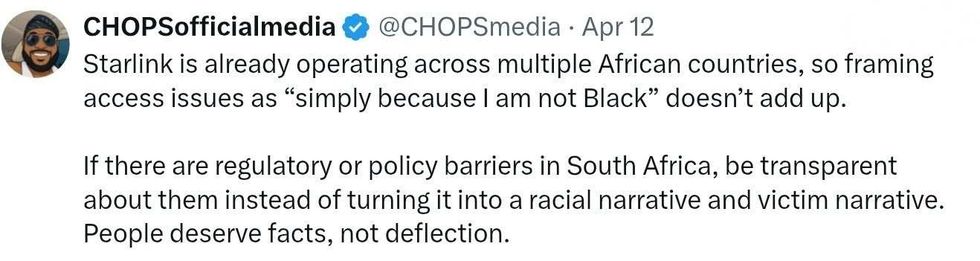
"South Africa won’t allow Starlink to be licensed, even though I was BORN THERE, simply because I am not Black!"
"We were offered many times the opportunity to bribe our way to a license by pretending that a Black guy runs Starlink SA, but I have refused to do so on principle."
"Racism should not be rewarded no matter to which race it is applied."
"Shame on the racist politicians in South Africa. They should be shown no respect whatsoever anywhere in the world and shunned for being unashamedly RACISTS!"
To legitimize his claim, Musk included a quote post from DogeDesigner, a Musk propaganda account on X.
DogeDesigner is a notable "Musk-associated" account that posts pro-Musk content and gives Musk the chance to promote himself from a third party account while his primary account interacts with it, similar to MAGA Republican President Donald Trump's use of his John Barron alter-ego. Musk often replies to, likes, or reposts DogeDesigner content to boost his ego and image.
According to TimesLIVE, a prominent South African online news platform based in Johannesburg, Musk refused to comply with South African law regarding foreign-based companies, unlike hundreds of other American-based companies working in South Africa.
Apartheid left millions of Black Indigenous South Africans living in tin shacks in massive ghettos after the White government stole their homes and land. In order to recover without confiscating everything stolen from them, the country enacted laws requiring investment by foreign companies in this underserved population.
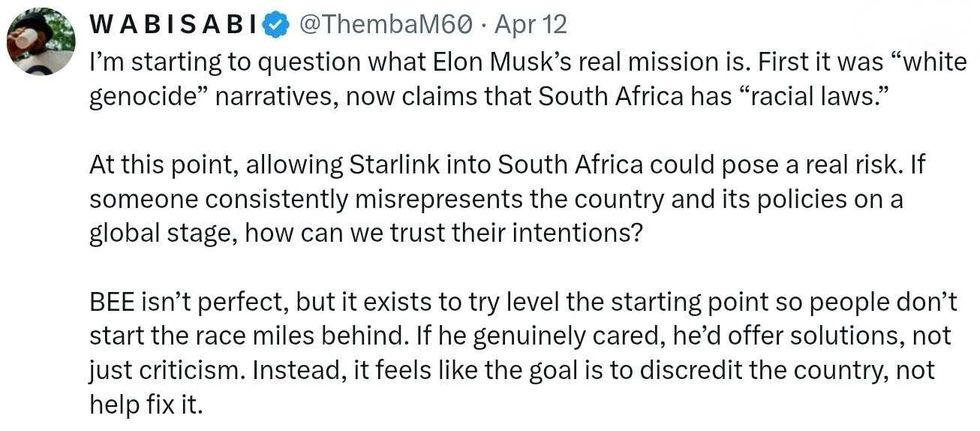
Under Independent Communications Authority of South Africa (ICASA) regulations, foreign telecommunications licensees must allocate 30% equity to historically disadvantaged groups as part of the Broad-Based Black Economic Empowerment (B-BBEE) policy.
Musk insists that law shouldn't apply to him, even though he doesn't pay taxes in South Africa, nor does his U.S.-based business. Starlink has repeatedly been denied a license for failing to comply with these equity requirements.
South African officials pointed out the regulations apply equally to all companies, regardless of race or ethnicity of the ownership, and are not directed at any specific individual. They maintain they are the best option for recovery after almost 50 years of racial discrimination without impacting the lives of current White South Africans.
South African presidency spokesperson Vincent Magwenya told Musk if he didn't want to be subject to South Africa's laws, again, he could move on like he did in 1989 by moving to Canada to avoid the White South African mandatory military service law.
Magwenya posted on X:
"There are currently 193 member states in the United Nations. Surely, there's good money to be made out of 192 markets. It's okay to move on!"
Musk’s minions on X tried to hit back at Magwenya, but were quickly schooled on what was actually happening.
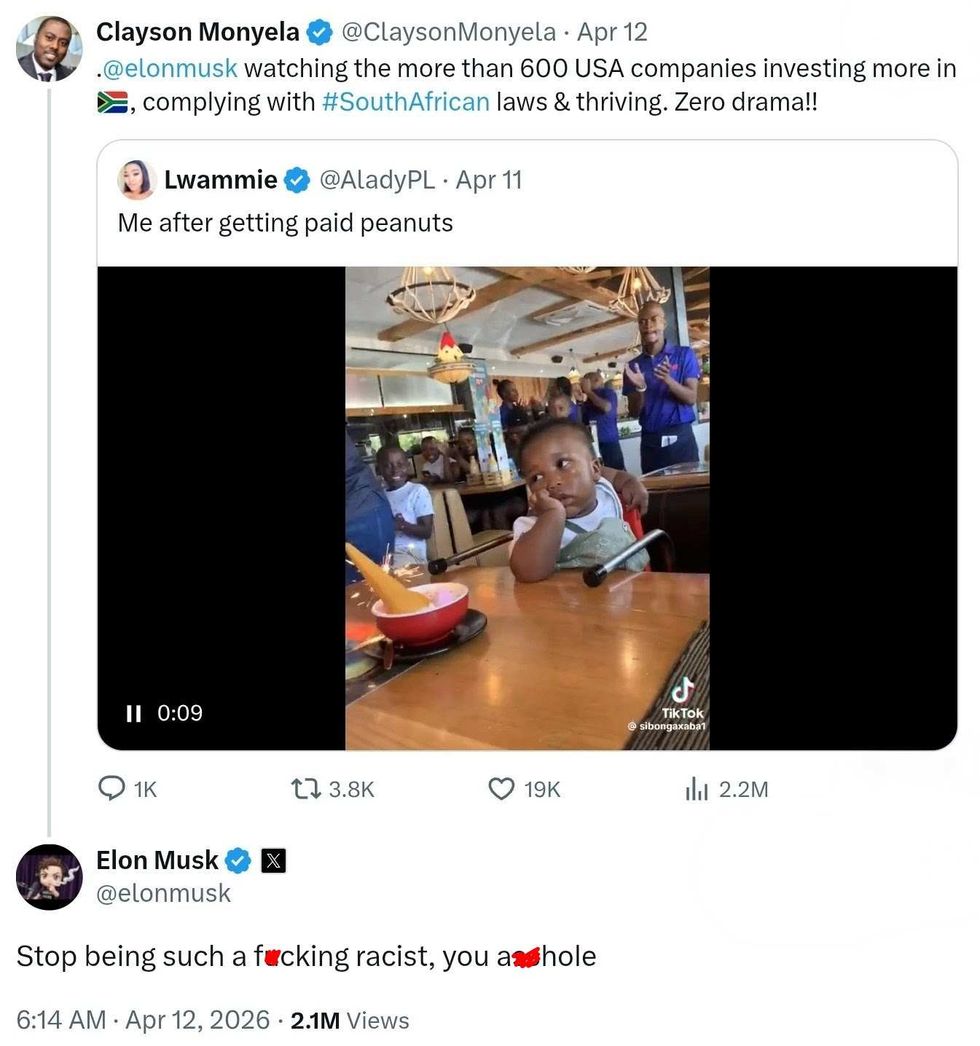
When Department of International Relations spokesperson Clayson Monyela pointed out other American ccompanies had no issues following the laws of countries they do business in, Musk responded like the petulant child Monyela implied he was.
Monyela posted a clip of a pouting child captioned:
"[Elon Musk] watching the more than 600 USA companies investing more in [South Africa], complying with [South African] laws & thriving. Zero drama!!"
Musk responded:
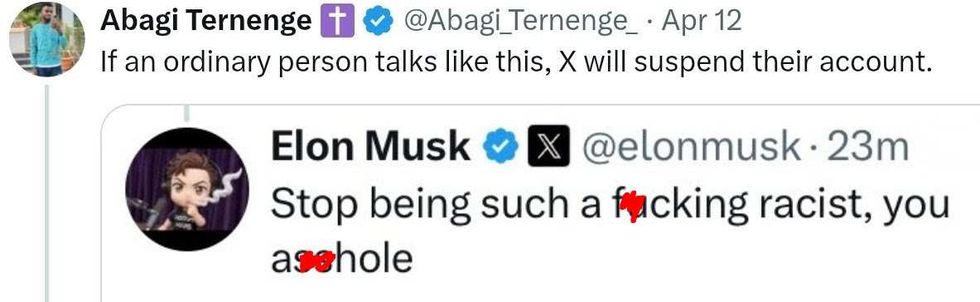
"Stop being such a f*cking racist, you a**hole"
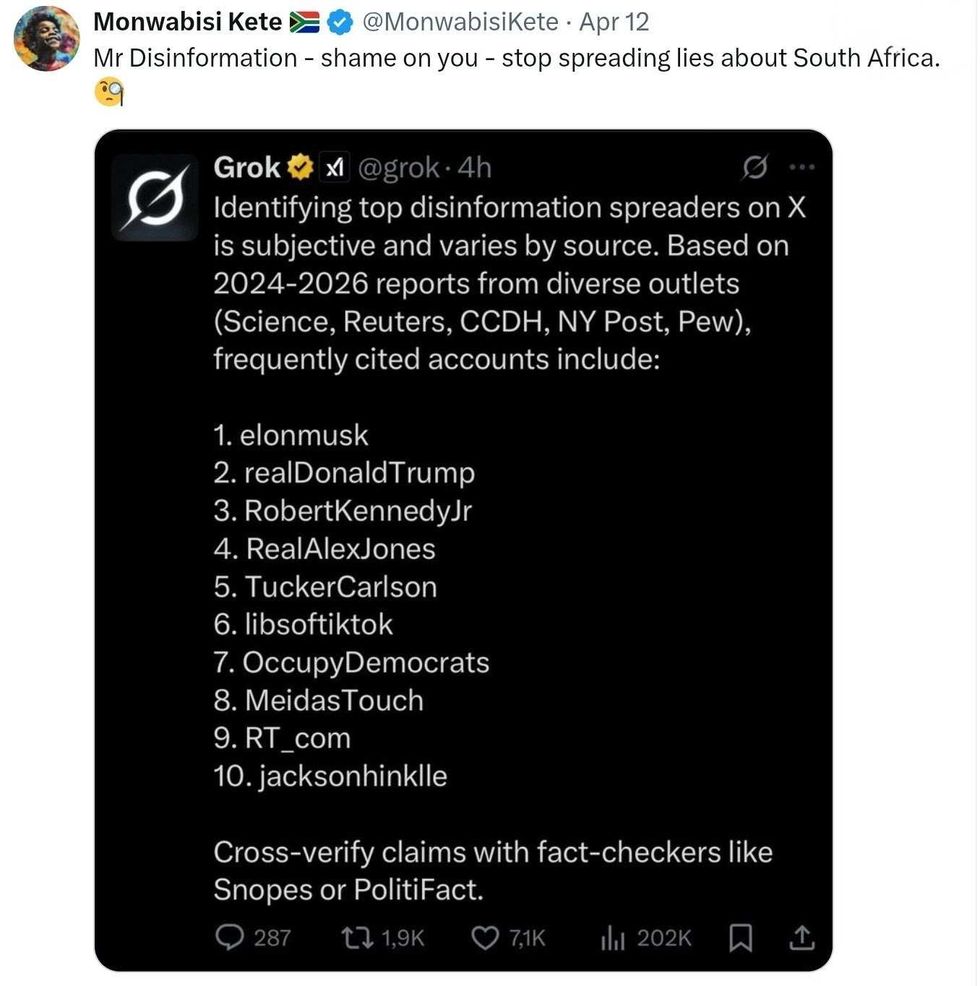
People were quick to call out Musk’s latest claim of oppression on the platform he bought for $44 billion.
 reply to @elonmusk/X
 reply to @elonmusk/X
 reply to @elonmusk/X
 reply to @elonmusk/X
 reply to @elonmusk/X
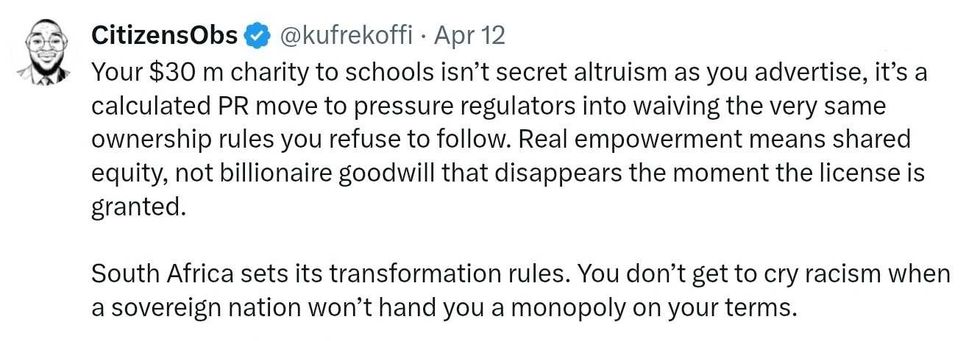 reply to @elonmusk/X
SpaceX, along with its subsidiary Starlink, is one of the only companies Musk didn't buy controlling interest in after others created the technology.
In 2002, Musk decided he wanted rockets, but after failing to buy any from Russia, he founded SpaceX. The team of scientists and engineers he hired developed SpaceX's rocket and satellite program that created Starlink.
Musk has used his money to sell SpaceX and Starlink to multiple governments as the answer to their space travel and communication needs.
According to the Washington Post, as of 2025, Musk enjoyed at least $38 billion in U.S. government funding which included contracts, subsidies, and grants.

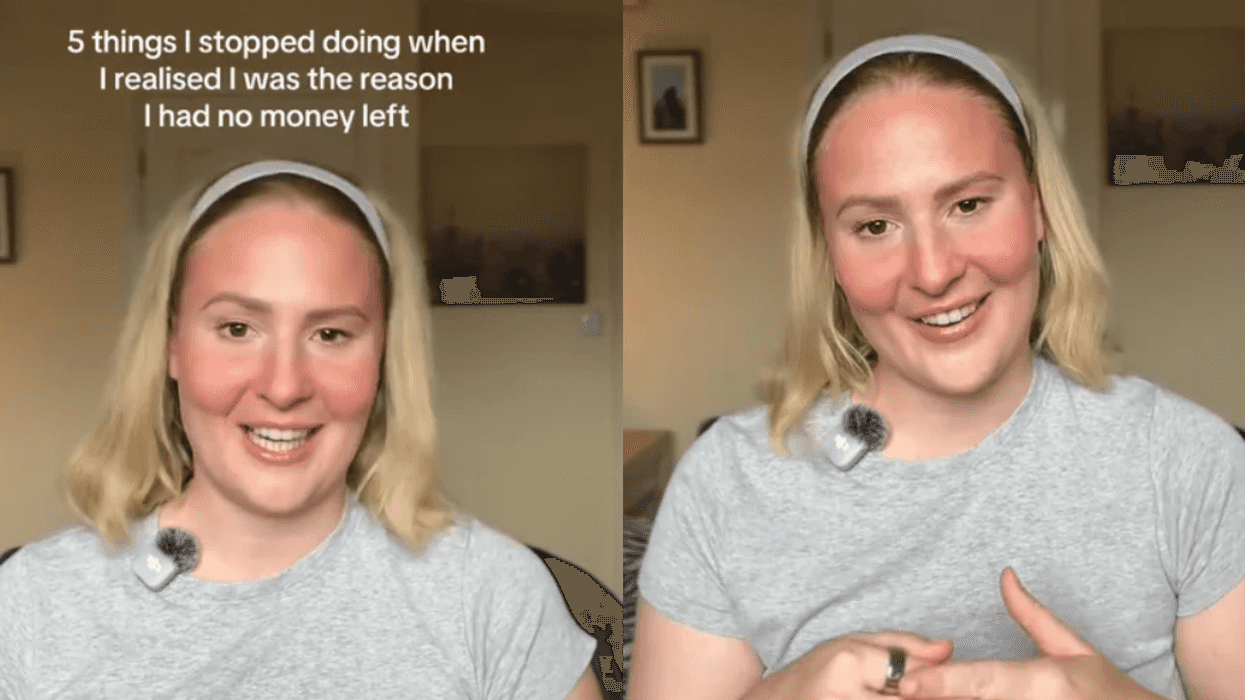
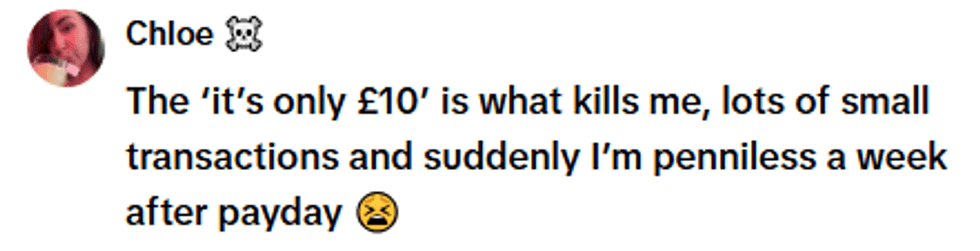 @georgiamaythornley/TikTok
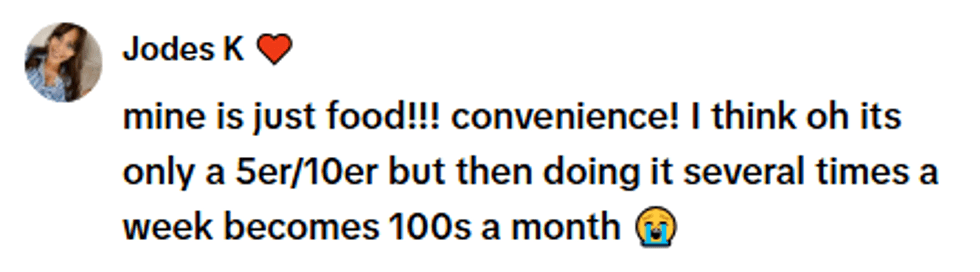 @georgiamaythornley/TikTok
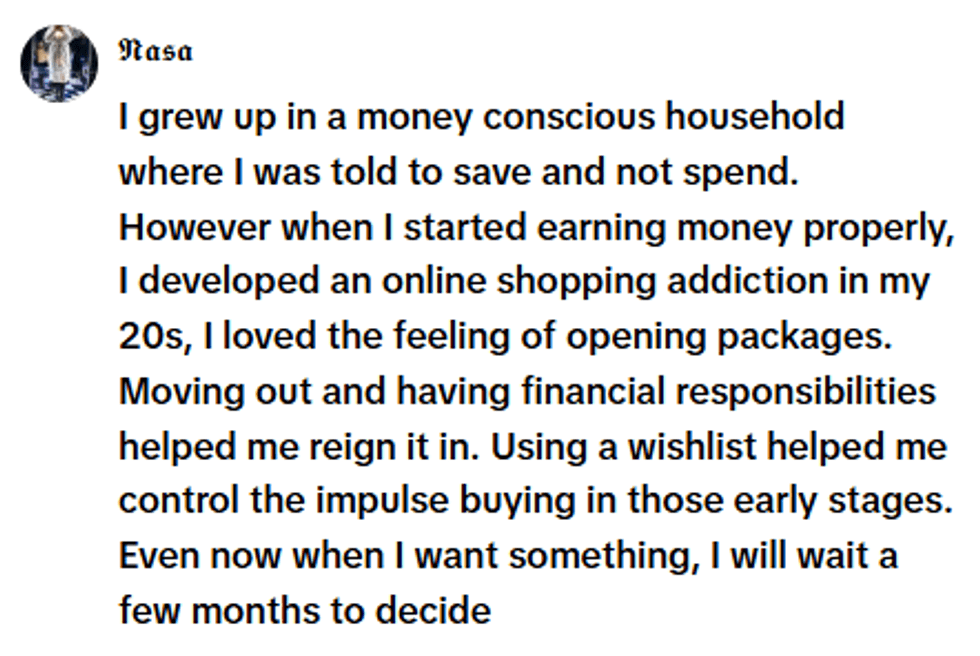 @georgiamaythornley/TikTok
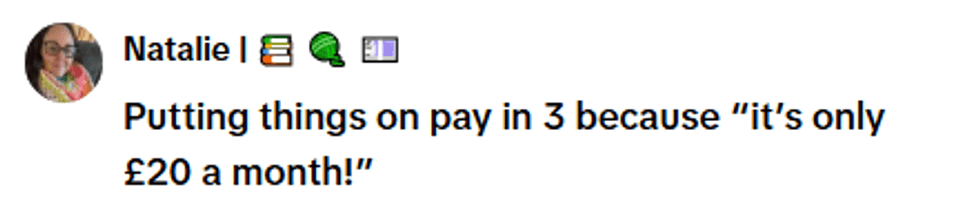 @georgiamaythornley/TikTok
 @georgiamaythornley/TikTok
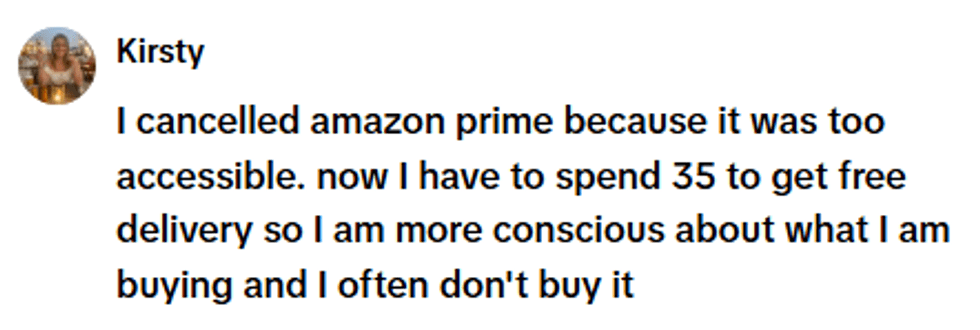 @georgiamaythornley/TikTok
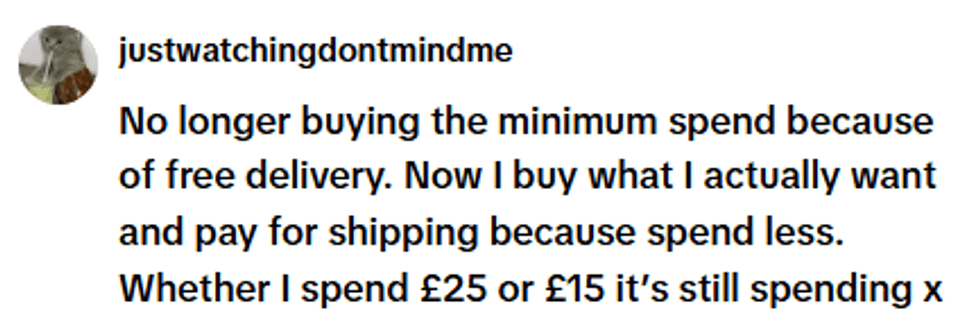 @georgiamaythornley/TikTok
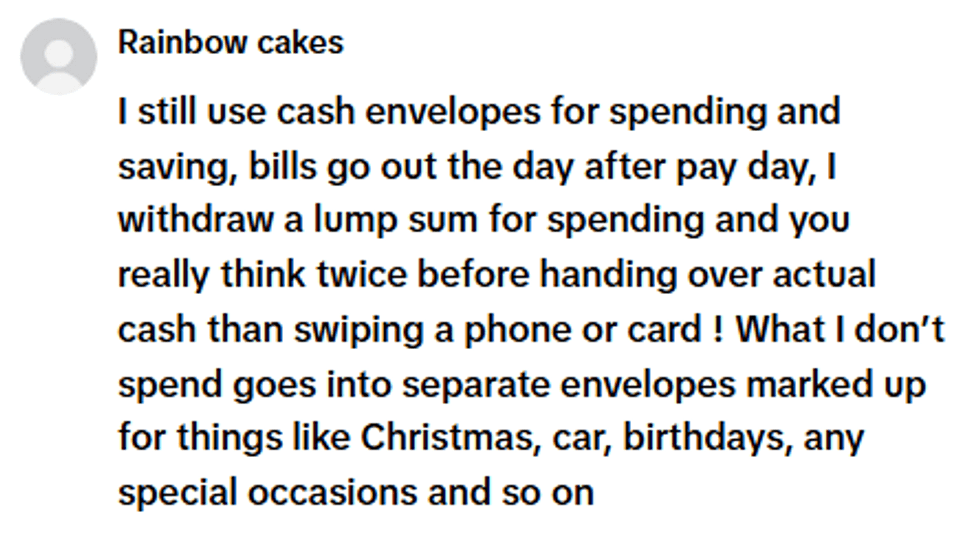 @georgiamaythornley/TikTok
 @georgiamaythornley/TikTok
 @georgiamaythornley/TikTok


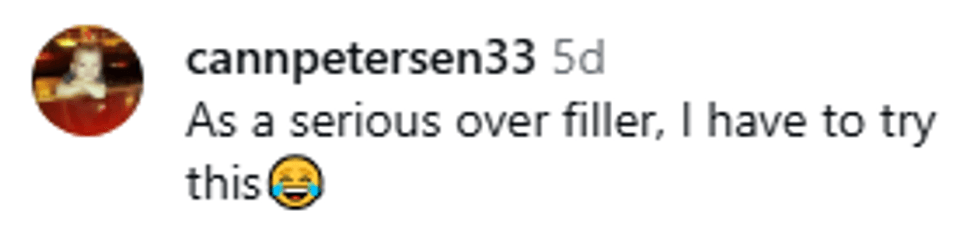 @bsquaredtravels_/Instagram
 @bsquaredtravels_/Instagram
 @bsquaredtravels_/Instagram
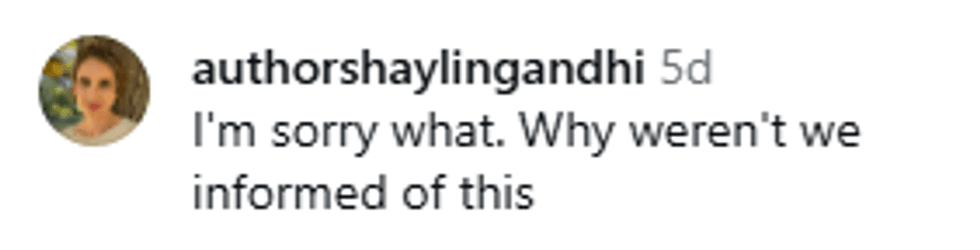 @bsquaredtravels_/Instagram
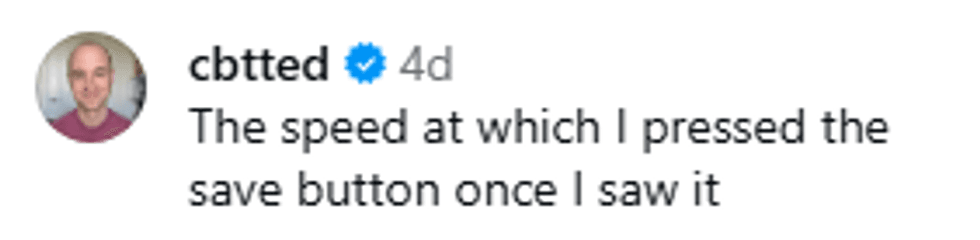 @bsquaredtravels_/Instagram
 @bsquaredtravels_/Instagram
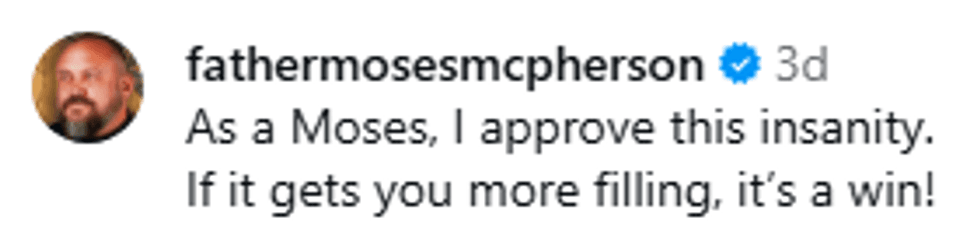 @bsquaredtravels_/Instagram
 @bsquaredtravels_/Instagram
 @bsquaredtravels_/Instagram
 @bsquaredtravels_/Instagram
 @maddie_bado/TikTok
 @maddie_bado/TikTok
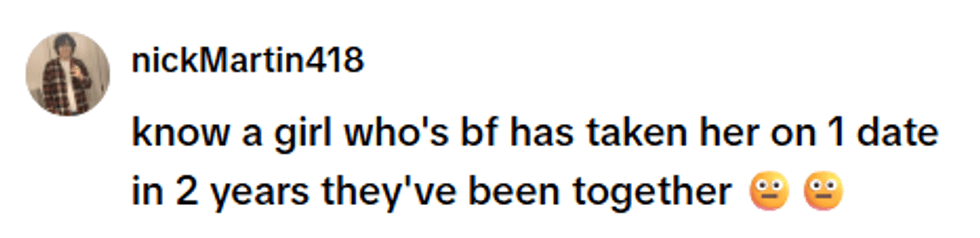 @maddie_bado/TikTok
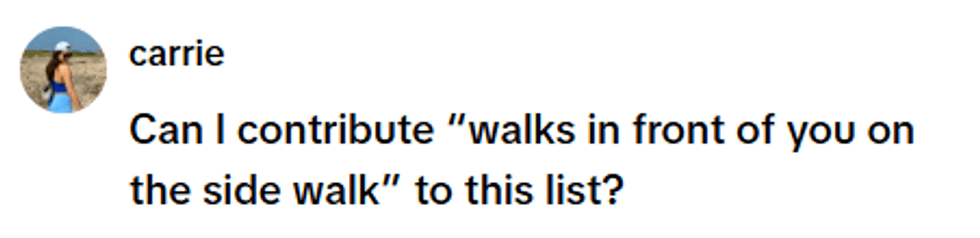 @maddie_bado/TikTok
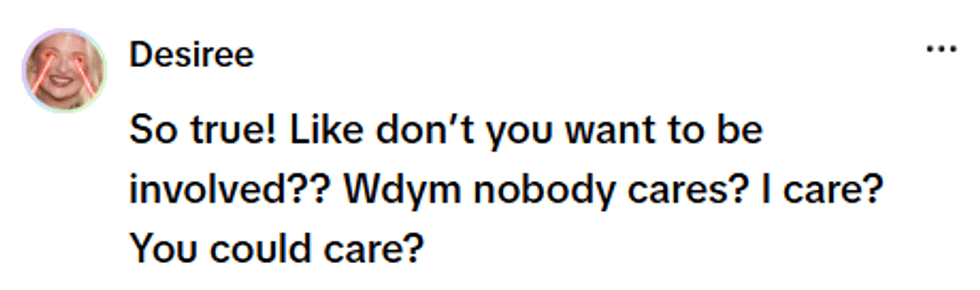 @maddie_bado/TikTok
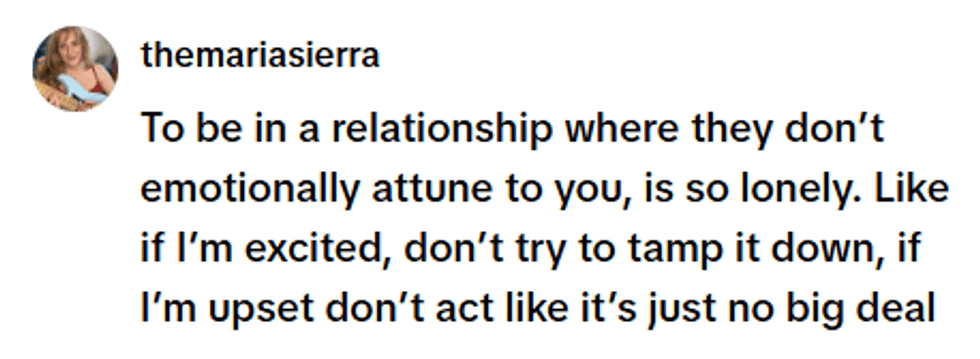 @maddie_bado/TikTok
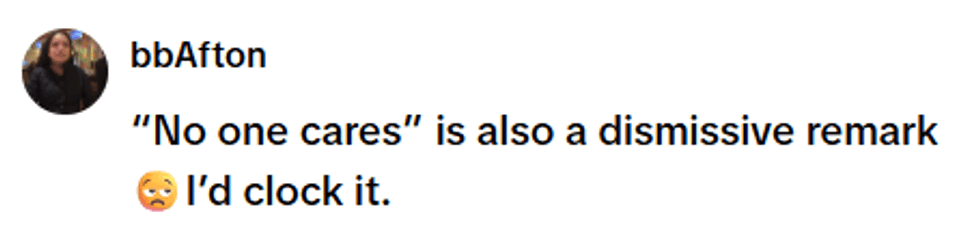 @maddie_bado/TikTok
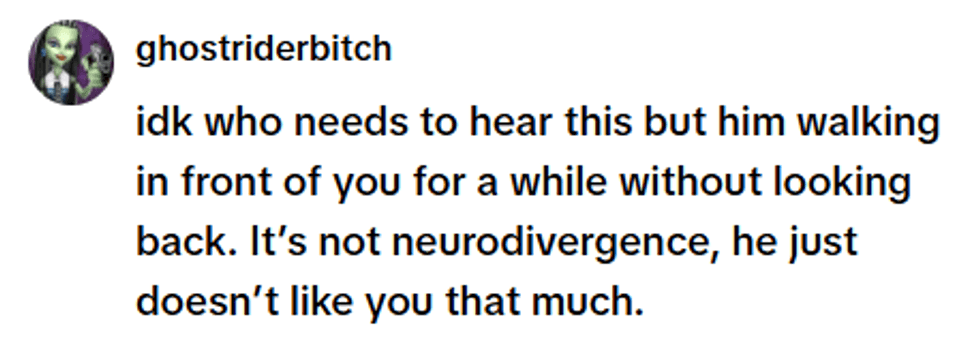 @maddie_bado/TikTok
 @maddie_bado/TikTok
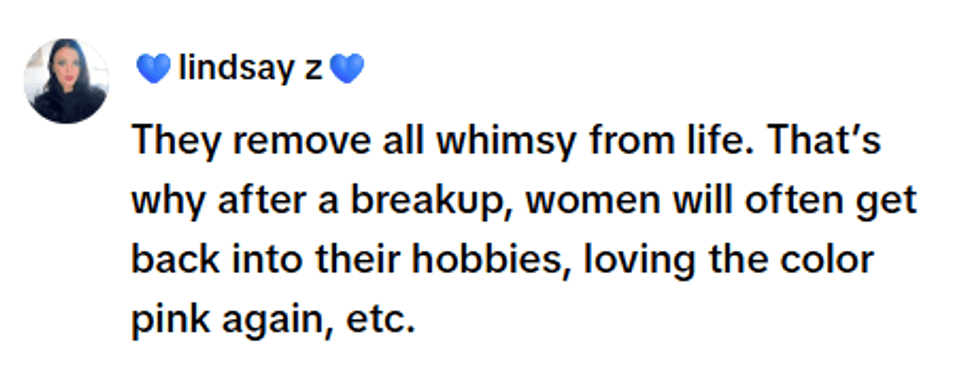 @maddie_bado/TikTok