

Please SHARE this with your friends and family.
Day of the Dead is almost here. If you have ever lived in Latin America or Latin communities, you have seen the skeletons partying in colorful scenes and perhaps looked at the sugar skulls and sweet breads in the bakery windows. Many celebrate the three day fiesta with evolving traditions, and in the U.S. events are popping up wherever you can find Mexican neighborhoods. Some traditions get a local spin reflecting the community.
Sometimes it is called “Mexican Halloween” but it comes from a blend of rituals starting with the Aztecs honoring death during the month of August. When the missionaries and explorers dominated Mexico, the traditions adapted to the Catholic ways and blended with All Hallows Eve (October 31), All Saints Day (November 1) and All Souls Day (November 2).
All three days consist of inviting the spirits of deceased children and adults to visit the families preparing to honor their lives in stories and fiestas. The main thought tied to the holiday is that death is faced as a natural part of living and the dead are awakened from their sleep to celebrate with their loved ones.
Young and old gather for three days to make altars, decorate graves and tell stories of the departed, hoping for visits by the souls who are listening to the funny retelling of moments on earth. Many schools are introducing the traditions and communities host a variety of events to invite all to join in the celebrations.
Here’s what you will find at these fiestas, with variations on traditions in different regions of Mexico and cities with robust Latin communities.
1. Ofrendas are decorated altars packed with treats, toys, favorites foods of the departed and photos to get the stories going.
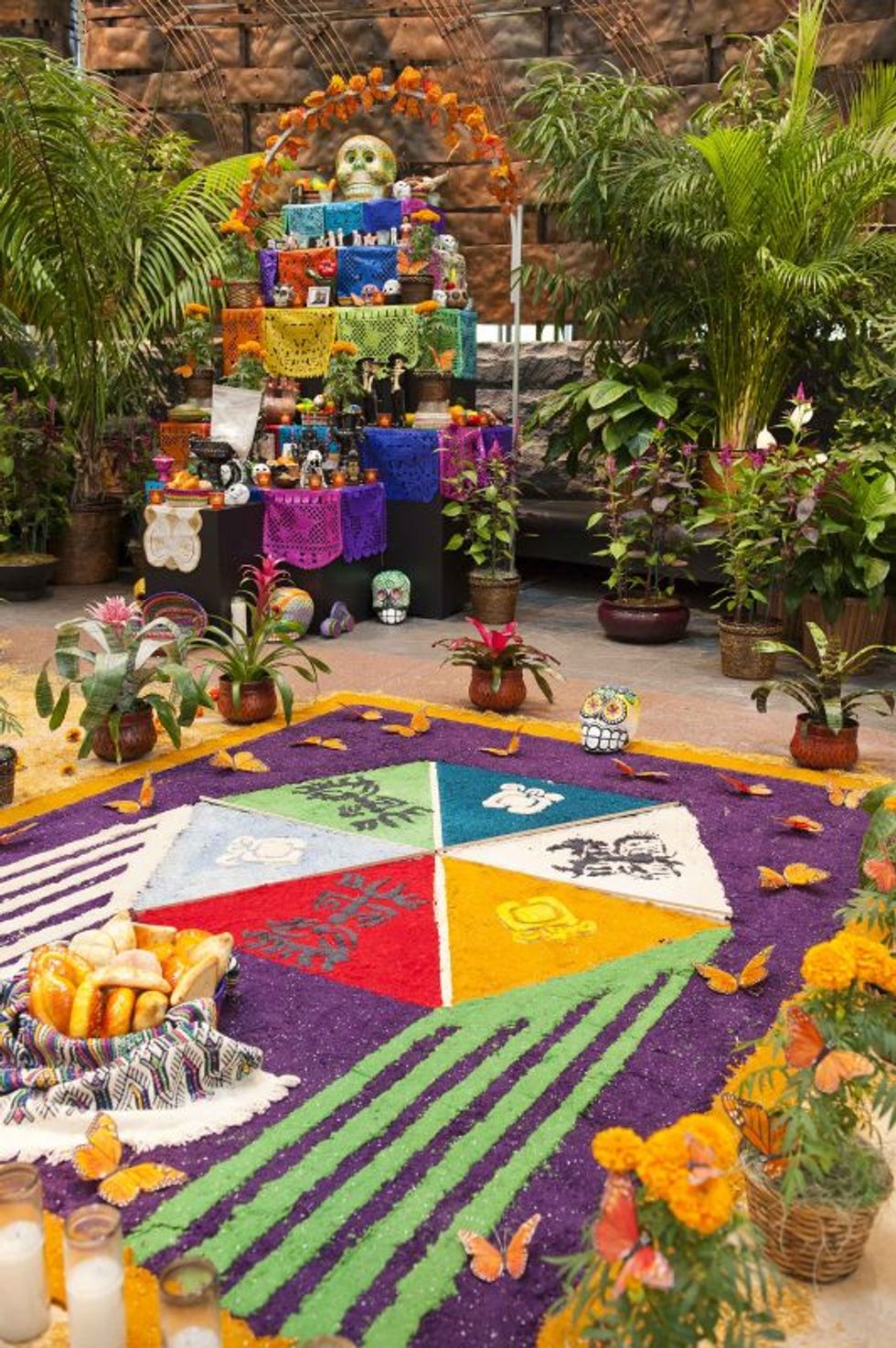
Candles and flowers lead up and blanket the altar to guide the dead to their family party. October 31 and November 1 are dedicated as Day of the Innocents to honor children who are deceased. Toys and candy are brought for dead children spirits. November 2 wraps up the fiesta to honor deceased adults with bottles of tequila, mezcal or jars of atole (a spiced warm toasted corn creamy drink).
Families will bring picnics and set up ofrendas on the grave overflowing with favorite foods, sugar skulls candies and pan de muerto (bread of the dead). Many families create ofrendas at home as a shout out for the deceased. Even pillows and blankets are provided as the belief is the dead have traveled far to visit the family. The fiestas in cemeteries can last all night as the dancing and music can wake up the dead and join in the festivities.
Schoolkids often learn La Danza de los Viejitos (the dance of the little old men) in which boys and young men dress as old men, walk around crouched over then suddenly jump up in an energetic dance.
2. Marigolds, butterflies and skulls are typically used as symbols.
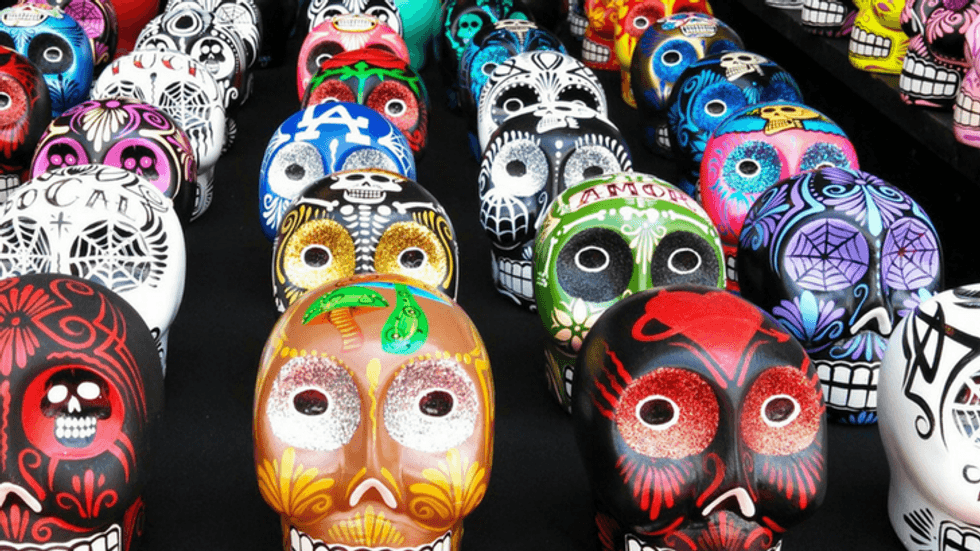
The sugar skull is used not as frightening symbol but rather as a whimsical reminder of the cycle of life, which is why they are brightly decorated. The belief shared is that every living thing will eventually die. Every human being, no matter how beautiful or well-dressed, will eventually be exposed as nothing more than a skeleton and skull. Sometimes the names of the dead are written on the skulls and placed next to their photos. Sugar skulls can be given as gifts to both the living and the dead. Other holiday foods include pan de muerto, a sweet egg bread made in various shapes from plain rounds to skulls and rabbits, often decorated with white frosting to look like twisted bones.
Marigold flowers can be seen laid out as pathways and symbols on the graves and altars to lead the spirits to the families and home due to their vibrant colors and scent. The ofrenda usually has elements of water, wind, earth and fire to guide the spirits. Water and drinks left on the altar will quench their thirst after such a long journey. Papeles Picados are brightly colored paper banners to show the wind. The food, flowers and breads left behind represent the earth. Candles are placed in the form of a cross to show the spirits the way home.
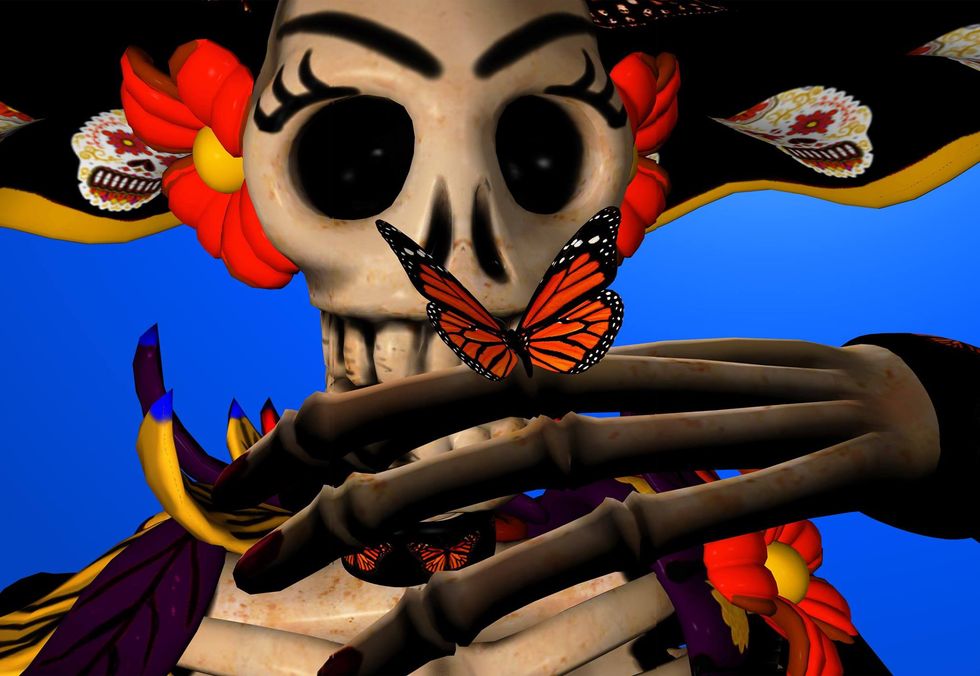
Monarch butterflies show up on many ofrendas and fiestas, as the belief is they bring the spirits of the departed. Coincidentally, the first monarchs arrive in Mexico for the winter on November 1st, just in time for the Day of the Dead.
3. Storytelling of family history and funny anecdotes is a key activity at the fiestas.
During the fiestas at the gravesite, families celebrate the dead with stories recalled while gathering at the ofrenda. Photos decorating the altar and other favorite foods left prompt the tales and the family members are united with the deceased in prayer, joy and laughter.
Learn more about Day of the Dead traditions at this virtual museum.







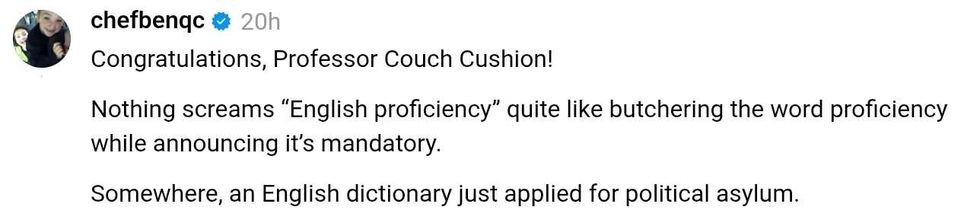 @chefbenqc/Threads
 @the_tre_haus; beckysolwold/Threads
 Ron Jarvis/Facebook
 @kasialove/Bluesky
 Barbara Boetsch/Facebook
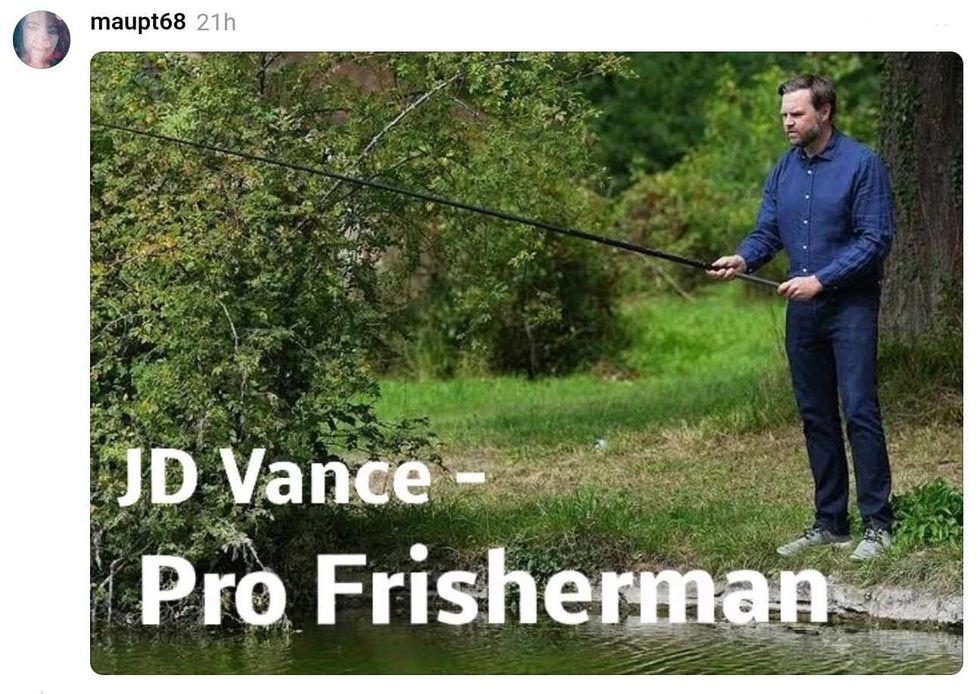 @maupt68/Threads
 @leftofliberal2025/Threads
 @pattistraus/Threads
 @sugarpillseattle/Threads