
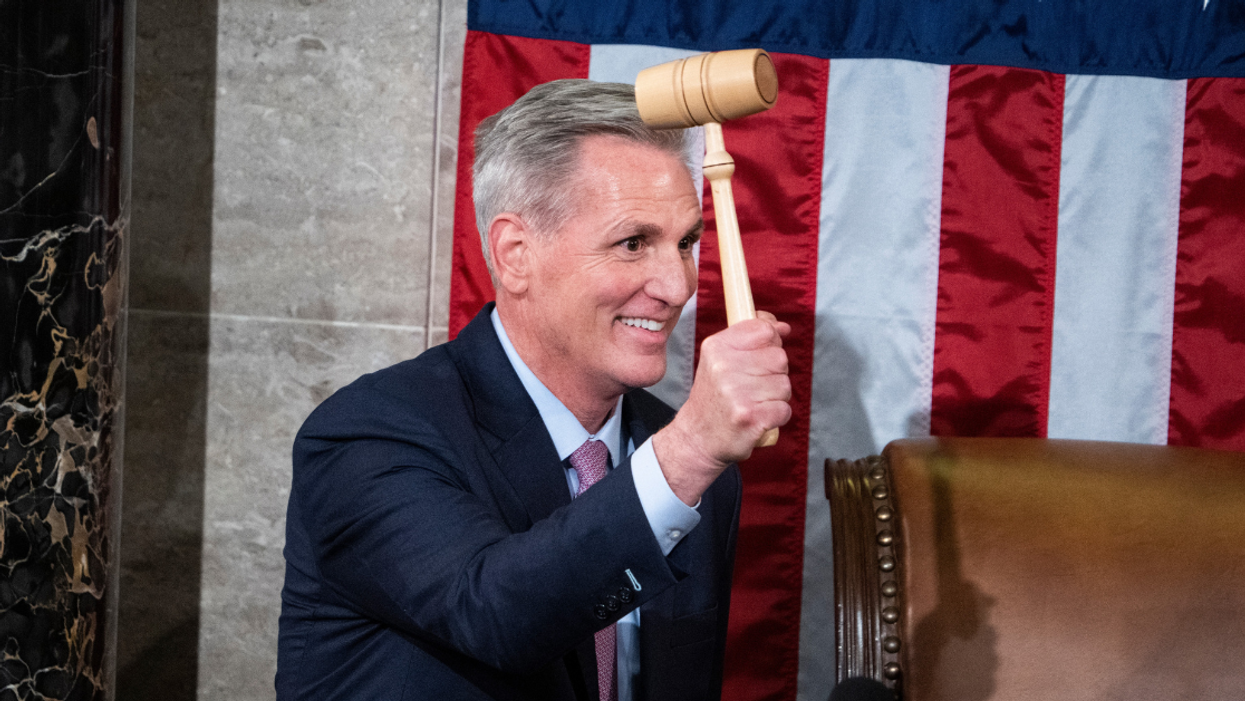

By the Sunday talk shows, House Republican moderates were showing evidence of dissatisfaction and even open revolt.
Texas Republican Representative Tony Gonzalez declared his intention to vote against the package because it contained a defense spending cut, which he said was a “horrible idea.”
South Carolina GOP Representative Nancy Mace told Face the Nation she was “on the fence” because of the lack of transparency about which deals were cut with whom.
Mace said:
“What I saw last week was a small faction … trying to cut backroom deals in private, in secret, without anyone knowing what else was going on.”
In short, there is more trouble brewing in the GOP. With Gonzalez opposed, the proposed rules package can’t afford to lose four more GOP votes or it will go down to defeat, setting off another furious round of negotiations.
So what’s going on here?
How is there still not a clear majority in favor of the basic ground rules by which the House will operate?
To understand this better, let’s back up and clarify first what a “Rules Package” is, then look at some of the more troubling parts of the proposed one that have unnerved the GOP moderates (if you can really call them that any more) and pretty much anyone who wants a functioning democracy.
What concessions did McCarthy make?
The motion to vacate.
As I’ve written about before, one of the biggest concessions from McCarthy was to restore the one-member-only threshold to bring a “motion to vacate the chair.” This operates like a no-confidence vote for the Speaker.
Under Nancy Pelosi, only a majority of the governing party’s members could bring such a motion. But under McCarthy, the proposal is that any single member (of either party, but for all effective purposes this means Republicans, because Democrats don’t want to risk someone worse) can call for such a motion.
It doesn’t take much to see why that’s a sword hanging over McCarthy’s head.
McCarthy had bargained for a higher threshold of at least five members of his own party. Why five?
He already knew that he could never become Speaker if there were already five votes for other candidates, so if there truly were five aligned against him, he was in trouble. Plus, doing the math, if the Democrats joined with fewer than five GOP rebels, they would still lack the votes to oust him.
But now with any one member having that power to make the motion, McCarthy will live with great uncertainty. Specifically, he won’t know until well after the motion is made, by just one person, whether he in fact has four or more others aligned against him.
Beyond putting his own neck so visibly on the chopping block, McCarthy agreed to a host of other rules that would empower the far-right faction of his party. I want to focus on three of them, but only briefly for now because it’s not clear whether these will survive intact through today’s vote.
Playing debt ceiling brinksmanship.
The House is just one chamber of Congress, and it takes both to pass new laws. So anything that the Democratic-controlled Senate doesn’t like won’t even get to President Biden’s desk, where he still holds veto power.
To make up for this inherent lack of legislative power, the GOP proposes to hold the country hostage.
The proposed rules package would force specific votes in order to raise the debt ceiling and importantly would enact a “cut as you go” process. This would require the House to enact spending cuts before the debt ceiling can be raised.
This in turn would likely mean cuts to defense and Medicare or Social Security spending, because it’s hard to see how to make the numbers work without slashing these major parts of the budget. This is why Representative Gonzalez balked at the Rules package and why others may as well.
Imagine it’s July and it’s time to raise the debt ceiling, but the House, bound by these rules, can’t vote on it without proposing huge cuts in spending to things that seniors, veterans and the military depend upon.
That is a very bad look, and the Senate isn’t going to agree to these anyway, so the House GOP basically has three choices:
- keep driving toward the economic brink by threatening a default once the ceiling is hit and there’s no authorization to raise it,
- back down and admit the whole thing was a terrible idea, or
- see five or more of its members break rank and work with the Democrats to raise the debt ceiling.
This last option is a film we’ve seen before.
Former GOP House Speaker John Boehner went through this in both 2011 and 2014, when he needed Democratic votes to approve the spending bills to fund the government. Having angered his own supporters, Boehner wound up being pushed out of office after Mark Meadows filed a single-member motion to vacate—a history not forgotten by McCarthy today.
Targeting ethics oversight and federal investigations.
In a highly troubling and also highly telling move, the proposed rules would gut the Office of Congressional Ethics (OCE). This would come at a time when incoming House members include con artists like New York GOP Representative George Santos who need to be investigated thoroughly and independently.
The proposed rules would also create and empower a “Weaponization of the Federal Government” subcommittee of the House Judiciary Committee at a time when many of their own leaders, such as Republican Representatives Scott Perry of Pennsylvania and Jim Jordan of Ohio, are witnesses or even possible criminal defendants in the January 6 probe.
Normally a new Speaker comes in pledging to run an ethical House, but McCarthy has signaled the exact opposite.
Democrats created the OCE in 2008 as an independent office capable of investigating ethical violations of House members. Republicans have been trying for over a decade to dismantle it, and now they have found a way: by imposing term limits on its board and restricting its ability to hire new staff.
This questionable move—removing the ethical investigators because you know your party’s ethics would violate them—would give Democrats a strong platform to run on in 2024, especially if the GOP fails to discipline charlatans like Santos.
The Freedom Caucus also knows that some of its members are knee-deep in the conspiracy to overturn the 2020 election, and they apparently want to use the new “Weaponization of the Federal Government” subcommittee to interfere with ongoing federal investigations.
The proposal is for a so-called “Church”-style committee, in reference to a 1975 Senate select committee led Idaho Democratic Senator Frank Church that investigated intelligence agencies after Watergate.
In practice, the subcommittee would be a way to harass and possibly slow the work of the FBI and the Justice Department. Almost by definition, it would be laden with conflicts of interest, particularly if witnesses to January 6 are themselves on the subcommittee.
In practice, however, it is dubious whether this new subcommittee will be able to accomplish much in the early going, given the GOP’s own record of ignoring subpoenas and the disdain most federal courts have over efforts to disrupt ongoing criminal investigations through politicized Congressional processes.
Stacking the Rules Committee with extremists.
It is currently unclear exactly how much McCarthy has promised the Freedom Caucus with respect to composition of the very powerful Rules Committee, which determines which legislation can move forward to the floor.
Reports are McCarthy promised extremists as many as three seats on that committee. Republicans can only afford to lose two votes on the Committee, so with three extremists on it, the far-right could kill legislation before it comes to a full House vote.
McCarthy’s reasoning for why he is offering up three precious seats here is a bit perplexing. Because, he argues, any legislation that lacks support from three conservatives would likely fail on the House floor anyway, it’s better to have that messy fight in the Rules Committee instead of out on the floor.
But this is the very lack of transparency that members like Representative Mace criticized. Bills often die quiet deaths in committee, and with a veto of three seats, the conservatives would effectively be in the legislative driver’s seat.
GOP moderates (if you still exist): it’s time to step up
If the increasingly few moderates in the GOP hope to have any say going forward, they had better make some kind of a stand against these rules, or they will be effectively handing the keys to their party over to the extremists, at least based on the proposed rules package.
If they brought a fight now, those rules would have to change, even though McCarthy is now Speaker. The risk, of course, is that this throws their caucus into even greater chaos and confusion.
For his part, Democratic House Minority Leader Representative Hakeem Jeffries of New York blasted the GOP over the proposed rules package, noting the GOP dysfunction last week “is not at an end, it’s just the beginning.”
Speaking on NBC’s Meet the Press, Jeffries issued a warning that “while the Congress was held captive this particular time,” it is the American people who “will be held captive over the next two years to the extreme ‘MAGA’ Republican agenda that apparently has been negotiated into the House rules and the functioning of the Congress.”
Bill Kristol of The Bulwark summed up the danger of the rules package.
He tweeted:
“Threatening a) the rule of law (interfering with criminal investigations), b) the full faith and credit of the U.S. (debt ceiling), c) standing with allies fighting aggressive dictators (the spending cuts) ... the House GOP rules package really does its best to damage the nation.”






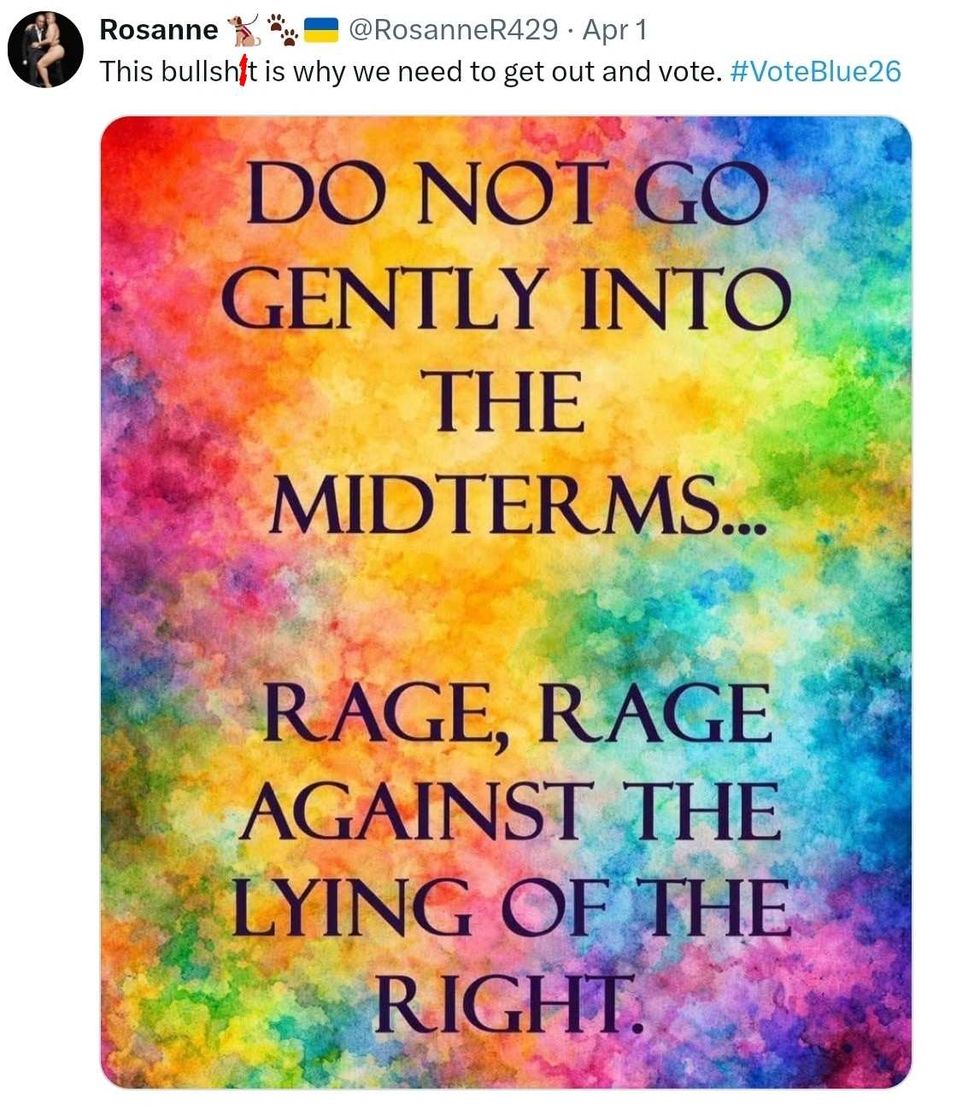 @RosanneR429/X
 @HadleySheley/X
 @fernandez.house.gov/Bluesky
 @artcandee/Bluesky
 @obscuricom/Bluesky
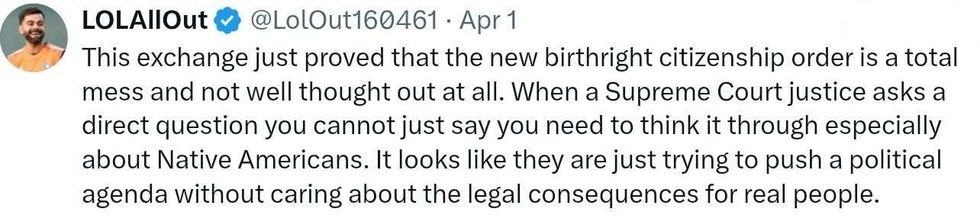 @LolOut160461/X
 @fernandez.house.gov/Bluesky
  @quizgirl06/X

 @themouselets/TikTok
 @themouselets/TikTok
 @themouselets/TikTok
 @themouselets/TikTok
 @themouselets/TikTok
 @themouselets/TikTok
 @themouselets/TikTok
 @themouselets/TikTok
 @themouselets/TikTok
 @themouselets/TikTok
 @themouselets/TikTok
 @themouselets/TikTok
 @themouselets/TikTok
 @themouselets/TikTok
 @themouselets/TikTok
 @themouselets/TikTok
 @themouselets/TikTok
 @themouselets/TikTok
 @themouselets/TikTok
 @themouselets/TikTok
 @themouselets/TikTok
 @angel_tweets27/X