
Skip to content
Search AI Powered

Latest Stories

Fox News Called Out After Trying To Blame Buffalo Shooting On 'Realistic' Video Games

Fox News Called Out After Trying To Blame Buffalo Shooting On 'Realistic' Video Games
Fox News

Fox News was called out after it wasted no time linking a mass shooting in Buffalo to "realistic" video games.

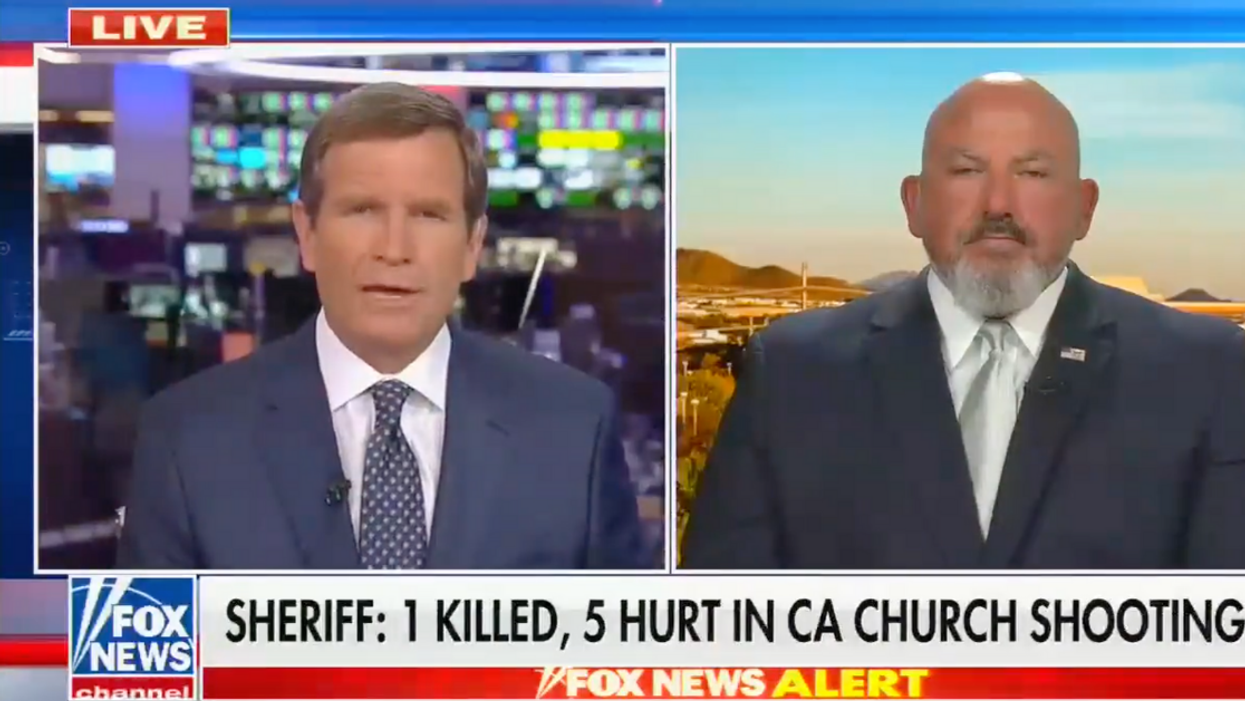
On Sunday May 15, the day after the shooting, Jon Scott, the host of Fox Report, was joined by former Bureau of Alcohol, Tobacco, Firearms and Explosives (ATF) special agent Bernard Zapor and the two men proceeded to downplay calls for stricter gun control measures.


The shooting, they reasoned, could only have been caused by one thing in particular: video games. They said that video games have "desensitized" people to actual violence–suggesting that they make killing multiple people in a shooting a more attractive endeavor.

You can hear what they said in the video below.

The exchange began with Scott suggesting to Zapor that mass shootings "have gotten so much worse since video games became so realistic and so violent" and asked whether Zapor has done any "research" into the matter.

Zapor replied:

"We're communicating through a medium that was never really intended as a human being, which is online or through texting or these kind of things, we get separated as humans to have that connection that builds, I would say, an inner morality."

Zapor went on to add that traditional meeting grounds like churches have become less popular and that families have become more "disconnected," adding that large venues and shopping malls can take precautions to guard themselves from other mass shootings, which he referred to as "rare events."

According to an updated resolution from the American Psychological Association (APA), there is "insufficient evidence" to suggest that "a causal link between violent video games and violent behavior" exists.

Many have criticized Fox News since the segment aired.


Missing from Fox News' analysis of the shooting is the fact that the shooter—who is reported to have written a 180-page manifesto released prior to the attack—subscribed to the "Great Replacement" conspiracy theory often touted by Fox News personality Tucker Carlson.

Replacement theory is a conspiracy theory that states White European populations and their descendants are being demographically and culturally replaced with non-European peoples.

Carlson has been accused of using his program to stoke resentment against people of color and a recent New York Times series noted he has "constructed what may be the most racist show in the history of cable news."

Critics of Carlson pointed out he has pushed numerous racist conspiracy theories on his program, including replacement theory. He has often railed against liberal immigration policies, providing an enormous platform for White nationalist rhetoric.


More from Trending

Ramy Youssef and Elmo
@sesamestreet/Instagram

MAGA Is Predictably Melting Down Over Video Of Elmo Learning New Arabic Words For Arab American Heritage Month

A clip released by Sesame Street on Thursday, April 16, showed Elmo with Egyptian-American actor, comedian, producer, director, and Golden Globe winner Ramy Youssef to celebrate Arab American Heritage Month.

The 41-second video showed Youssef teaching Elmo the Arabic words "salamu alaykum" and "habibi."

Keep Reading Show less
Nancy Sinatra; Donald Trump
Jim Spellman/WireImage; Tasos Katopodis/Getty Images

Nancy Sinatra Fires Back At Trump With Four Powerful Words After He Uses Her Father's Song In Cryptic Post

Singer Nancy Sinatra, the daughter of the iconic crooner Frank Sinatra, criticized President Donald Trump after he posted a video featuring her father's version of the song "My Way" to Truth Social amid his ongoing war and negotiations with Iran.

"My Way," a song about an individual looking back on their decision to live life on their own terms, was one of the late Sinatra's signature hits. Trump posted a video of Sinatra singing the song with no comment or explanation.

Keep Reading Show less
Screenshot of Pete Buttigieg; Donald Trump
@Acyn/X; Anna Moneymaker/Getty Images

Pete Buttigieg Explains Why Trump's AI Jesus Post Was So Offensive To Christian Conservatives In Viral Video

Former Transportation Secretary Pete Buttigieg condemned President Donald Trump for posting an AI-generated post depicting himself as Jesus Christ, describing it as "insulting" to both people's faith and their intelligence.

Earlier this month, the Pope criticized Trump's widely unpopular war in Iran and called on the world "to reject war, especially a war which many people have said is an unjust war, which is continuing to escalate and is not resolving anything."

Keep Reading Show less
Screenshot of Donald Trump
@atrupar/X

Trump Dragged After Gushing Over His Own Signature In Ultra-Cringey Viral Clip

President Donald Trump was super proud of himself after he signed an executive order to make certain psychedelic drugs more available to treat mental health conditions, taking an opportunity to boast about his own signature.

Trump's order approves $50 million in federal funding to expand access to certain therapies and directed the Food and Drug Administration (FDA) to fast-track its review of drugs like psilocybin and ibogaine. He was joined by the likes of podcaster Joe Rogan and Health and Human Services (HHS) Secretary Robert F. Kennedy Jr. in the Oval Office.

Keep Reading Show less
Charlize Theron (left) responds to Timothée Chalamet’s (right) controversial comments about ballet and opera.
Steve Granitz/FilmMagic; Jamie McCarthy/WireImage

Charlize Theron Gives Timothée Chalamet A Blunt Reality Check About His Future After His Comments Insulting Ballet

Timothée Chalamet declaring that “no one cares” about ballet and opera was always going to age poorly. It just happened faster than expected.

Enter Charlize Theron, who didn’t just disagree—she flipped the whole argument, suggesting that while centuries-old art forms will endure, Chalamet’s own career may be far more vulnerable in the age of artificial intelligence.

Keep Reading Show less