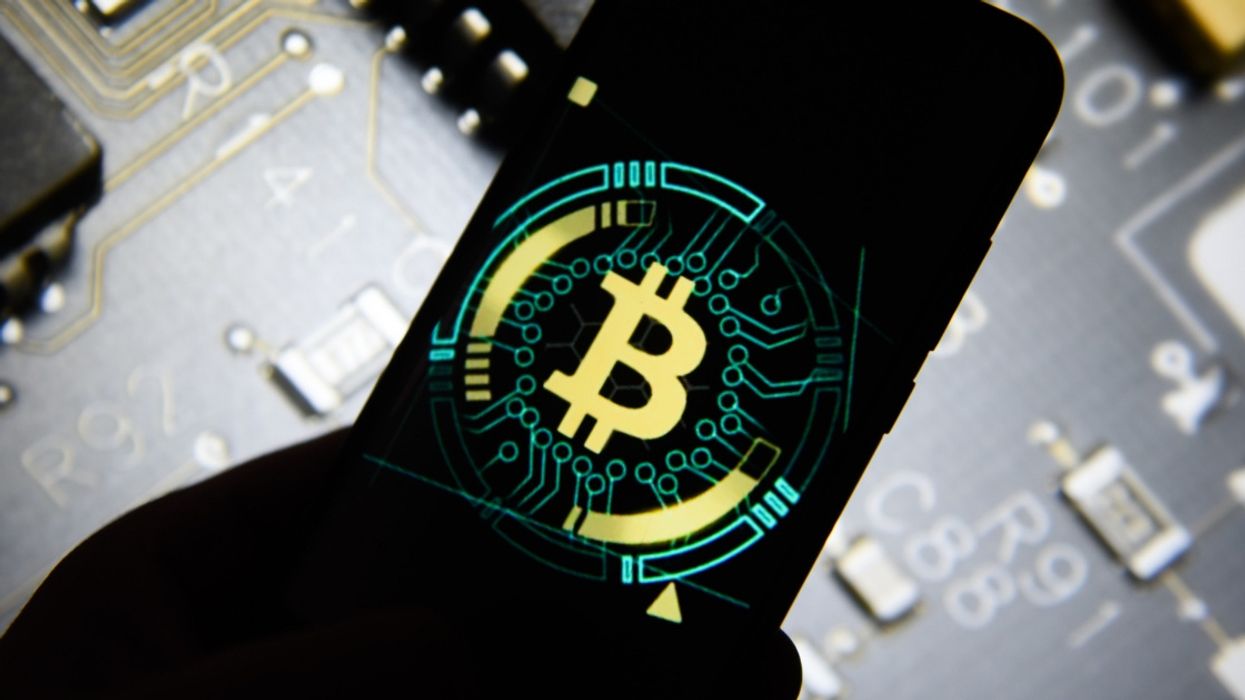

One of the appeals of crypto currency has always been that it cannot be stolen or misplaced—it exists in a digital portfolio which is tracked by many computers simultaneously. It turns out, however, that your crypto money can still be lost, especially if the only person who knows the password to access it dies.
30-year-old Gerald Cotten, founder of the crypto currency exchange company QuadrigaCX died unexpectedly in India this past December 2018. Since crypto exchanges often collect and store real currency to facilitate transactions (unlike the stock market, which simply organizes trades between two parties), Cotten's widow, Jennifer Robertson, believes the company now owes its customers somewhere around $190 million that cannot be accessed.
Cotten left behind no business records—only an encrypted laptop which experts say they cannot hack and no one but Cotten himself knew the password to. Though some jaded customers suspected the businessman was faking his own death, Robertson included a copy of his death certificate in her filings, and India was able to confirm a Canadian had died there in December (though they were unable to release his name due to privacy laws).
According to CoinDesk, a small portion of the funds may be stored in an accessible "hot wallet" but not nearly enough to pay back all of Quadriga's customers:
"The exchange holds roughly 26,500 bitcoin ($92.3 million USD), 11,000 bitcoin cash ($1.3 million), 11,000 bitcoin cash SV ($707,000), 35,000 bitcoin gold ($352,000), nearly 200,000 litecoin ($6.5 million) and about 430,000 ether ($46 million), totaling $147 million, according to the affidavit. It was not clear what portion of the exchange's crypto holding were kept in cold storage, versus its hot wallet. In the affidavit, Robertson explained that 'only a minimal amount of coins' were stored in the hot wallet, but specifics were not provided."
Robertson claims that her husband had "sole responsibility for handling the funds and coins," which has caused significant issues.
She also commented on the nature of his death:
"[Cotten died] due to complications with Crohn's disease on December 9, 2018 while travelling in India, where he was opening an orphanage to provide a home and safe refuge for children in need."
Complicating this whole issue is the fact that last year, in January 2018, QuadrigaCX had $26 million of its assets frozen by the Canadian Imperial Bank of Commerce due to "irregularities with payment processing." The Ontario legal system would later conclude "$67-million worth of transactions ended up improperly transferred into the personal account of Costodian Inc, the payment processor," and although the issue has now been resolved Quadriga claims the legal battle has "'severely compromised' their ability to access tens of millions of dollars' worth of holdings held by the processors."
Robertson wrote to CoinDesk:
"[QuadrigaCX] urgently needs a stay of proceedings which will allow Quadriga and its contractors additional time to find whatever stores of cryptocurrency may be available and also to negotiate the bank drafts available to Quadriga."
Elvis Cavalic, who cannot access his $15k being held by Quadriga, commented to CBC:
"This is a tough lesson learned...I would probably avoid [cryptocurrency] in the future. They've left us completely in the dark. I'm kind of preparing for the worst."






 u/Chemical_Grape_2150/Reddit
 u/Head_Patience7136/Reddit
 u/Internal_Praline_658/Reddit
 u/redelectro7/Reddit
 u/Past_Dimension_5133/Reddit
 u/Illustrious_Bad_2980/Reddit
 u/Bread_Low/Reddit
 u/crystal_clear24/Reddit
 u/throwawaysixties/Reddit
 u/RoRoRicardo/Reddit
 u/Damaged_G00d5/Reddit